Capped vs Uncapped Ranges Explained for Beginners
A capped range has no strong hands left; an uncapped range still can. Learn how to spot each, why it matters, and a worked example beginners can use.
On this page · 4 sections
Range is the set of all hands a player could hold in a given spot. A range is capped when it can no longer contain the strongest hands, and uncapped when it still can. This single distinction shapes who can bet big, who can bluff, and who is stuck merely hoping to survive.
For a beginner, the useful shift is to stop thinking about your two cards and start thinking about the whole family of hands your line represents. Once you see that a certain sequence of actions removes the nuts from someone’s range, you can attack that ceiling.
What caps a range
A range gets capped whenever a player’s earlier actions are inconsistent with holding a premium hand. The most common cause is passive play: calling instead of raising with a strong hand.
Imagine a player who just calls a bet on the flop and the turn. A thoughtful opponent knows that most players raise their sets, two pairs, and strong made hands somewhere along the way to build the pot. So by the river, the caller’s range is missing those monsters. It is capped at roughly top pair or a good second pair, with a lot of medium hands and draws that missed. There is a ceiling on how strong they can be.
By contrast, a player who raised the flop and bet the turn has taken actions consistent with the nuts. Their range is uncapped: it still includes sets, straights, and the strongest possible hands alongside their bluffs. Thinking about ranges this way is the same skill behind range equity, where you compare how whole groups of hands fare against each other rather than single holdings.
Why the difference matters
The player with the uncapped range holds the power. Because they can credibly have the nuts, they can bet large and even overbet, and their opponent cannot comfortably call without a very strong hand. When you are uncapped and your opponent is capped, big bets become extremely effective, whether you are betting for value or bluffing.
The capped player is on the defensive. They cannot represent the top hands, so they are reduced to bluff-catching: calling with medium hands and hoping the bettor is bluffing often enough. This is exactly why understanding the bluff-to-value ratio matters here. The uncapped bettor can lean on more bluffs than usual because the capped caller simply lacks the hands to punish them.
The practical rule for beginners is simple. When you spot that your opponent is capped, look for spots to bet big and pressure them. When you realize your own range is capped, tighten up and avoid calling large bets with mediocre holdings.
A worked example
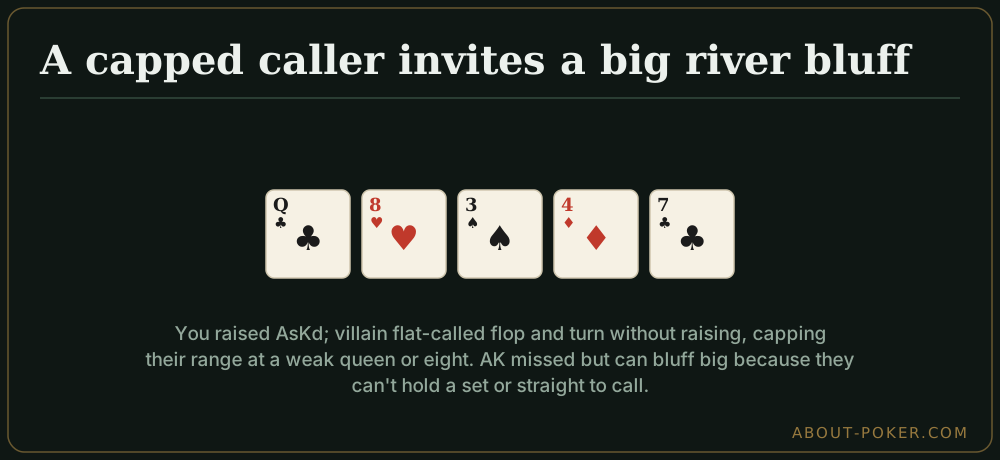
You raise preflop with As Kd and one player calls from the big blind. The flop comes Qc 8h 3s. You bet, they call. The turn is the 4d. You bet again, they call once more. The river is the 7c.
Think about the big blind’s range. They just called preflop, then called the flop and turn without ever raising. A player who flopped a set of queens or two pair would usually raise at some point to grow the pot and protect their hand. Because they only called, their range is capped: it is mostly a pair of queens with a weaker kicker, some eights, and busted straight draws like JT or T9 that missed. They almost never have a set or a straight here.
Now you can use that ceiling. Even though your AK missed and is only ace-high, you can make a large river bet as a bluff. The capped range cannot call a big bet comfortably, because none of those queens or eights want to stack off against a hand that credibly represents better. If instead your opponent had raised the turn, their range would be uncapped, you could no longer represent the nuts safely, and bluffing the river would be reckless.
Applying it at the table
Every time you reach a later street, ask two questions. First, could my opponent still have the nuts based on how they have played? Second, could I? The answers tell you who is capped and who is uncapped, and that tells you who gets to apply pressure.
When you hold the uncapped range, you are the one who can bet big for value and mix in bluffs. When you are capped, respect large bets and pick low-cost ways to reach showdown. Reading these ceilings turns vague guessing into a clear plan for the whole hand.
Frequently asked
What does capped range mean in poker?
A capped range means a player can no longer have the very strongest hands, so there is a ceiling on how good their holding can be. This usually happens because their earlier actions, like just calling instead of raising, ruled out the top of their range.
What is an uncapped range?
An uncapped range is one that still contains the strongest possible hands, including sets, straights, and the nuts. A player who raised or re-raised earlier keeps their premium hands in range, so there is no ceiling on their strength.
Why does a capped range matter?
A capped range is vulnerable to large bets and bluffs because the opponent cannot hold a hand strong enough to call comfortably. You can apply pressure with big sizes, knowing they lack the nutted hands needed to fight back.
How do I know if my own range is capped?
Look at your line. If you only called earlier streets and would have raised your best hands, then your range is capped when you reach the river. Recognizing this helps you avoid bluff-catching in spots where your opponent can pressure you cheaply.