Exploitative Play Explained for Beginners
Exploitative play means deviating from balanced strategy to punish an opponent's specific leaks. Learn how it works and see a concrete example.
On this page · 4 sections
Exploitative play means deviating from balanced strategy on purpose to punish a specific opponent’s mistakes. Where a balanced player tries to be unbeatable no matter who they face, an exploitative player asks a sharper question: what is this particular opponent doing wrong, and how do I profit from it most? Against the weak, predictable players most beginners actually face, exploitation earns far more than perfect balance ever could.
The catch is that every exploit opens you up in return. Exploitative play is a trade: you sacrifice some safety to attack a leak. Whether that trade is good depends entirely on how badly your opponent is leaking.
Exploitation versus balance
The two styles are best understood side by side:
- A balanced (game-theory-optimal) strategy mixes value and bluffs so no counter-strategy beats it. It never loses to a specific plan, but it also never maximizes against a bad one. You can read the defensive side of this on the balanced ranges page.
- An exploitative strategy abandons that safety to target one flaw. If your opponent folds too much, balance would still bluff at the “correct” rate — but exploitation says bluff far more, because every extra bluff prints money against a chronic folder.
Balance is a shield; exploitation is a spear. Beginners should learn balance so they stop being easy prey, then reach for exploitation the moment an opponent hands them a clear leak.
The two leaks you attack most
Almost all exploitation for beginners reduces to two opposite mistakes:
- They fold too much. Their folding rate is below the minimum defense frequency, so your bluffs auto-profit. Counter: bluff more, and bet more streets, because you win the pot uncontested far too often for them to stop you.
- They call too much (calling stations). They pay off bets with hands that are clearly beaten. Counter: stop bluffing and value bet relentlessly, even thinly. Every marginal made hand becomes a bet, because worse hands keep paying.
Match the counter to the leak and you cannot go wrong: never bluff a station, never stop bluffing a folder.
A worked example
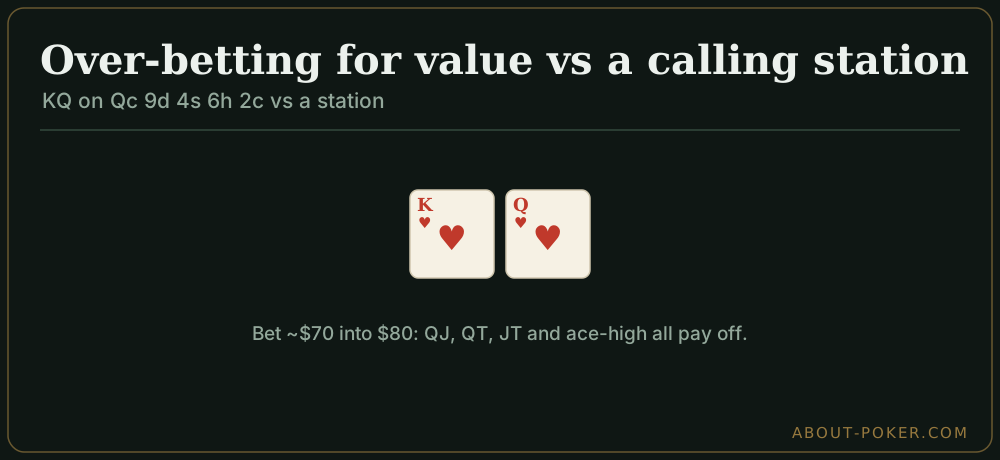
You are heads-up on the river holding Kh Qh on a board of Qc 9d 4s 6h 2c. You have top pair, decent kicker. The pot is $80. Over the last hour you have noticed your opponent is a calling station — they have called down with third pair and ace-high multiple times and have never once folded to a river bet.
A balanced player might size this modestly to protect against being exploited by a check-raise. But exploitation ignores that: against someone who literally does not fold, you should bet big for value, because they will call with a huge range of worse hands. So you bet $70 into $80, nearly pot-sized, and get called by 99 — wait, 99 is a set and beats you — but far more often by hands like QJ, QT, JT, and even ace-high, all of which this station calls with. Because those worse hands vastly outnumber the rare monster, the oversized value bet is hugely profitable. This is value betting turned up to maximum against the exact opponent who rewards it.
Now flip the read. If the same player were a nit who folds everything but two pair or better, betting KQ for value here is a mistake — the only hands that call beat you. Against them you would check and give up, or turn a hopeless hand into a bluff on a scarier board. Same cards, opposite play, because the opponent is different. That is exploitation in one sentence.
The risk you accept
Every exploit is a deviation, and deviations can be counter-exploited. Bluff a folder relentlessly and a good one will notice and start calling. Value bet huge against a station and if they wise up, your thin bets get raised. Against observant, adjusting opponents, lean back toward balance. Against the many players who never adjust — the true bread and butter of live and low-stakes online games — deviate hard and keep collecting. The skill is knowing which kind of opponent is in front of you.
Frequently asked
What is exploitative play in poker?
Exploitative play means adjusting your strategy to take maximum advantage of a specific opponent's mistakes, rather than playing a balanced, unexploitable game. If someone folds too much, you bluff more; if they call too much, you value bet more.
What is the difference between GTO and exploitative play?
GTO (game-theory-optimal) play is balanced and cannot be beaten, but it doesn't punish mistakes maximally. Exploitative play deviates from balance to punish a specific opponent's leaks, earning more against weak players but becoming exploitable in return.
Is exploitative play better than balanced play?
Against weak or predictable opponents, exploitative play wins more money because it targets their errors directly. Against strong, balanced opponents it can backfire, since deviating from balance opens you up to counter-exploitation. Most winning players mix both.
How do beginners start playing exploitatively?
Watch for one clear, repeated tendency — folding to bets, calling too much, never bluffing — and adjust one thing against it. Bluff more against folders, value bet thinner against callers. Start with obvious leaks before attempting subtle reads.