Chance of Winning With Pocket Aces
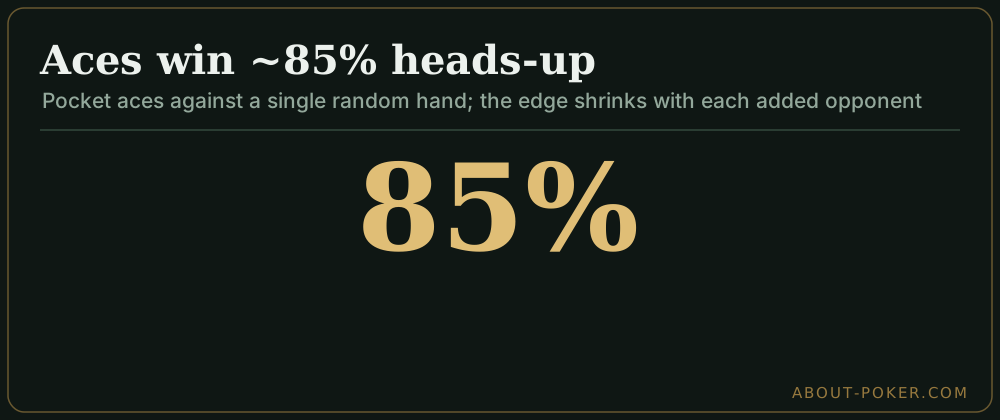
Pocket aces win about 85% heads-up but drop toward 35% at a full table of nine. Win rates by opponent count, worked examples, and why aces get cracked.
On this page · 6 sections
Pocket aces are the best starting hand in Hold’em, but “best” doesn’t mean “unbeatable.” Heads-up, aces win about 85% of the time. Add opponents and that number falls fast — against a full table of eight players it sinks toward 35%. Understanding that slide is the difference between winning big with aces and stacking off into a cooler.
The core answer: win rate by opponent count
Aces’ equity depends almost entirely on how many hands you’re up against:
| Opponents (random hands) | AA wins about |
|---|---|
| 1 | 85% |
| 2 | 73% |
| 3 | 64% |
| 4 | 56% |
| 5 | 49% |
| 8 (full table) | ~35% |
The pattern is clear: every extra opponent chips away at your edge because each new hand is another chance for someone to flop two pair, a set, or a flush. Aces stay the favorite far longer than any other hand, but the raw win percentage still drops. This flows from the standard preflop all-in equity rules.
Why more opponents hurt so much
Against one player, the only ways to lose are their pair spiking a set, running out two pair, or a lucky straight/flush — collectively about 15%. Against five players, all five of those small chances stack up. You’re still more likely to win than any single opponent, but the field combined can beat you more than half the time.
This is the single most important lesson about aces: your job preflop is to thin the field. Raise and re-raise to get heads-up (85%) or three-handed (73%) rather than limping into a five-way pot where you’re barely a coin flip to win.
A worked example
You hold Ac Ad and raise. One opponent with Ks Kd shoves; you call. This is the classic aces vs kings matchup: you’re about 82% to win. Slightly below the 85% against a random hand, because kings are a strong specific holding, but still a massive favorite.
Now imagine four callers instead of one. Suddenly you’re around 56%. You went from an 82% lock to barely better than a flip — same aces, four extra opponents. The aces didn’t get weaker; the field got bigger. That’s why a raise that folds out three of those callers is worth real money.
How the number shifts with the board
Preflop equity is only the start. After the flop, your win rate swings hard:
- Dry flop (e.g. K 7 2 rainbow): aces stay ~90%+ against most hands — bet for value.
- Coordinated flop (e.g. Jh Th 9h): aces can drop below 50% against straight and flush draws — proceed carefully and consider pot control.
- You flop a set of aces: now you’re ~95%+ and should build the pot relentlessly.
Aces realize their equity well because they’re rarely dominated preflop, but wet boards are where “the best hand” quietly becomes second-best.
Common mistakes
Slow-playing into a family pot. Limping or min-raising with aces invites five callers and drops you toward a coin flip. Raise big to isolate.
Refusing to fold postflop. Aces are a preflop monster, not a postflop guarantee. When a tight opponent jams a 9-8-7 board after you’ve shown strength, your one pair is often beat. Getting cracked one-in-seven heads-up is math; paying off obvious sets is a leak.
Feeling cursed. You’ll get aces about once every 221 hands and lose with them ~15% of the time heads-up. A string of cracked aces is variance, not a jinx. Across a long session you should expect to lose roughly one in seven of your all-in aces heads-up; if you never lost with them, the sample would be too small to mean anything.
Playing them passively out of fear. Some players, burned by past coolers, start checking and calling with aces to “keep the pot small.” That surrenders their biggest edge. Aces earn their profit precisely because they can build huge pots as an 85% favorite — betting and raising is how you cash in the equity, not a way to lose it.
Quick reference
- Heads-up: aces win ~85%. Two opponents: ~73%. Full table: ~35%.
- AA vs KK all-in: aces win ~82%.
- More opponents = lower win rate — thin the field preflop.
- Wet, coordinated boards can drop aces below 50% postflop.
- Getting cracked ~1 in 7 heads-up is expected, not a curse.
Aces are the best hand you can hold — treat them like it by raising to get heads-up, then respecting the board when it turns dangerous.
Frequently asked
What is the chance of winning with pocket aces?
Against a single random hand, pocket aces win about 85% of the time. That figure falls as opponents are added: against two random hands it is about 73%, and against eight opponents at a full table it drops to roughly 35% because more players means more ways for someone to outdraw you.
How often do pocket aces get cracked?
Heads-up, aces lose about 15% of the time — roughly one in seven all-ins. Against a full field the loss rate climbs sharply. Getting cracked one time in seven heads-up is expected math, not a run of bad luck.
Should you always go all-in with pocket aces?
Preflop, aces are the best possible hand and you should almost always build the pot aggressively, ideally getting money in against a single opponent where you are 85%. The mistake is letting many players see a cheap flop, which lowers your win rate.