Pot Control Explained for Beginners
Pot control means keeping the pot small with medium-strength hands so you risk less when unsure. Learn when and how to control the pot, with an example.
On this page · 4 sections
Pot control is the art of keeping the pot small on purpose. It is not a fancy move; it is often just checking when a beginner’s instinct says bet. The reason to do it is simple: some hands are good enough to win at showdown but not good enough to want a big pot. With those hands, growing the pot mostly grows your risk.
Most beginners lose money by playing every decent hand for a big pot. Pot control is the discipline that keeps your medium hands cheap and your losses small in the spots where you are genuinely unsure.
Why a small pot protects you
Think about a hand like top pair with a weak kicker. When you are ahead — against a worse pair or a draw — you win a modest amount. When you are behind — against two pair or a better top pair — you can lose your whole stack. That asymmetry is the problem.
If the pot stays small, both outcomes shrink: you win a little less when ahead, but you lose a lot less when behind. Because the losing outcome was the expensive one, capping the pot raises your average result with these marginal hands. This is the same logic behind expected value: you are trading a small amount of upside for a large reduction in downside.
Pot control is really a decision about the stack-to-pot ratio. Every bet you make lowers the ratio and moves the hand toward a stacks-in situation you may not want with a middling holding.
How to actually control the pot
You have a few levers, from simplest to most advanced:
- Check. The most direct tool. Checking a street the opponent also checks keeps the pot exactly where it is.
- Bet smaller. If you do bet — say for thin value — a small size grows the pot slowly and keeps you from committing.
- Decline to raise. Just calling a bet, rather than raising, keeps the pot smaller than a raise would and avoids inflating it into a stack-off.
The key habit is recognizing the hand type before you act. When you notice “this hand can win a showdown but hates a big pot,” you have found a pot-control spot.
A worked example
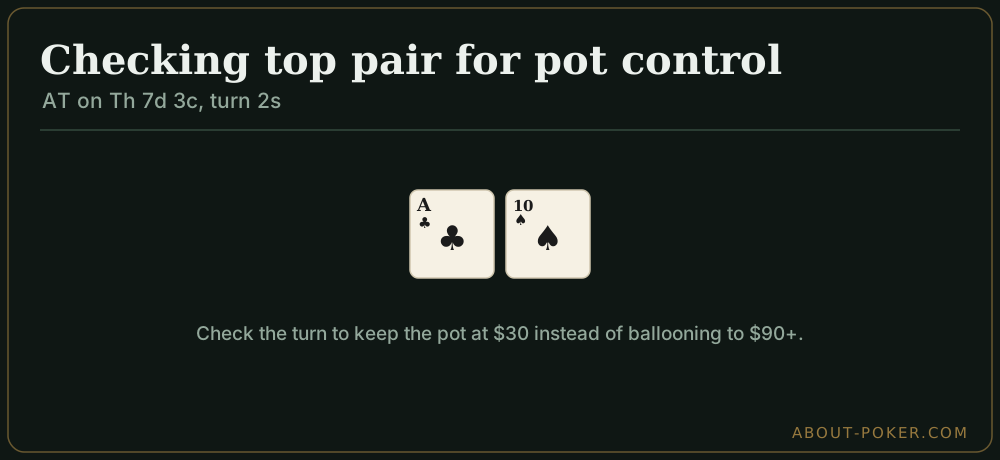
You hold Ac Ts on a board of Th 7d 3c in a single-raised pot of $30, with $150 behind. You have top pair with a good-not-great kicker.
You bet the flop and get called. The turn is the 2s. Here is the pot-control decision. If you bet again and your opponent calls or raises, you are building a pot where most of the hands that continue — sets, two pair, better tens like KT and QT — beat you, while the worse hands (draws, weak tens) may fold. Betting builds a big pot you often don’t want.
So you check the turn. This keeps the pot at $30 instead of ballooning to $90 or more. You still get to showdown cheaply, you deny your opponent the chance to check-raise you off a hand that is sometimes best, and you let them bluff their missed draws on the river into a pot you can call profitably. If the river is a blank, you can call one reasonable bet and win against all the busted draws and worse pairs, having risked far less than a two-street value line would have cost when you were behind.
Contrast that with a genuine value hand like a set of tens: there you want the pot huge and should keep betting. That is the flip side, covered in value betting for beginners — pot control and value betting are two answers to the same question of how big you want the pot to be.
When not to control the pot
Pot control is a tool for medium hands, not a default. Do not slow down when:
- You have a strong hand that wants stacks in — bet and raise for value instead.
- You are drawing and need to build a pot for your implied odds — though usually you keep it small until you hit.
- The opponent will bluff too much if you check — sometimes betting denies them the chance to bet worse hands, but this is a read-dependent exception.
Used correctly, pot control is quiet and unglamorous. It rarely wins a huge pot, but it stops your marginal hands from losing one — and over a long session, that is where a lot of your win rate lives.
Frequently asked
What is pot control in poker?
Pot control is deliberately keeping the pot small when you hold a medium-strength hand. By checking instead of betting, you avoid building a large pot in a spot where you are unsure whether you are ahead, limiting how much you can lose.
Why would you want a small pot?
With a hand that is good but not great, a big pot is dangerous: you win a little when ahead but lose a lot when behind. Keeping the pot small caps your losses in the marginal spots and lets you reach a cheap showdown.
How do you control the pot?
The simplest tool is checking. Checking a street instead of betting keeps the pot from growing. You can also bet smaller or decline to raise. The goal is to slow the pot's growth on streets where you don't want to commit chips.
Which hands are best for pot control?
Medium-strength hands like second pair, top pair with a weak kicker, or an underpair. They can win at showdown but rarely improve and don't want to face heavy action, so keeping the pot small suits them.