Preflop All-In Equity Rules
The simple preflop all-in equity rules: memorize the four matchup buckets, from 80/20 to coin flips, and instantly know your odds before the cards run out.
On this page · 6 sections
Most all-in confrontations before the flop fall into a handful of recognizable shapes, and once you learn the equity attached to each shape you can price any spot in seconds without a calculator. You do not need to memorize hundreds of matchups. You need four rules and a couple of adjustments. This is the fastest, most reliable piece of poker math you can carry to the table.
The four core buckets
Almost every preflop all-in collapses into one of these categories:
- Pair versus two undercards, like QQ against J9: about 80/20 for the pair.
- Pair versus one overcard and one undercard, like 88 against A5: about 70/30 for the pair.
- Pair versus two overcards, like 88 against AK: about 52/48 for the pair. This is the coin flip.
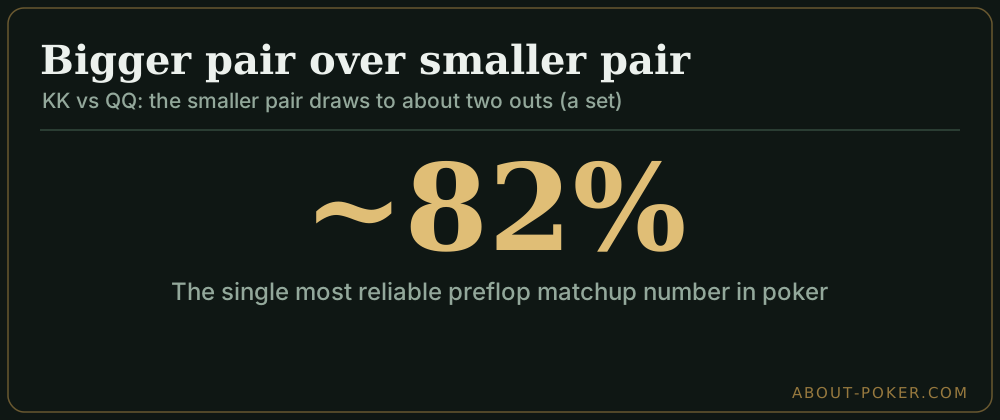
- Higher pair versus lower pair, like KK against QQ: about 82/18 for the bigger pair.
Add one more for non-pair spots: a dominated hand, where you share a card but have a worse kicker, like AJ against AK, is roughly 70/30 against you. If the dominated hand is also suited it improves a couple of points, but it remains a big underdog.
That is the entire framework. Four pair buckets and the domination rule cover the overwhelming majority of shoves you will ever see. For the exhaustive list with exact figures, see preflop all-in odds.
Why the numbers land where they do
A smaller pair against a bigger pair is drawing essentially to a set, which is about two outs, so it wins only around 18% of the time. A pair against two overcards is a near-coin-flip because the pair is already made while the overcards must pair up, and each overcard has roughly six outs across the runout, which nearly balances the pair’s head start at about 52/48. Two undercards against a pair have far fewer clean outs, dropping them toward 20%. And a dominated ace, sharing the ace but with a smaller kicker, is stuck needing its kicker to pair or a lucky two-pair or straight, landing near 30%.
These are not arbitrary; they flow from counting outs and remaining cards. But you do not have to derive them each time. You just have to slot the hand into its bucket.
A worked example
You open with As Ks and the big blind shoves. You call. They turn over Qh Qd. Which bucket is this? Your ace-king is two overcards against a pair, so it is the coin flip, about 48% for you and 52% for the queens. Being suited nudges you up a point or so, to roughly 46 to 47% offsuit territory becoming closer to 48 to 49% suited. Either way, you are a slight underdog, not the favorite many players assume when they hold two big cards.
Now change it: they show Jc Tc instead. Now your ace-king dominates neither card, and you are two overcards against two undercards, making you about a 60/40 favorite. Same holding, very different spot, and you can tell them apart instantly by asking whether the opponent’s cards are over, under, or a pair relative to yours.
How the rules shift with more players
Every rule above assumes a heads-up all-in. Add a third player and equities compress, because now more hands can improve. Aces against two random hands drops from about 85% heads-up to roughly 73% in a three-way pot. A coin flip in a three-way pot is no longer a clean 52%; the extra opponent siphons equity from everyone. The practical rule is that big favorites get less dominant and underdogs gain a little as the pot goes multiway. When in doubt, shade your favorite down and your underdog up as players enter.
This is why isolating a single opponent with your premium hands matters. You want your 82% aces heads-up, not your 73% aces three ways.
Common mistakes with preflop equity
The first mistake is overrating ace-king. It is a strong hand, but all-in against a pair it is a coin flip at best, not the crushing favorite people imagine. Getting it in is fine, but do not expect to win most of the time.
The second mistake is underrating small pairs preflop. A tiny pair like 5-5 is a coin flip against two overcards and an 80% favorite against two undercards, which makes it a perfectly reasonable shove or call in the right spot despite feeling weak.
The third mistake is forgetting to adjust for multiway pots, treating a three-way all-in like a heads-up one. Always recompress toward the middle when extra players are involved. To pair these matchup rules with a broader reference, keep a poker equity chart handy, and remember that equity only becomes profit when you understand expected value behind the call.
Quick reference to carry
Bigger pair over smaller pair: 82/18. Pair over two undercards: 80/20. Pair over one over and one under: 70/30. Pair over two overcards: 52/48, the coin flip. Dominated hand: about 70/30 against. Suited adds two to four points. Every extra player in the pot pulls big favorites down toward the field. Learn these six lines and you will never again be surprised by what the equity calculator shows after the hands go on their backs.
Frequently asked
What are the basic preflop all-in equity rules?
There are four buckets to memorize. A pair versus two undercards is about 80/20. A pair versus one over and one under is about 70/30. A pair versus two overcards is a coin flip near 52/48. A dominated hand, sharing a card with a higher kicker, is roughly 70/30 against. Knowing these lets you estimate almost any all-in instantly.
How much of a favorite is a bigger pair over a smaller pair?
A higher pocket pair is about an 80% to 82% favorite over a lower pair, because the smaller pair is drawing to two outs to make a set. For example, kings are roughly 82% against queens. This holds across almost all pair-over-pair matchups, making it one of the most reliable numbers in poker.
Does suitedness change preflop equity much?
Only slightly. Being suited adds roughly 2 to 4 percentage points of equity because of the extra flush potential. Ace-king suited versus a pair is close to a true 50/50, while offsuit it is a point or two worse. Suitedness matters more for playability and implied odds than for raw all-in equity.