Delayed Aggression Lines
Delayed aggression means checking one street then attacking the next. Learn the delayed c-bet, probe, and float-lead lines with a worked turn example.
On this page · 5 sections
Not every strong line starts with a bet. Some of the most profitable postflop plays begin with a check — a deliberate pause that sets up a bigger attack one street later. These are delayed aggression lines: you check the flop, then bet the turn; or you call the flop, then lead the turn when the initial aggressor slows down. Done well, delayed aggression lets you take free cards, protect the hands you check, and pounce exactly when the runout or your opponent’s passivity opens the door. Done poorly, it just gives up equity for no reason. The difference is knowing why you are checking in the first place.
Why delay aggression at all
Betting every street with your strong hands is fine when you keep both range and nut advantage — but you cannot bet everything, or your checks become a glaring signal of weakness. Delayed aggression solves several problems at once:
- It protects your checking range. If you only check weak hands, thinking opponents attack every time you check. Mixing in strong hands that check then bet later keeps you unexploitable.
- It captures missed value and fold equity. Sometimes the flop is a bad bet — the texture favors your opponent, or you have a hand that plays better by keeping their bluffs in. The turn often flips those conditions.
- It lets you realize equity cheaply. Checking behind in position takes a free card with a marginal hand, then bets when you improve.
The three main delayed lines
The delayed c-bet. As the preflop raiser, you check the flop, then bet the turn. This is the workhorse delayed line, covered fully in our delayed c-bet guide. It shines when the flop favored the caller or when checking induces action, and the turn either improves your range or the opponent’s flop check screams weakness.
The probe bet. As the preflop caller out of position, you check-call or check the flop, then lead into the raiser on the turn when they check back the flop. That flop check-back caps their range — they rarely have the nuts — so you can attack a wide swath of turn cards. See our probe betting guide for the full framework.
The float-then-lead. You call a flop bet in position — floating — with the plan of taking the pot away later. When your opponent checks the turn, you bet, applying the pressure you set up by calling one street earlier.
A worked example
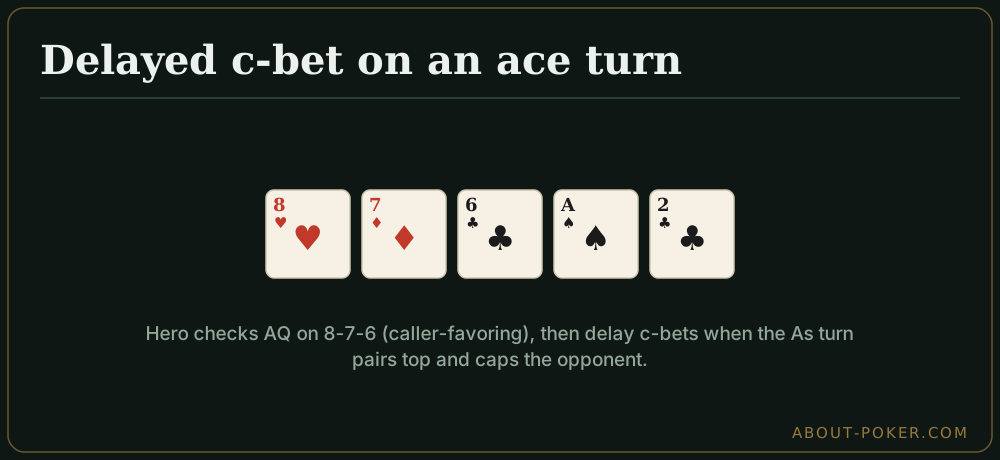
You raise A-Q offsuit from the button and the big blind calls. Flop comes 8-7-6 two-tone — a connected, low board that smashes the big blind’s calling range and misses your two overcards. C-betting here is a poor idea: the texture favors your opponent and you have no made hand. So you check behind, taking a free card and protecting yourself against a check-raise.
Turn is the Ace of a different suit, and the big blind checks again. The board is now 8-7-6-A. That ace is an ideal delayed-c-bet card: it pairs your hand for genuine top-pair value, and it is an overcard that your opponent’s range of small pairs and draws largely missed. Their turn check signals they did not improve. You bet around two-thirds pot. You are now value betting a top pair you would not have made on the flop, and you also fold out the missed draws and middle pairs that would have called a weaker line. Had you fired the flop, you would have been bluffing into a range that connected — instead, the delay turned a check into a value bet.
Reading the trigger
Delayed aggression is only correct when something changes to justify the attack. The two triggers to watch for:
- A range-shifting turn card. An overcard, a card that pairs you, or a scare card that favors your range more than your opponent’s. If the turn is a total blank that only helped the hands that would have called the flop, delaying gains you little.
- Signaled weakness. A flop check-back or a passive check on the turn caps your opponent’s range. Their strongest hands would usually have bet, so you can attack the capped remainder.
If neither trigger is present, checking again and giving up is often the disciplined move — do not manufacture aggression just because you delayed it.
Common mistakes and a checklist
- Delaying with no plan. Checking the flop only makes sense if you know which turn cards you will attack and which you will give up on.
- Probing every time the raiser checks. Some flop check-backs still leave the raiser with strong hands on certain textures; probe selectively.
- Ignoring your own range. If you delay, make sure you sometimes delay with value too, or observant opponents will exploit your capped delayed bets.
- Over-floating out of position, where you cannot control the pot and your delayed lead is easily raised.
Before you take a delayed line, ask: Why am I checking this street rather than betting? Which turn or river cards will I attack, and which will I abandon? Has my opponent’s line capped their range? And do I have enough value hands in this delayed line to stay balanced? Answer those and delayed aggression becomes a scalpel — checking with purpose, then striking exactly when the spot is ripe, instead of firing on autopilot.
Frequently asked
What is a delayed aggression line in poker?
A delayed aggression line is any line where you check one street and then attack on a later one — such as checking the flop and betting the turn. It lets you protect your checking range, take free cards, and attack when the runout or your opponent's weakness invites it.
When should you use a delayed c-bet?
Use a delayed c-bet when the flop favored your opponent or was a poor c-bet spot, then the turn improves your range or your opponent's flop check signals weakness. It captures value and fold equity you passed up on the flop.
Is delayed aggression better than betting every street?
Neither is universally better. Betting every street works when you keep range and nut advantage, but delayed aggression exploits capped, passive opponents and protects your checking range so you are not exploitable when you decline to c-bet.