Donk Bet Sizing
How big should a donk bet be? Learn why leads out of position use small, purposeful sizes, the boards that justify them, and a worked donk-betting example.
On this page · 6 sections
A donk bet — leading into the player who raised before the flop — is one of the most misunderstood moves in poker, and its sizing is where most of the misunderstanding lives. Bet too big and you bloat a pot you have to navigate out of position; bet the wrong boards and you’re just donating. Done right, the donk lead is a small, surgical size aimed at boards that favor your range over the raiser’s.
Why Most Donk Leads Are Small
The default profitable donk size is small: roughly one-quarter to one-third of the pot. The reason is structural. When you donk, you’re out of position against the preflop aggressor, and your range as the caller is capped — you’d usually have three-bet your very strongest hands. Firing a big bet with a capped, out-of-position range invites raises and builds a pot you can’t comfortably control.
A small lead, by contrast, does exactly what you need: it denies the raiser’s overcards cheap equity, takes a thin slice of value from worse hands, and keeps your investment low if you get raised. It’s the sizing that matches the modest strength of a typical leading range. For the full case on when to lead at all, see donk betting in poker.
The Boards That Justify a Donk
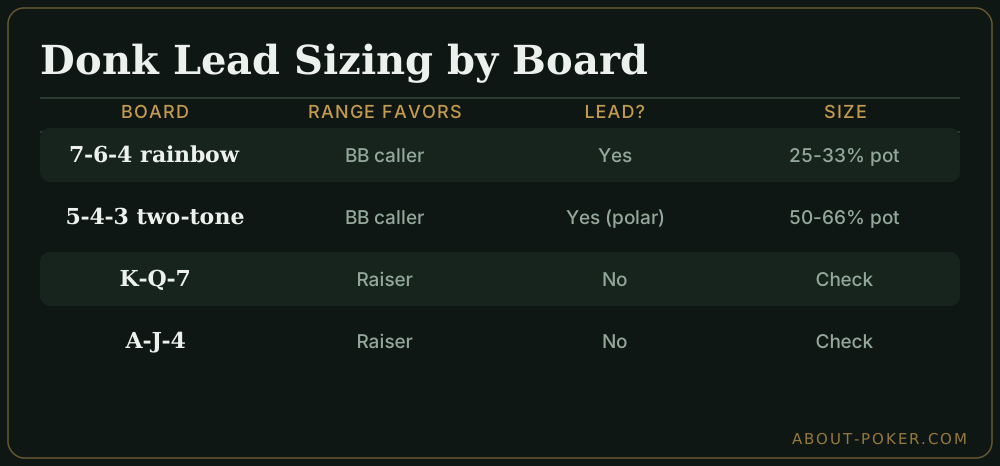
Sizing follows board selection. Donk leads work best on flops that connect with your calling range far more than the raiser’s opening range. The classic example is a low, connected board after you defended the big blind — something like 7-6-5 or 5-4-3. You have all the low straights, two pairs, and sets in your range; the button’s raising range is full of big cards that missed. Here your range advantage is real, and a lead makes sense. On a K-Q-x board, by contrast, the raiser crushes you and donking is a mistake — you should check to let them c-bet.
A Worked Example
You call a button raise from the big blind with 6-5 suited. The pot is $20. The flop comes 7-6-4 rainbow, giving you second pair plus a gutshot and, crucially, a board that smashes your defending range. You lead for $6 — about 30% pot.
This small size accomplishes several things at once. It gets value from the button’s overcards and worse pairs that will call one street, it denies equity to two overcards that would have realized their outs for free on a check, and it costs you almost nothing if the button raises, in which case you can fold cheaply or continue with your equity. If instead you’d blasted $15 into $20, you’d have turned a modest edge into a bloated, awkward pot with a hand that’s good but far from the nuts.
When to Size Up
There is a place for a larger, polarized donk, but it’s narrow. On boards that are extremely skewed toward your range — very low, coordinated flops where you hold a disproportionate share of the strong hands — a bigger lead can push a protected, value-heavy range and charge the raiser’s floats. The key is that your range must genuinely be stronger than theirs on that texture. If it isn’t, a big lead is just spewing chips out of position.
You’ll also see larger leads used with a deliberately built polarized range: nutted hands that want to grow the pot plus a measured number of bluffs. This is closer to the probe betting logic used on later streets after the raiser checks back, where you attack the weakness they showed by declining to bet.
How Opponents Should Respond — And Why It Matters
Understanding how a good player reacts to your lead tells you which size to use. Facing a small donk, thinking opponents will often float wide, raise their strong hands, and rarely fold much — the small size doesn’t fold out enough to be a pure bluff. That’s exactly why the small lead should be value-weighted and equity-denying, not a bluff. If you want the full defensive picture, read facing a donk bet and notice how a small lead invites more continuation than a large one.
A Donk-Sizing Checklist
- Default lead size: 25–33% of the pot.
- Only lead boards that favor your range — low, connected flops after defending the blind.
- Never donk boards that smash the raiser (big-card flops); check instead.
- Keep it value-and-protection weighted at the small size; don’t turn small leads into pure bluffs.
- Size up only on textures where your range is clearly nutted and protected.
Get the board selection right and the sizing almost picks itself: small and purposeful on the flops that are yours, and a check on everything else.
Frequently asked
How big should a donk bet be?
Most profitable donk leads are small — around one-quarter to one-third of the pot. The lead is meant to deny equity cheaply and take initiative on boards that favor the caller, not to build a huge pot out of position.
Why are donk bets usually small rather than large?
You're betting out of position into the preflop aggressor with a range that's rarely nutted. A small size gets thin value, denies equity, and keeps your risk low, whereas a big lead builds a bloated pot you have to play from a positional disadvantage.
When is a large donk bet correct?
A larger, polarized donk lead makes sense on boards that hit your range far harder than the raiser's — for example a low, connected flop after you called from the big blind — where you can push a strong, protected range or a specific nutted hand.