Delayed Continuation Betting
A delayed continuation bet checks the flop and bets the turn instead. Learn why it works, which flops to check back, sizing, and a full worked hand.
On this page · 6 sections
A delayed continuation bet is what happens when the preflop raiser checks the flop back in position and then bets the turn instead. It looks passive for one street and aggressive the next, and that timing is the whole point. Modern postflop play doesn’t c-bet every flop — some textures are just bad for the raiser’s range — so the delayed c-bet gives those checked-back hands a second, better street to make money.
Why the delayed line exists
Old-school advice was to c-bet nearly every flop as the preflop aggressor. That leaks money on boards that hit the caller’s range harder than yours — low, connected, or paired flops where the big blind’s calling range is loaded. On those boards, checking back is correct with a big chunk of your hands. But checking doesn’t mean surrendering. The turn often changes everything: an overcard arrives, a draw completes, or the opponent simply gives up. The delayed c-bet monetizes that. For the fundamentals of firing the first bullet, see continuation bet strategy.
Which flops to check back
Check the flop back — setting up a delayed c-bet — when:
- The board is low and connected (something like 7-6-4) and favors the caller.
- You have a marginal made hand that wants pot control, like a weak top pair or middle pair.
- You have a weak draw or backdoor equity that prefers to see a cheap card.
- Your range is capped there and betting would just fold out worse and get called by better.
Betting flops you should check back turns a protected, flexible range into an easily exploited one. Checking back also disguises your strong hands, which is the pot-control benefit covered in pot control in poker.
A worked hand
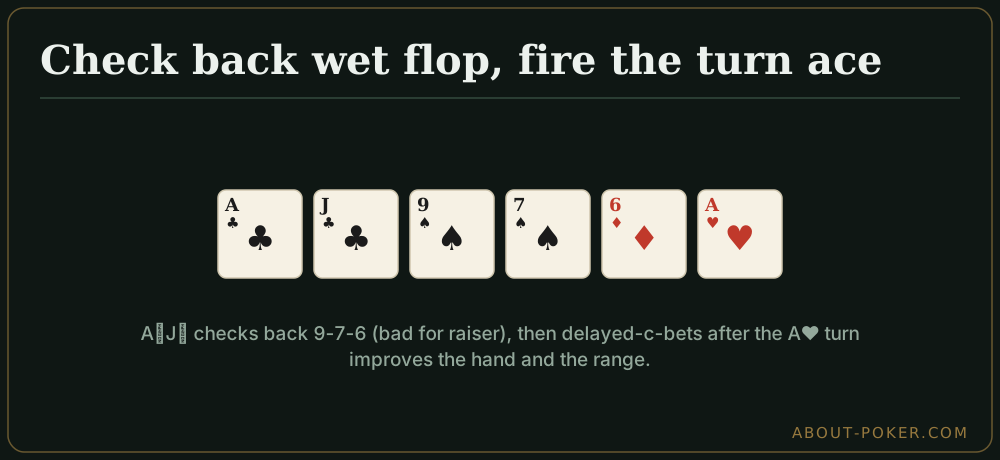
You open A♣J♣ from the button, the big blind calls. Flop is 9♠7♠6♦ — a wet, low, connected board that smashes the big blind’s range and misses your overcards. A standard c-bet here is bad: worse hands fold, better hands and draws continue. So you check back, keeping A-high with a backdoor flush and gutshot equity, and taking a free card.
Turn is the A♥. Now you’ve made top pair with a good kicker on a card that’s better for you than for the big blind, who would often have raised strong aces preflop. You fire the delayed c-bet at around 66% pot. This bets for value against worse aces, second pairs, and pair-plus-draw combos, while also charging the flush and straight draws that want to continue. The flop check disguised your hand and the turn card justified the bet — that’s the delayed c-bet working exactly as designed.
Sizing and the turn card
Because your turn range is more defined than a raw flop c-betting range, you can size up. Medium to large — roughly 50 to 75% pot — is standard. Pick the turn cards to fire carefully:
- Overcards to the flop that pair your range (aces, kings) are prime.
- Cards that complete draws you’d credibly hold let you barrel as a bluff too.
- Blanks that changed nothing are weaker spots — only bet if the opponent is folding too much.
Against a player who reflexively check-folds turns after the flop checks through, the delayed c-bet prints money even on mediocre cards. Against a station, tighten up to value.
Common mistakes
- Checking back only your weak hands. If you always bet strong flops and only delay with air, opponents read your turn bets as bluffs. Balance by checking some strong hands too.
- Firing the turn on a card that helped them. A delayed c-bet into a completed low straight or an obvious draw card is just a second mistake after the free card.
- Using tiny sizing. Your turn range is stronger than a flop range; a small bet under-extracts and under-protects.
- Delaying on dry boards you should have c-bet. On an A-K-4 rainbow that favors you, bet the flop — don’t invent a reason to check.
Delayed c-bet checklist
- Did the flop favor my opponent’s range enough to check back?
- Does my checked-back hand want a free card or pot control?
- Did the turn improve my hand or scare my opponent?
- Am I betting a defined range that justifies a larger size?
- Does this opponent over-fold turns, or will I get called down?
Get those right and the delayed continuation bet becomes one of the highest-EV lines available to an in-position raiser — quietly profitable because most opponents assume a checked flop means you’re done. A related single-street breakdown lives in delayed c-bet.
Frequently asked
What is a delayed continuation bet?
A delayed c-bet is when the preflop raiser checks back the flop and then bets the turn after the flop checks through. It's a way to take a betting line with hands that don't want to fire the flop but still have value or bluff potential on later streets.
Why check the flop instead of c-betting?
You check back to protect a checking range, to pot-control marginal made hands, and to realize equity cheaply with weak hands and draws. It also lets you bet the turn when the flop connects poorly with your range but you still want to apply pressure later.
When should you fire the delayed c-bet on the turn?
Bet the turn when it improves your hand, when it's a scare card for your opponent, or when their flop check signals weakness. The delayed line works best against players who check-fold turns and who read your flop check as giving up.
What sizing should a delayed c-bet use?
Turn delayed c-bets usually go medium to large — around 50 to 75% pot — because your range is fairly strong by then and the pot is still small. You're betting a more defined range than a standard flop c-bet, so you can size up.