Button Opening Range (RFI) Chart
The button is your widest opening seat. See a solver-based button RFI chart (~45% of hands), why it opens so wide, and how to size your raise.
On this page · 5 sections
The button is the single best seat in poker, and its opening range is the widest you will ever play. When the action folds to you on the button, only the two blinds remain, and both must act out of position for the rest of the hand. That combination of positional advantage and a real chance to steal the blinds uncontested lets you open close to half of all starting hands profitably.
Why the button opens so wide
Two factors drive the button’s enormous range.
First, position. If either blind calls, you act last on every postflop street. Position is worth a great deal of expected value: you see your opponent’s action before deciding, you control the pot size, and you realize more of your hand’s equity than an out-of-position player realizes of theirs.
Second, fold equity. The blinds have posted forced bets and are often holding random, weak hands. A large share of the time, both fold and you collect the blinds without a flop. That immediate profit means even trash-tier hands like K3o or 84s clear the bar for a profitable open.
Because both effects stack, the button opens far wider than any other seat. For the full seat-by-seat picture, see preflop opening ranges.
The button RFI chart (6-max, 100bb)
A solid, solver-approximate button opening range is around 45 to 50 percent of hands:
- All pocket pairs, 22 through AA.
- All suited aces, A2s through AKs, plus most offsuit aces (A2o and up).
- All suited kings (K2s+) and offsuit kings down to roughly K5o.
- All suited queens and offsuit queens down to about Q6o; suited jacks and Q9o+.
- Suited connectors and one-gappers down to 54s and 64s; most suited broadways.
- Offsuit connectors like JTo, T9o, 98o at the top end.
The range excludes only the true bottom: offsuit hands with two low, disconnected cards such as 72o, 83o, or 94o.
A worked example
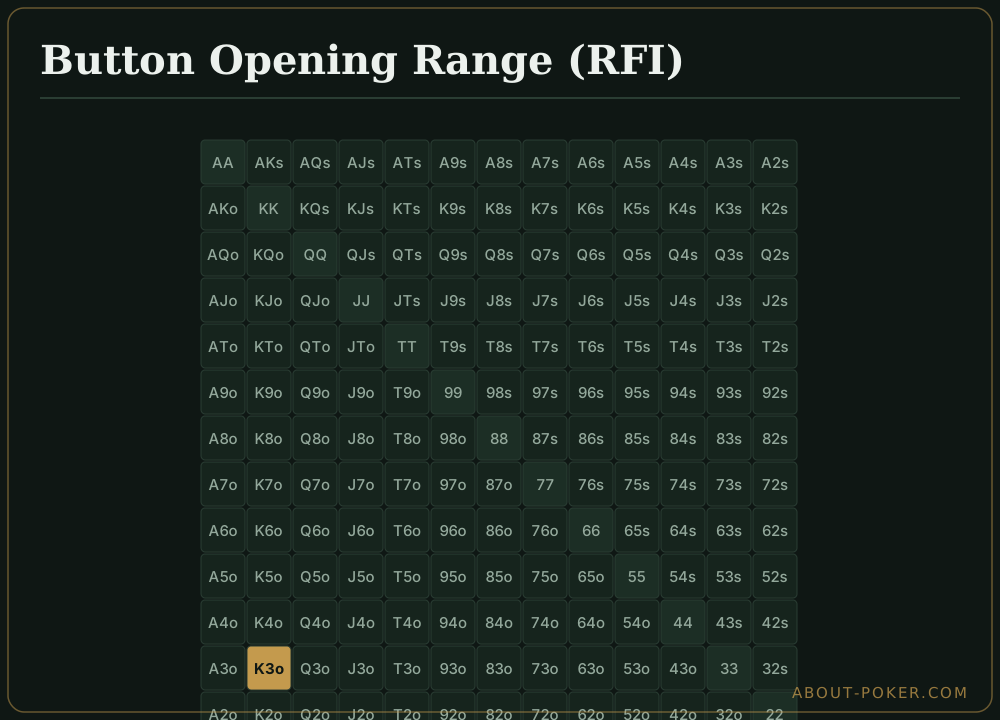
Say it folds to you on the button with K3o and 100bb stacks. That hand is a fold from every earlier seat, but on the button it’s a clear open.
Here’s the logic. If you open to 2.2bb and both blinds fold — which happens a large fraction of the time — you win 1.5bb immediately without seeing a flop. When you do get called, you have position and a king that can flop top pair. You don’t need K3o to be a strong hand; you need it to profit slightly, and the blind-stealing frequency plus positional edge push it over the line. The break-even math on a steal is friendly: risking 2.2bb to win 1.5bb only needs the blinds to fold about 59 percent of the time, and against two players that threshold is routinely met.
Sizing and adjustments
Use a small open, typically 2 to 2.5bb online. Because your range is so wide and you have position, a cheaper open keeps risk low while still folding out the blinds’ weakest holdings.
Adjust for the table:
- Aggressive blinds who 3-bet a lot — tighten slightly by dropping the weakest offsuit hands, since you’ll get blown off them.
- Passive, calling-station blinds — you can keep the range wide but lean toward hands that flop well and can value bet.
- Antes present (most tournaments) — widen further; the extra dead money rewards stealing.
For how these ranges shift by seat and how the button compares to earlier positions, study poker ranges by position, and use preflop RFI ranges to see the full first-in framework.
How the button range fits your overall game
The button open is the highest-frequency, highest-EV opening decision you make, so it deserves the most attention when you build your ranges. A common beginner mistake is opening the same “solid” 20 percent range from every seat — that leaves enormous profit on the table on the button, where you should roughly double your opening frequency.
The practical path to mastering the button range is to start with the pairs and suited hands (which are the easiest to remember and play), then extend into the offsuit broadways, and finally add the marginal steals like K3o and Q6o once you’re comfortable playing them postflop out of a wide range. If you open too wide before you can navigate those spots, the button’s theoretical edge turns into real losses. Build the range in layers, and the button becomes the seat that carries your win rate.
Frequently asked
How wide should you open on the button?
A standard 6-max solver baseline opens roughly 45 to 50 percent of hands on the button. That includes all pairs, most suited hands, most broadway offsuit hands, and a chunk of suited connectors and small suited aces. It's by far your widest opening range.
Why is the button opening range so wide?
Only two players remain behind you, and both are in the blinds where they must play out of position for the rest of the hand. You'll have position postflop against whoever calls, and there's a real chance everyone folds and you win the blinds uncontested.
What size should I use for a button open?
2 to 2.5 big blinds is standard online. Many solvers favor a smaller size like 2 or 2.2bb on the button because your wide range benefits from a cheap open, and position lets you realize equity well after the flop.
Does the button range change if there's an ante?
Yes. Antes add dead money to the pot, which rewards stealing, so button ranges widen further in ante formats like most tournaments. You can profitably open close to 50 to 55 percent when antes are in play.