Big Blind 3-Bet Range Chart
The big blind can call or 3-bet since it closes the action. See a solver-based big blind 3-bet chart, the value/bluff split, and when to just flat.
On this page · 6 sections
The big blind is the one blind seat that can comfortably call — so its 3-bet range works alongside a wide flatting range, not instead of one. Because the big blind closes the preflop action, a call ends the betting and no one can squeeze you from behind. That freedom means you don’t have to 3-bet-or-fold the way the small blind does. Instead you build a 3-betting range on top of a broad calling range.
Call and 3-bet, not just one
The small blind is stuck 3-betting or folding because the big blind lurks behind it. The big blind has no such problem: you act last preflop, so a flat simply takes you to the flop. This is why the big blind can defend a huge portion of hands by calling — you’re getting a discounted price thanks to your posted blind. That flatting framework is covered in defending the blinds.
On top of that calling range, you layer a 3-betting range for the hands that prefer aggression: premiums that want to build a pot, and select bluffs that benefit from folding out the opener’s marginal continues.
The big blind 3-bet chart (vs a button open, 100bb)
Against a wide button open, a solid big blind 3-bet range is roughly 9 to 13 percent:
Value:
- QQ+ and AK, always.
- JJ, TT, AQs, AJs, KQs as strong 3-bets.
- 99 and ATs mixed toward 3-betting versus a loose opener.
Bluffs (fold to a 4-bet):
- Suited aces A5s, A4s, A3s — blockers plus nut potential.
- Suited kings like K9s, K7s.
- Suited gappers/connectors such as 86s, 75s that play poorly as flats but fine as bluffs.
Everything else playable just calls. Weak offsuit hands like J8o or Q9o defend by flatting, not by bluff-3-betting.
The range depends on who opened
This is the key adjustment. Match your 3-bet width to the opener’s seat:
- Vs a button or cutoff open — their range is wide and weak, so 3-bet wider and include more bluffs. They fold often, and you have position to punish them.
- Vs an under-the-gun open — their range is strong, so 3-bet tight and mostly for value. Bluffing into a range full of premiums just gets you 4-bet or called by better hands.
The full breakdown by opener position is in 3-bet range by position.
A worked example
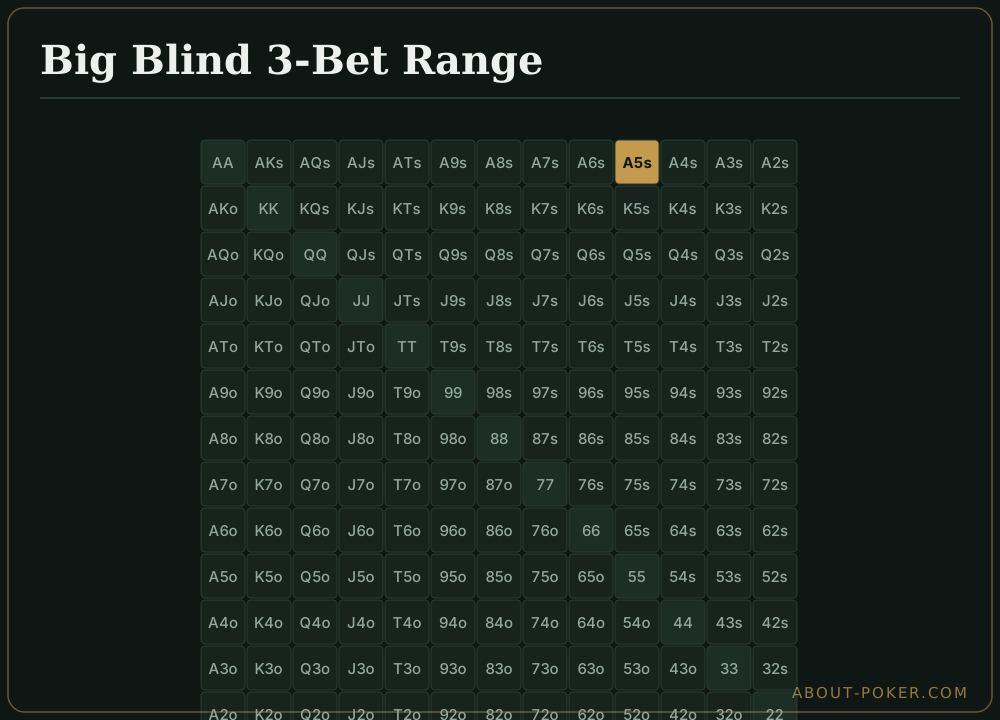
The button opens to 2.5bb, the small blind folds, and you’re in the big blind with A5s, 100bb deep. Call or 3-bet?
3-bet, to about 10bb. This is a textbook big blind bluff-3-bet:
- The ace blocker removes AA, AK, and AQ combos from the button’s premium continues, so the fold happens more often.
- When called, A5s flops flush draws, wheel draws, and pairs, and you have position postflop as the big blind against the button… except here you’re actually out of position, which is why size matters — a bigger 3-bet compensates.
Compare A5s to A5o in the same spot: the offsuit version usually just calls, because it lacks the flush equity that makes the suited hand a strong bluff when the 3-bet gets called. The suitedness is what promotes the hand from a flat to a 3-bet bluff.
Adjustments
- Vs a player who folds to 3-bets too much — add more bluffs; you’re printing.
- Vs a maniac 4-bettor — tighten bluffs, keep value, and let your flatting range do the heavy lifting.
- Multiway (a caller already in) — cut bluffs sharply and 3-bet mostly for value; the pot is now a squeeze spot governed by different math than the base 3-bet range.
Balancing your 3-bet range with your calling range
The big blind’s superpower is having both tools available, so the real skill is deciding which hands go in which bucket. A useful way to think about it: 3-bet the hands that either want to fold out the opener’s marginal holdings or want to build a big pot for value, and flat the hands that play well multiway or realize their equity fine by seeing a cheap flop.
That framing explains why A5s prefers a 3-bet while A5o prefers a call, and why a hand like 98s is a comfortable flat rather than a bluff — it flops well, doesn’t block much, and loses value by folding out the opener. It also explains why you 3-bet a strong hand like AQs rather than trapping with a flat: you want to charge the opener and avoid a cheap multiway flop that dilutes your equity.
Get the split right and your big blind defense becomes coherent instead of ad hoc. You’re no longer guessing each hand; you’re sorting it into a plan. That structure, layered on the wide price-driven flatting range from defending the blinds, is what turns the big blind from a chip-bleeding seat into a manageable one.
Frequently asked
Should the big blind 3-bet or call?
Both. The big blind closes the action, so unlike the small blind you can profitably flat a wide range for a good price. You mix in a 3-betting range on top of that flatting range, built from value hands plus blocker-heavy bluffs.
How wide should the big blind 3-bet be?
It depends on the opener's seat. Against a late-position open you 3-bet wider, roughly 9 to 13 percent, because their range is weak. Against an early-position open you 3-bet tighter and mostly for value, since they're representing strength.
What hands does the big blind 3-bet as bluffs?
Hands that block strong continues and play acceptably when called: suited aces like A5s and A4s, suited kings, and some suited connectors and gappers. Because you have a wide flatting range too, weak offsuit hands just call or fold rather than bluff-3-bet.
Why can the big blind flat wider than the small blind?
The big blind closes the preflop action, so a call ends the betting and you can't be squeezed by a player behind you. Combined with the discounted price from your posted blind, that lets you defend a large flatting range instead of being forced into 3-bet-or-fold.