Big Blind Opening Range (RFI) Chart
The big blind almost never opens because everyone has folded when it's your turn. Learn why there's no true BB RFI range and what to do instead.
On this page · 6 sections
There is no true big blind opening range — and understanding why is the whole lesson. The big blind is the last seat to act before the flop. By the time the action reaches you, one of two things has already happened: someone raised, or everyone folded. Neither leaves you an unopened pot to open into. So the question “how do I open from the big blind?” has a surprising answer: you almost never do.
Why the big blind can’t RFI
RFI means Raise First In — opening when the pot is unopened. For every other seat, that situation exists: the action can fold to you with no chips in yet.
The big blind is different. You post the big blind as a forced bet, then everyone else acts before you. If they all fold, you win the pot automatically and the hand is over — you don’t get a turn. If someone raises, you’re no longer first in; you’re facing a raise and the decision is defense, not opening.
So the seat that would use an “opening range” simply never faces an unopened pot. That’s why you won’t find a big blind RFI chart alongside the others in preflop opening ranges.
The one exception: facing a limp
There is exactly one spot where the big blind acts with no raise in front: when the small blind limps (just completes the blind rather than raising). Now it’s heads up, you have position, and you can either check your option or raise.
This is the closest the big blind comes to an opening decision, and here you should attack. Raise a wide, strong range to punish the limp — all pairs, suited aces, broadways, and good suited connectors — and check back the marginal hands to see a free flop. A typical raise size over a limp is 3.5 to 4bb, since there’s already 2bb in the middle. For the full heads-up dynamic, see blind vs blind play.
What the big blind actually does: defend
The big blind’s real preflop job is defense — reacting to opens from other seats by calling or 3-betting. And here the big blind is unusually active, because you defend very wide.
The reason is price. You already have 1bb invested and you’re getting a discount to continue. Against a small button open of 2.2bb, you only need to put in 1.2bb more to see a flop into a pot that already holds 3.7bb. That excellent price means you defend a huge portion of hands. This is covered in depth in defending the blinds.
A worked example
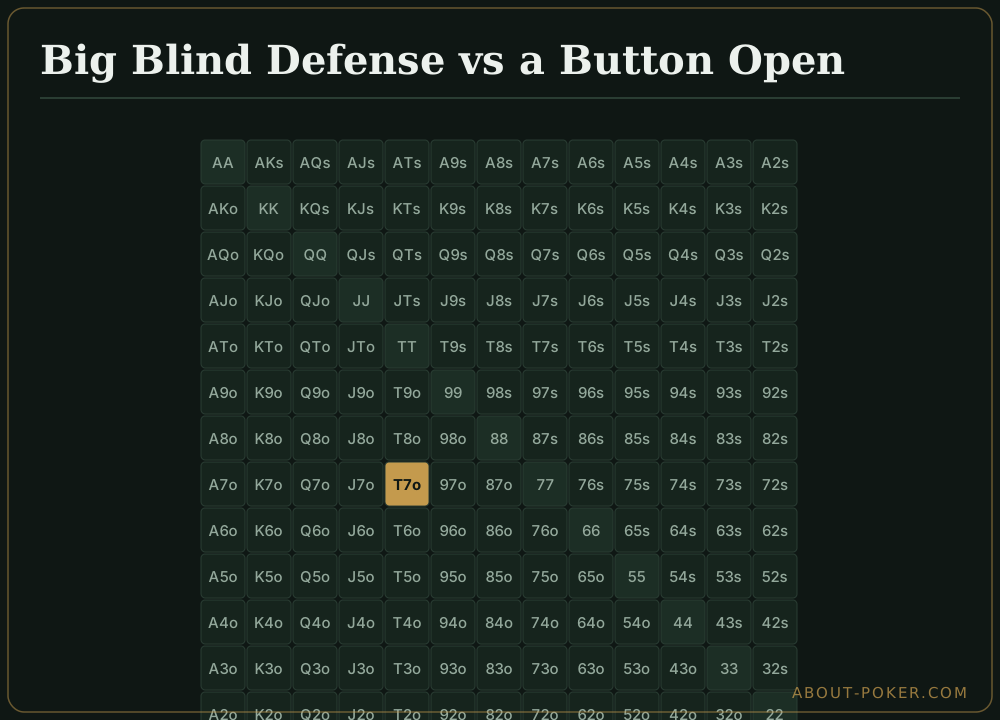
The button opens to 2.5bb and folds to you in the big blind with T7o, 100bb deep. There’s 4bb in the pot and it costs you 1.5bb to call.
You’re getting 4-to-1.5, or about 2.7-to-1 immediate odds, meaning you only need to win roughly 27 percent of the time to break even on the call. T7o against a wide button opening range easily clears that — it can flop pairs, straights, and draws, and you’re closing the action so you never face a further raise on this street. This is a routine defend. If you tried to “open” T7o, you’d have nothing to open into; instead you correctly defend it against the button’s steal.
Key takeaways for the big blind
- No RFI range — the big blind never faces an unopened pot.
- Defend wide — the price you’re getting justifies calling or 3-betting a large share of hands.
- Punish limps — when the small blind limps, raise a strong, wide range with your positional advantage.
Master defense and blind-vs-blind play, and you’ve covered everything the big blind actually needs preflop.
Why the “no opening range” idea trips people up
Beginners often search for a big blind opening chart because every other seat has one, and the missing chart feels like a gap in their knowledge. It isn’t. The absence is structural: the big blind is defined by acting last preflop, and a seat that acts last can never be first in.
The mental shift that helps is to stop thinking of the big blind as an opening seat at all and start thinking of it as a defending seat. Your preflop strategy from the big blind is entirely reactive — you respond to what the opener did, choosing between fold, call, and 3-bet based on their position and sizing. The wider their opening seat, the wider you defend and the more you 3-bet. Against a tight early-position raiser, you defend far less and 3-bet mostly for value.
That reactive framework, combined with the limp-punishing raise covered above, is the complete preflop toolkit for the big blind. There’s simply no opening range to memorize, and recognizing that saves you from chasing a chart that can’t exist.
Frequently asked
Is there a big blind opening range?
Not in the usual sense. The big blind acts last preflop, so by the time it's your turn either someone has already raised or everyone has folded and the hand is over. There is no unopened pot for the big blind to open into, so a true RFI range doesn't exist.
What happens when everyone folds to the big blind?
If everyone including the small blind folds, you win the pot automatically and the hand ends. You never get to act. The only preflop situation where you act with no raise in front of you is when the small blind limps, and then you can check or raise.
What does the big blind do instead of opening?
The big blind's job is defense: calling or 3-betting against opens from other seats. Because you're already invested one big blind and getting a price to continue, you defend very wide, often 40 percent or more against a late-position open.
Should the big blind raise over a small blind limp?
Often yes. When the small blind limps, you're heads up with position, so you can raise a strong, wide range to punish the limp and check back the rest. This is the closest the big blind gets to an opening decision.