Cold Calling a Raise
Cold calling means flatting a raise with no money already in. Learn which hands to flat, why position dictates the play, and when to 3-bet or fold instead.
On this page · 8 sections
Cold calling means flat-calling a raise when you have no money in the pot yet — you enter the hand cold, matching an opener’s raise rather than 3-betting or folding. It is distinct from calling from the big blind, where you already have a forced bet down. A cold call is a deliberate choice to play a hand passively, and whether it is correct depends almost entirely on position and on who is still to act behind you.
What cold calling actually accomplishes
When you cold call, you keep the raiser’s range wide and capped rather than forcing them to define it with a 4-bet, and you invite yourself to a flop with a hand that plays well but isn’t a 3-bet. The upside is a cheaper look with hands that flop strongly and dominate parts of the opener’s range. The downside is that you give up initiative and expose yourself to players still to act.
The core tension is cold call vs 3-bet. A useful mental split: 3-bet the hands that are strong enough to want more money in or good bluffs, and cold call the hands that are too good to fold but not good enough to 3-bet — provided you have position. When you’re out of position with players behind, the 3-bet-or-fold strategy is often cleaner.
Position is everything
In position, cold calling shines. You act last on every street, you realize your equity better, and you can control the pot size. Good in-position cold-calling hands include:
- Medium and small pairs (22–TT) for set-mining and pot control.
- Suited broadways (KQs, QJs, JTs) that flop pairs, straights, and flushes.
- Suited connectors (98s, 87s) that make disguised big hands.
Out of position, flatting is far riskier. You’ll check-and-guess on many boards and face the constant threat of a squeeze. Out of position, tighten dramatically and prefer 3-betting or folding.
Beware the squeeze
The single biggest risk in cold calling is the squeeze. When you flat and players remain behind, one of them can re-raise large to isolate the original raiser and blast you off your hand — you’ve committed nothing and folding is easy for you, which makes you the perfect squeeze target.
This is why the number of players yet to act matters so much. Cold calling on the button (nobody behind but the blinds) is comfortable. Cold calling in the hijack with the cutoff and button still to act is dangerous. When squeeze risk is high, prefer to 3-bet or fold.
A worked example
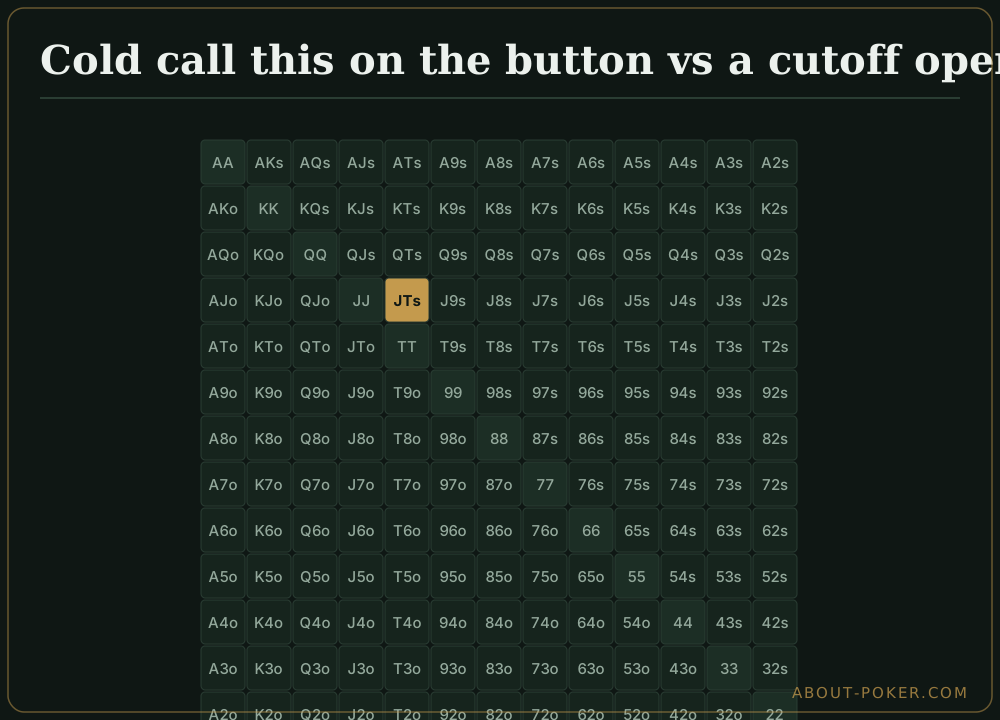
A tight regular opens to 2.5bb from the cutoff. You’re on the button with J♥T♥ (JTs). The blinds are unremarkable.
This is a textbook cold call. JTs is too good to fold and plays beautifully — it flops straights, flushes, and strong draws, and it flops top pair often enough to have showdown value. But 3-betting it for value against a tight cutoff range is thin, and as a bluff it folds out worse hands you’d rather keep in. Crucially, you’re on the button: nobody can squeeze you, you’ll have position all hand, and you close the action. Flat-call.
Now move the same hand to the hijack with the cutoff and button behind. The squeeze risk and the loss of guaranteed position tilt the decision toward a 3-bet or a fold, depending on the table.
Cold call vs big-blind call
Don’t confuse the two. From the big blind you already have 1bb invested and you’re getting a discount plus you often close the action, so you defend very wide — that’s covered under defending the blinds. A cold call has no such discount: you’re paying full price with no forced investment, so your cold-calling range is tighter and more selective than a big-blind defending range.
Building your cold-calling range
Structure it around three questions. First, do I have position? If not, lean toward 3-bet-or-fold. Second, who’s behind me? The more players, the tighter I flat. Third, does this hand play better as a flat than as a 3-bet? Pairs and suited hands that want to see flops and keep the opener’s range wide are ideal flats. For fully worked ranges by position, use cold-calling ranges.
Common mistakes
- Flatting out of position too often. The most expensive leak — you realize far less equity than you think.
- Cold calling with squeeze risk behind. Inviting a re-raise you’ll have to fold to.
- Flatting hands that should 3-bet. Slow-playing strong hands lets the opener realize equity for free.
- Cold calling dominated hands like KJo or AJo from early spots, which are frequently second-best when the money goes in.
Checklist for cold calling a raise
- Do I have position? If not, prefer 3-bet-or-fold.
- Who’s still to act? More players behind = tighter flat, higher squeeze risk.
- Is this a flat or a 3-bet hand? Flat the too-good-to-fold, not-good-enough-to-3-bet hands.
- Do I flop well? Favor pairs, suited broadways, and suited connectors.
- Have a postflop plan — you gave up initiative, so know how you’ll navigate the streets.
Cold calling is a scalpel, not a hammer. Used in position with the right hands, it prints money by keeping opponents’ ranges wide and letting your skill edge show up after the flop. Used out of position or into squeeze risk, it bleeds chips. Choose your spots with position at the front of your mind.
Frequently asked
What does cold calling a raise mean?
Cold calling means flat-calling a raise when you have no money invested in the pot yet — you are entering fresh, cold, by matching someone else's raise rather than raising or folding. It is different from a big-blind call, where you already have a forced bet in front of you.
When should you cold call instead of 3-betting?
Cold call with hands that play well postflop but are not strong enough to 3-bet for value and are too good to fold, especially when you have position and closing the action. In position with pairs, suited broadways, and suited connectors, flatting keeps the raiser's range wide and lets you outplay them after the flop.
Is cold calling out of position a mistake?
It is usually much weaker out of position. Without position you realize less equity and get squeezed by players still to act. Out of position, lean toward a tighter 3-bet-or-fold approach and reserve flatting for a small, disciplined set of strong hands.
Can players behind you punish a cold call?
Yes. When you flat and players remain to act, they can squeeze — 3-bet large to isolate — putting you in a tough spot. This squeeze risk is a major reason to prefer 3-betting or folding when several players are still to act behind you.