Cutoff Opening Range (RFI) Chart
The cutoff opening range is a wide late-position RFI — about 27-30% of hands in 6-max. See the exact chart, the hands it adds, and a worked open.
On this page · 8 sections
The cutoff is the second-best seat at the table, and its range reflects that. With only the button and the two blinds left to act, the cutoff opening range runs about 27-30% of hands in 6-max — the last big widening before the button opens roughly half its hands. This chart gives you the full range, the additions over the hijack, and a worked open.
What the cutoff opening range looks like
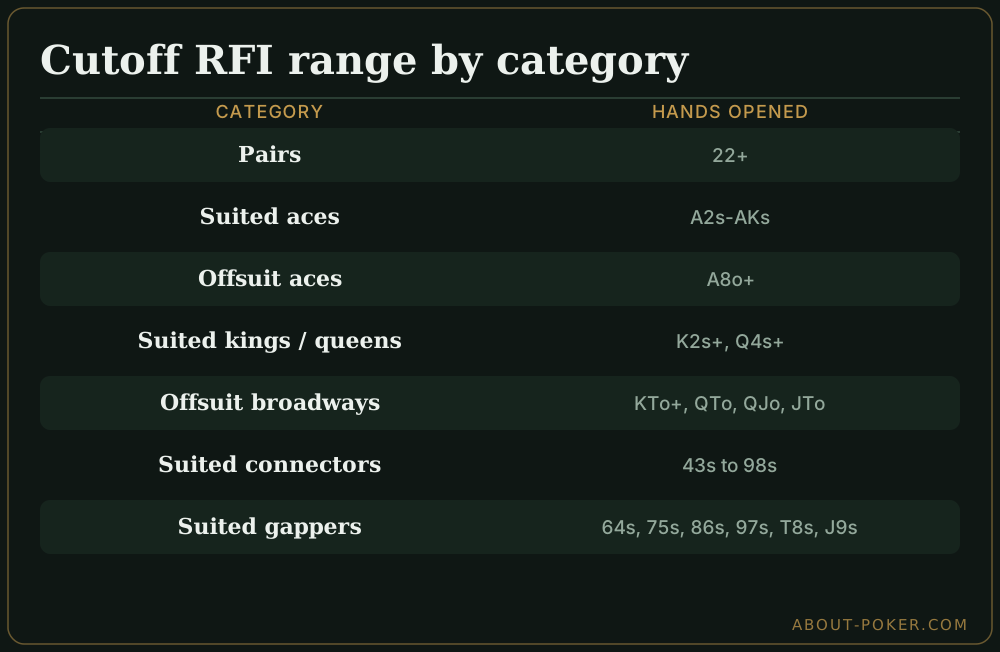
A solid 6-max baseline at 100bb. This is a pure RFI range — you are opening an unopened pot with three players behind.
| Category | Hands opened from the cutoff |
|---|---|
| Pairs | 22+ (all pairs) |
| Suited aces | A2s–AKs (all) |
| Offsuit aces | A8o, A9o, ATo, AJo, AQo, AKo |
| Suited kings | K2s+ |
| Offsuit kings | KTo, KJo, KQo |
| Suited queens | Q4s+ |
| Offsuit queens/jacks | QTo, QJo, JTo |
| Suited connectors | 98s down to 43s |
| Suited gappers | J9s, T8s, 97s, 86s, 75s, 64s |
That is roughly 27-30% of the 169 starting-hand types — a step up from the 26-28% of the hijack and a range that is now unmistakably wide.
What the cutoff adds over the hijack
The additions are the last set of “second-tier” hands before the button:
- More offsuit aces.
A7oandA8obecome opens with just the button and blinds behind. - JTo enters alongside the QTo/KTo offsuit broadways.
- Suited queens run to Q4s and suited connectors extend down to
43s. - More suited gappers like 75s and 64s become playable.
The strong core is unchanged; the cutoff simply piles on medium-strength and speculative hands that print money against the blinds.
Why the cutoff opens so wide
Two forces peak here. First, only three players act behind you, and one of them — the button — is the sole opponent who will have position on you postflop. That is a very favorable count for stealing the blinds and antes. Second, position on future streets: the cutoff will act after both blinds if they call, so a huge slice of medium hands realize their equity well.
The button behind is the one caution. A wide cutoff open invites button 3-bets and flats in position, so the range stays weighted toward hands that can continue against pressure rather than pure air.
A worked cutoff open
You are in the cutoff with A♠ 8♦. The action folds to you.
A8ois an open from the cutoff. With just the button and blinds behind, an offsuit ace with this much steal value clears the bar.- Raise to about 2.5bb.
Now move that same A♠ 8♦ to the hijack — one seat earlier, one extra player behind. There A8o sits right on the fold line and often folds, because the extra opponent tips it below profitability. Same hand, one seat apart, opposite decision. A8o is a clean example of a cutoff-specific addition.
Common cutoff mistakes
- Opening too tight. The cutoff is a premier stealing seat. A range that looks like a middle-position range is leaving money on the table.
- Opening every offsuit hand. The cutoff is wide, not the button. The weakest offsuit connectors and unconnected offsuit junk are still folds until you reach the button.
- Ignoring the button. The one player behind you with position will 3-bet and flat aggressively, so include hands that can play back, not just steal.
How the cutoff range adjusts to conditions
The 27-30% baseline assumes a standard 100bb 6-max game with typical opponents. A few common conditions should move it.
- An aggressive, 3-bet-happy button. When the player on your left punishes your opens relentlessly, tighten the offsuit end of your range first — the A7o, A8o, and weaker offsuit broadways that fold to a 3-bet and flop poorly. Keep the suited hands, which flat 3-bets and flop draws more comfortably.
- Tight, passive blinds. If the blinds fold too much and rarely fight back, widen. The whole cutoff range is a steal at heart, and blinds that surrender their dead money let you open even the marginal suited gappers profitably.
- Antes in play (tournaments). Antes sweeten every steal by adding dead money to the pot, which lowers the equity you need to open profitably. With antes, nudge the range wider — closer to 32-34% — especially with the speculative suited hands that thrive when the pot is already worth taking down uncontested.
- Deeper stacks (150bb+). Deep stacks favor suited and connected hands that can flop draws and win big pots, and they slightly disfavor the dominated offsuit aces that make one weak pair. Shift the range’s composition toward suitedness rather than simply widening it.
The principle underneath all four: the offsuit hands at the bottom of the range are the fragile ones. When conditions turn hostile, they leave first; when conditions turn soft, the suited speculative hands come in.
Stack-depth note
At 100bb the range above is correct. As stacks shorten toward 20-40bb — common in the later stages of tournaments — the cutoff range compresses and its shape changes. Dominated offsuit aces and suited gappers lose value because there is no room for postflop implied odds, while hands with clean all-in equity (pairs, suited broadways, the strong aces) hold their spot. Short-stacked, think of the cutoff open as a hand you are willing to get in against a button or blind 3-bet-shove, not a hand you open to see a flop.
Wrapping up
The cutoff opening range is a wide late-position range: about 27-30% of hands, adding offsuit aces like A8o, JTo, lower suited queens, and more suited connectors and gappers over the hijack. Open aggressively to attack the blinds, keep the range playable against the button behind, tighten the offsuit end against an active button, and see how the full seat-by-seat picture fits together in poker ranges by position and the complete preflop strategy framework.
Frequently asked
What is the cutoff in poker?
The cutoff is the seat directly to the right of the button — the second-to-last player to act preflop. It is a prime late position because only the button and the two blinds act behind it, so it opens a wide range.
How wide is the cutoff opening range?
In 6-max at 100bb, the cutoff opens around 27-30% of hands. That includes all pairs, all suited aces and kings, most offsuit broadways, offsuit aces down to A8o, suited gappers, and a broad set of suited connectors.
What hands does the cutoff add over the hijack?
The cutoff adds hands like A7o and A8o, more offsuit broadways such as JTo and QTo, wider suited gappers, some offsuit connectors, and lower suited queens. It is the last big widening before the button opens roughly half its hands.
Should I open weak offsuit hands from the cutoff?
Only selectively. The cutoff opens many offsuit broadways and some offsuit aces, but the weakest offsuit connectors and unconnected offsuit junk are still folds. The button, one seat later, is where the range explodes to include those.