Defending the Big Blind vs a Button Open
How to defend the big blind vs a button open. Learn correct calling and 3-betting ranges, pot odds math, and why you defend so wide against the button.
On this page · 7 sections
The big blind versus a button open is the single most frequent spot in poker where you defend. The button steals relentlessly, and you close the action with money already in the pot. Learning to defend wide — and correctly split between calling and 3-betting — plugs one of the biggest leaks in most players’ games.
Why you defend so wide
The button opens the widest range at the table, often 40-50% of hands. That means its range is weak on average, and you don’t need much to continue against it. You’re also getting an excellent price. Against a 2.5x open, you call 1.5bb to win a pot of roughly 4bb — about 3.7-to-1 — so you only need around 21% equity to break even on the call. Because you’ve already posted the blind, most reasonable hands clear that threshold. This is the core of defending the blinds.
The tradeoff is that you’ll be out of position for the rest of the hand. That doesn’t stop you from defending wide, but it does shape how you split your range between calling and 3-betting.
Building your calling range
Against a 2.5x button open at 100bb, you can defend by calling with a broad range: most suited hands, many offsuit broadways and connectors, all pairs, and a large chunk of ace-x. The idea is to see flops cheaply with hands that can flop pairs, draws, or equity you can realize even out of position. To see exactly what you’re up against, review the button opening range chart.
Fold the true bottom: weak offsuit hands with no connectivity like 72o, 83o, 94o that can’t flop anything useful even at a great price.
Building your 3-bet range
Your 3-bet range should be polarized — strong value plus bluffs, with the medium hands relegated to calling:
- Value: TT+, AQs+, AKo, and often AJs/KQs
- Bluffs: suited wheel aces (A2s-A5s), some suited kings (K9s-KJs), and suited connectors (76s, 65s)
The bluffs are chosen for blockers and playability: a suited ace blocks the button’s strongest continues and can flop a nut flush draw. A 3-bet to around 9-10bb is standard from the big blind. For the dynamics of these blind battles, see blind-vs-blind play.
Worked example: 96s in the big blind
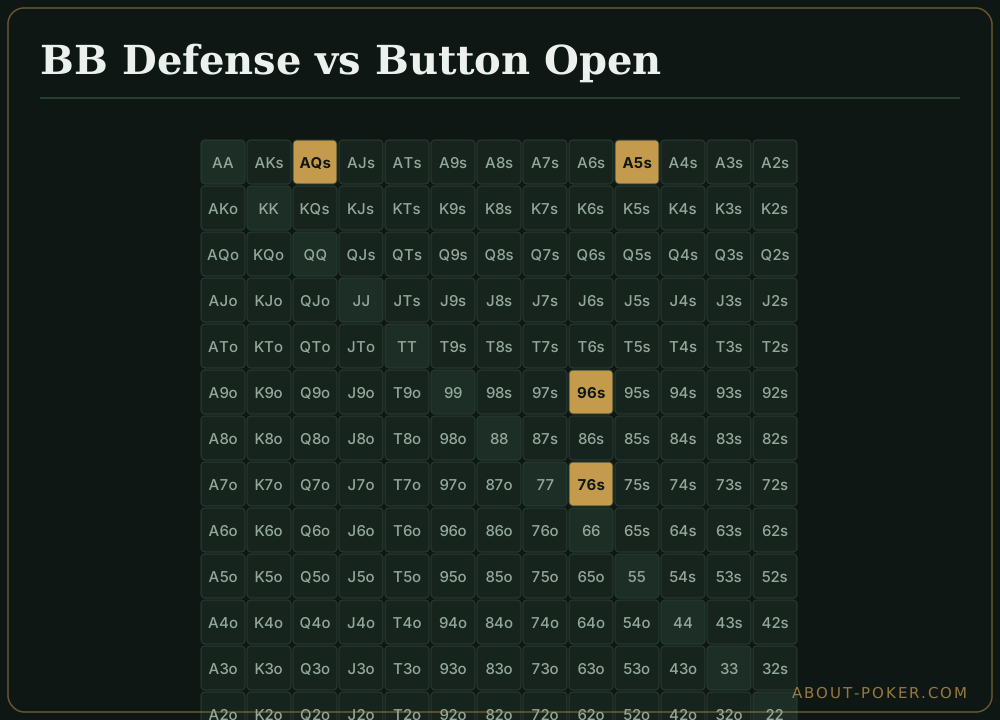
Button opens to 2.5x, folds to you in the big blind with 96s. Effective 100bb.
96s is a defend — specifically a call, not a fold or 3-bet. At 3.7-to-1 you need only ~21% equity, and 96s flops enough (pairs, straight draws, flush draws) to realize its equity against the button’s wide range. Calling keeps the pot small and in-position hands like this out of your 3-bet range, which is reserved for value and blocker-bluffs.
If you’d instead been dealt A5s, the play flips to a 3-bet bluff: the ace blocker and nut-flush potential make it a better raise than a call. And with a hand like 72o, you simply fold — even a great price can’t rescue a hand that can’t connect.
How raise size and stack depth reshape the defense
The 2.5x example is the baseline, but the button’s sizing swings your defending range hard. Against a min-raise (2x), you call 1bb to win about 3.5bb — roughly 3.5-to-1 in a different arrangement, and effectively an even better deal to close the action — so you defend even wider, folding almost nothing but the true garbage. Against a larger 3x open, your price drops to about 2.75-to-1 and you need closer to 27% equity, so you shed the weakest offsuit hands and some of the trashier suited combos from the bottom of your range. The general law: the bigger the raise, the tighter you defend, because each extra chip you must call raises the equity bar.
Stack depth matters too. At 100bb the wide flatting range above is correct because you have room to realize equity postflop and win a big pot when you connect. Shorter — around 40bb — the implied odds on speculative hands shrink, so you trim the weakest suited connectors and small suited aces from the calling range and shift a few more of your strong hands into a 3-bet-or-fold approach. Very deep, 200bb or more, position becomes an even bigger liability out of the big blind, which nudges you toward 3-betting your best hands to avoid bloated pots you have to play from out of position across three streets.
A defending checklist
Run this quick sequence every time it folds to you in the big blind against a button open:
- Price first. Note the raise size and your pot odds. At 2.5x you need ~21% equity; at 3x closer to 27%.
- Sort the hand. Value or premium bluff-with-blockers goes into the 3-bet range; playable-but-medium goes into the call range; unconnected offsuit trash folds.
- Check stack depth. Deeper favors 3-betting your strong hands and trimming speculative flats; shallower favors a tighter, more 3-bet-or-fold style.
- Factor the opponent. Against a button that folds too much to 3-bets, add bluffs; against one that never folds, lean on value and flat more.
Common mistakes
The two big leaks are over-folding and under-3-betting. Players fold too many defensible hands because they dread playing out of position, handing the button free steals. Others flat everything and never 3-bet, letting the button realize equity too cheaply. Defend wide, apply pressure with a polarized 3-bet range, and the button’s steals stop being free money.
Frequently asked
How wide should I defend the big blind against a button open?
Very wide — often 50% or more of hands at 100bb against a 2.5x open. The button opens a huge range and you're getting a great price to close the action from the big blind, so you continue with far more hands than in any other spot.
When should I 3-bet the big blind vs the button?
3-bet a polarized range: strong value hands (big pairs, AK, AQ) plus bluffs that block the button's continues, like suited aces and suited connectors. Flat the middling hands that play well but don't want to bloat the pot out of position.
What pot odds am I getting in the big blind vs a button open?
Against a 2.5x open you're calling 1.5bb to win a pot of about 4bb, roughly 3.7-to-1, so you only need around 21% equity to profitably call. Because you've already posted the big blind, most playable hands clear that bar easily.