Facing a Limp
When a passive player limps in, you have a chance to punish a weak, capped range. Learn how to size your raise, which hands to attack with, and when to check.
On this page · 7 sections
A limp is when a player enters the pot by only calling the big blind rather than raising. When you are facing a limp, you hold most of the leverage, because a first-in limp almost always represents a weak, capped hand from a passive opponent. Your job is to convert that mistake into money: raise big with hands that dominate them, occasionally call along with speculative holdings, and fold your junk. Done well, attacking limps is one of the steadiest sources of profit in low- and mid-stakes games.
Why a limp is a gift
Aggressive, competent players rarely open-limp first-in. Premiums get raised, and most playable hands get raised too. So a limp screams: “I have something I want to see a flop with, but not something I love.” That leaves the limper’s range wide and capped — full of weak aces, small suited stuff, and medium offsuit hands that flop poorly.
Two edges follow directly:
- A range edge. The hands you raise with dominate the mush the limper shows up with.
- A postflop skill edge. Passive limpers tend to play face-up after the flop, betting when strong and checking when weak, which is easy to read and exploit.
The standard aggressive response is the isolation raise. For the deep mechanics of that play, see isolating limpers.
Sizing your raise over a limp
Size larger than a normal open. A limper has already put a big blind in and is inclined to call, so you want to charge them. A reliable formula is your standard open plus one big blind per limper.
If your usual open is 2.5bb, raise to roughly 4bb over one limper. Over two limpers, push toward 5 to 6bb. The bigger size does three things: it charges the limper, it discourages the blinds from coming along, and it builds a pot you’ll be favored to win with your stronger range and position.
A worked example
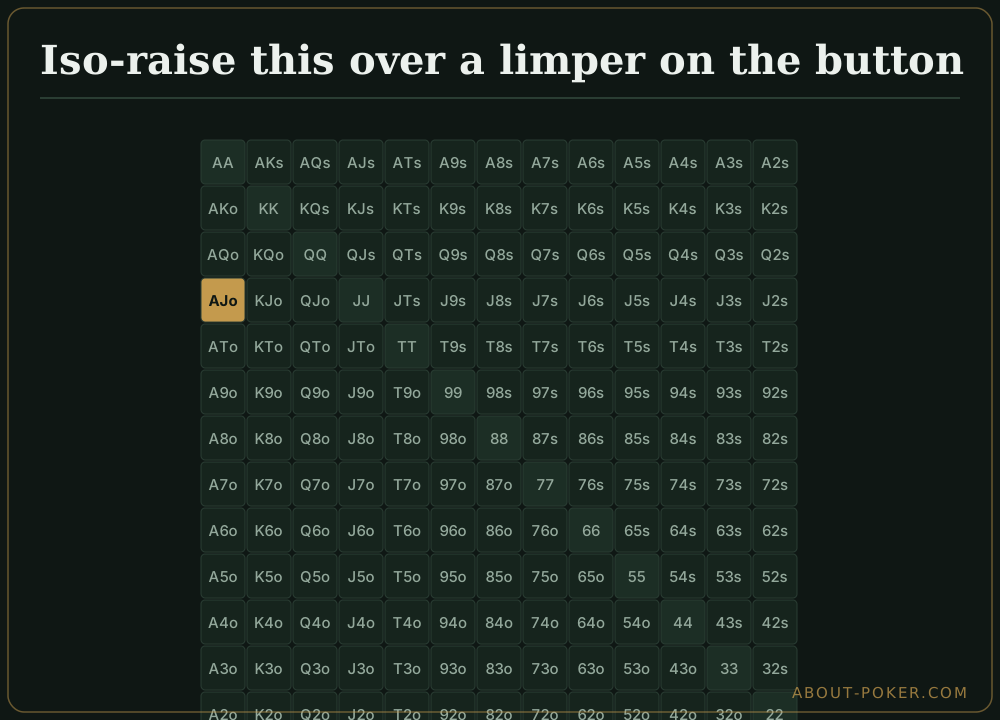
You are on the button with A♣J♦ (AJo). A loose-passive player in the cutoff limps for 1bb. Folded to you.
The cutoff’s limping range is something like weak aces, suited kings and queens, small pairs, and medium offsuit broadways. Your AJo dominates most of it and you’ll have position for the entire hand. Raise to about 4.5bb. If both blinds fold and the limper calls, you go heads-up to the flop with a range and positional advantage.
Compare that to just calling. Overlimping AJo behind invites the blinds in for cheap, plays a multiway pot with a hand that wants to be heads-up, and gives up the initiative. Raising is clearly better here.
When to call instead of raise
Overlimping — calling along behind a limper — is not always wrong. It shines with hands that want cheap, multiway flops and have big implied odds:
- Small pocket pairs (22–66) that are set-mining.
- Suited connectors and one-gappers (like 7♥6♥) that flop well multiway.
- Small suited aces in position when the pot is likely to stay multiway.
The logic mirrors the trade-offs in limping vs raising: you sacrifice initiative for a cheap look with a hand that realizes its equity best when several players see the flop.
When to fold
Fold your genuine trash. Facing a limp does not obligate you to play. Offsuit disconnected hands (like J♠4♣) do not dominate the limper’s range meaningfully, play badly postflop, and just bleed chips when you raise and get called. Discipline here keeps your iso range strong and credible.
How it changes by position and opponent
- In position (button, cutoff): raise wide, because you keep position all hand.
- Out of position (from the blinds facing a limp): tighten up. Without position, your postflop edge shrinks, so lean toward raising a stronger, more polarized range and check your big blind option with junk.
- Vs a nit who limps only trap-hands: slow down. A rare limper whose limps include monsters is not the standard target — respect the tighter range.
- Vs a station who never folds: value-raise relentlessly and stop bluffing. Get more money in with your good hands and cut the thin steals.
For sizing theory that carries over to these spots, review open-raise sizing.
Quick checklist for facing a limp
- Read the limper. Loose-passive? Attack. Rare, tricky limper? Slow down.
- Check your position. Raise wider in position, tighter out of position.
- Size up. Standard open plus one big blind per limper.
- Pick your action: raise to isolate with dominating hands, overlimp with speculative hands that want multiway flops, fold the junk.
- Plan the flop. You raised because you have a range and skill edge — keep betting to press it.
Facing a limp is a repeatable, low-variance edge. Punish the weak range, get heads-up in position, and let a passive opponent pay for the mistake of entering the pot without a raise.
Frequently asked
What does it mean to face a limp?
Facing a limp means someone before you has entered the pot by just calling the big blind instead of raising. You now decide whether to raise (isolate), call along, or fold. Because limping usually signals a weak, capped range, raising to get heads-up in position is often the most profitable choice.
Should you always raise over a limper?
No. Raise with the top of your range and hands that dominate the limper, but you can also fold trash and occasionally overlimp behind with speculative hands in multiway spots. Position matters a lot: raise wider in position and tighten up out of position.
How big should you raise over a limp?
A good default is your normal open size plus one big blind per limper, which often lands around 4 to 6 big blinds over a single limper. The larger size charges the limper to continue and discourages the blinds from calling along cheaply.
Can you profit by just calling behind a limper?
Sometimes. Overlimping (calling along) works with small pairs and suited connectors that want cheap multiway flops and have implied odds. But calling too much lets the blinds in cheaply and surrenders the initiative, so raising is usually stronger with the top of your range.