Flatting a 3-Bet
Flatting a 3-bet means calling instead of folding or 4-betting. Learn which hands to flat, why position decides it, and a worked JJ example.
On this page · 6 sections
Flatting a 3-bet means calling an opponent’s re-raise rather than folding or 4-betting. After you open and someone 3-bets, your three options are fold, 4-bet, or flat. Flatting keeps in the hands that are too good to fold but not right for a 4-bet — a middle tier you’d otherwise leak value by throwing away. Done well, it’s a core part of defending against 3-bets.
Why flat instead of fold or 4-bet
Think of your range against a 3-bet as three buckets:
- 4-bet for value / as a bluff: your strongest hands (A-A, K-K, A-K) plus blocker bluffs like A-5s — see 4-betting as a bluff.
- Fold: hands with no equity or playability against the tight 3-betting range.
- Flat: the middle — hands strong enough to profitably see a flop, but that lose value or get blown off equity if you 4-bet.
Flatting lets you realize the equity of medium-strength hands by playing a postflop pot, ideally in position. It also keeps weaker hands in your continuing range so you’re not folding too often and becoming exploitable.
Position decides everything
The single biggest factor in whether to flat is position:
- In position (you called the open, or you’re on the button facing a blind 3-bet): flat widely. You’ll see the flop with the informational and positional edge, so hands like J-J, T-T, A-Q, K-Q suited, and suited connectors all play well as flats.
- Out of position: flat far less. You realize less equity, face awkward turn and river spots, and can’t control the pot as easily. Many in-position flats become folds or 4-bets when you’re first to act.
This is the same positional logic that drives cold-calling ranges: calling ranges widen in position and tighten out of it.
Which hands to flat a 3-bet with
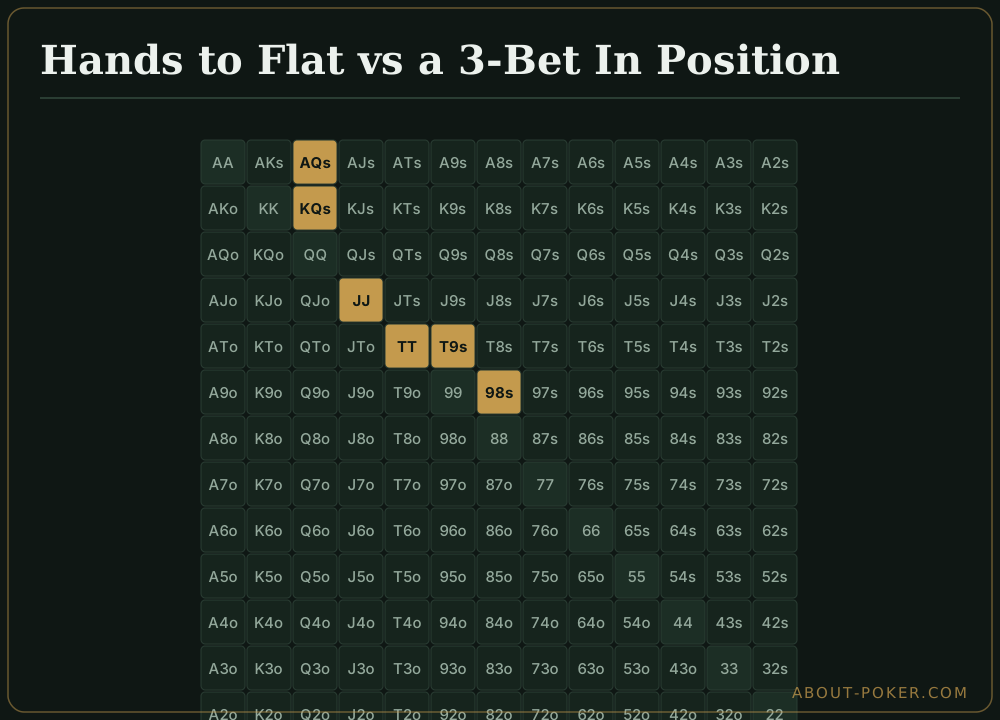
A strong in-position flatting range against a standard 3-bet typically includes:
- Medium and low pairs (T-T down to 2-2): great for set-mining; they flop a set about 1 in 8.5 times (~11.8%) and win big when they do, but don’t want to stack off preflop.
- Suited broadways (A-Q, A-J suited, K-Q, Q-J suited): flop strong pairs and draws, dominate parts of the 3-bettor’s bluffs.
- Suited connectors (T-9s, 9-8s): high playability and disguise when they connect.
Notice these are hands that don’t want to be all-in preflop against a tight range but happily see a flop. A-Q suited is crushed by A-A/K-K if the money goes in, but flops well enough to flat and outplay bluffs.
A worked example
You open the hijack to 2.5bb with J♥J♠ at 100bb. The button 3-bets to 8bb. It folds back to you.
J-J is a classic flat here rather than a 4-bet:
- If you 4-bet, you fold out everything you beat and only get called or 5-bet by hands that crush you (A-A, K-K, Q-Q, A-K, which flips at best). Against K-K you’re a ~19% underdog; against A-A about ~19% as well. That’s a losing proposition for stacking off.
- By flatting to 8bb, you keep in the button’s entire bluffing and thin-value range. You see a flop with a strong made hand that’s ahead of most of what they 3-bet, and you can fold on the rare over-card boards where you’re beaten.
Flop comes 9♦6♣2♠. Your over-pair is now ahead of nearly the button’s whole range. You’ve realized J-J’s value exactly as intended — by flatting rather than blowing the pot up preflop.
Common mistakes
- Flatting too much out of position. Awkward postflop spots eat your equity; fold or 4-bet more when first to act.
- Flatting hands that dominate you when you continue. A-J offsuit out of position often plays poorly against a value 3-bet — it flops top pair with a losing kicker.
- Never 4-betting from your flatting range. If you only ever flat medium hands and 4-bet monsters, opponents read your flats as capped. Keep a few 4-bet bluffs to protect the flatting range.
- Set-mining at bad prices. Flatting a small pair only to set-mine needs deep stacks and implied odds; if stacks are shallow, folding is often better.
Quick checklist
Before flatting a 3-bet, confirm: you have position (or a strong OOP reason not to fold); your hand plays well postflop but doesn’t want to stack off preflop; you have the implied odds to continue (especially with pairs); and your overall response to 3-bets still includes some 4-bets so your flats aren’t capped. Get those right and flatting becomes a quiet, steady profit center against aggressive 3-bettors.
Frequently asked
What does flatting a 3-bet mean?
Flatting a 3-bet means calling an opponent's re-raise instead of folding or 4-betting. You keep in hands that are too strong to fold but not clearly worth a 4-bet, so you can realize their equity by seeing a flop, usually in position.
When should you flat a 3-bet instead of 4-betting?
Flat when you're in position with hands that play well postflop but don't want to get all-in preflop — medium pairs, suited broadways, and some suited connectors. 4-bet your very best hands and your blocker bluffs; flat the middle. Out of position, your flatting range shrinks and folding more is correct.
Can you flat a 3-bet out of position?
You can, but tighten up. Out of position you realize less equity and face tougher postflop decisions, so many marginal flats become folds or 4-bets. Reserve out-of-position flats for hands with clear playability and enough strength to continue on multiple boards.