Flatting in the Big Blind
You already have a big blind invested and often close the action, so you can flat very wide. Learn the pot-odds math, which hands to flat, and how position.
On this page · 8 sections
Flatting in the big blind — calling a raise from the big blind rather than folding or 3-betting — is the widest calling range in poker, and for good reason. You already have one big blind posted, so you’re getting a discount, and you almost always close the preflop action, so nobody can squeeze you. Those two facts combine to give you excellent pot odds and let you defend a huge, speculative range that would be far too loose from any other seat.
The two edges of the big blind
Every other seat pays full price to enter a pot and risks getting re-raised by players behind. The big blind escapes both:
- The discount. Your forced 1bb is already in the pot, so you’re only topping up the difference to call.
- Closing the action. When it’s folded to the raiser and around to you, calling ends the betting — no squeeze risk at all.
This is why big-blind defense is its own topic. The wider framework lives in defending the blinds; this page zeroes in on the flatting portion.
The pot-odds math
Say the button opens to 2.5bb. The pot is 2.5 (raise) + 1 (your blind) + 0.5 (small blind) = 4bb, and you call 1.5bb more. You’re risking 1.5 to win 4, about 3-to-1, so you need only around 25% equity to break even on the call.
Against a min-raise to 2bb the odds are even better — you call 1bb into about 3.5bb, needing only ~18% equity. That’s why your defending range widens against smaller opens and tightens against larger ones. Note this equity is your raw threshold; because you’re out of position you realize somewhat less than raw equity, so don’t defend literally every hand that clears the math.
Which hands to flat
Favor hands that flop something and can realize their equity out of position:
- Suited hands of all kinds — suited connectors, suited gappers, suited aces and kings. Suitedness adds flush potential and equity.
- Connectors and one-gappers that make straights.
- Small and medium pairs for set-mining and showdown value.
- Broadways, including offsuit ones against smaller opens.
Weak offsuit disconnected hands (like 9♣4♠) are where you draw the line even in the big blind — they flop too poorly to defend profitably.
Flat vs 3-bet from the big blind
Don’t flat everything strong. Build a polarized 3-betting range too: premiums for value plus some bluffs to balance and to punish late-position steals. Flatting handles the speculative middle — the hands that want a cheap flop but aren’t strong enough to 3-bet for value. For the re-raising side, use the big blind 3-bet range chart; the general flatting logic parallels cold-calling ranges, just shaded much wider because of the discount.
A worked example
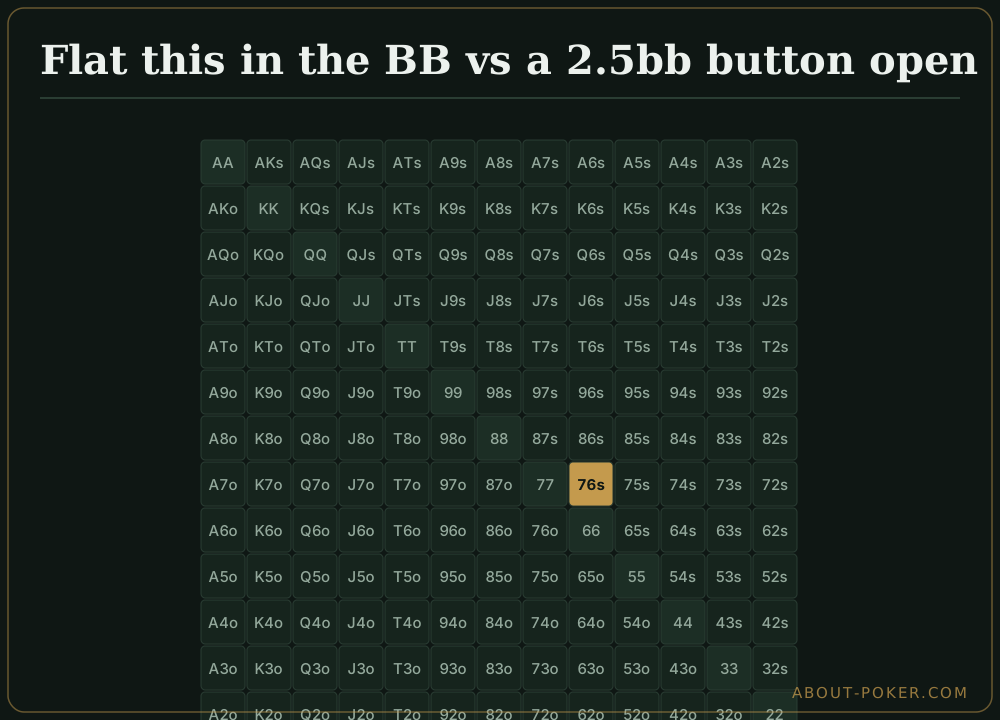
The button opens to 2.5bb. You’re in the big blind with 7♥6♥ (76s). The small blind folds.
Flat. You’re getting 3-to-1, and 76s is exactly the kind of hand big-blind flatting was made for — it makes straights and flushes, flops open-enders and flush draws constantly, and stays disguised. It’s too weak to 3-bet for value and a poor bluff-3-bet (it folds out worse and gets called by better), but it’s a slam-dunk flat at this price. You’ll check most flops to the opener and take strong lines when you connect.
Contrast with 9♠4♦ against the same open: fold. Even at 3-to-1, offsuit disconnected trash flops too little to defend.
How position and size adjust it
- Against a button open: widest defense — the button’s range is loose, so you flat very wide.
- Against an early-position open: tighten. UTG ranges are strong, so drop your weakest speculative hands.
- Against a min-raise or small open: widen further; the price is even better.
- Against a large open (3bb+): tighten; you need more equity and realize it worse out of position.
Common mistakes
- Over-folding the big blind. The most common and expensive blind leak — the discount means you should defend far more than instinct suggests.
- Flatting pure trash. The discount is not infinite; offsuit disconnected hands still fold.
- Never 3-betting. A pure flatting big blind is exploitable; blend in a polarized 3-bet.
- Overvaluing raw equity. You’re out of position, so you realize less than the math implies — don’t defend everything that barely clears 25%.
Checklist for flatting in the big blind
- Note the opener’s position and size — wider vs late/small, tighter vs early/large.
- Compute the price — roughly 25% equity vs a 2.5bb open, ~18% vs a min-raise.
- Favor suited and connected hands that flop draws and realize equity.
- Reserve a polarized 3-bet for premiums and select bluffs.
- Discount for being out of position — don’t defend literally everything the raw math allows.
Flatting in the big blind is the one spot where you get to play a genuinely wide range profitably. Lean on the discount, favor hands that flop draws, and don’t let the fear of playing out of position push you into over-folding the cheapest defense in poker.
Frequently asked
Why can you flat so wide in the big blind?
Two reasons: you already have one big blind invested, so you are getting a discount to continue, and you usually close the preflop action, so you cannot be squeezed by players behind. Together these give you excellent pot odds and let you defend a far wider range than in any other seat.
What hands should you flat in the big blind?
Flat hands that flop reasonably and realize equity — suited hands, connectors, broadways, small pairs, and even weak offsuit hands against small opens. The exact width depends on the opener's position and size, but big-blind flatting ranges are the widest calling ranges in poker.
How do pot odds work in the big blind?
Facing a 2.5bb raise with your 1bb already posted, you call 1.5bb to win a pot of about 4.5bb, roughly 3-to-1, so you need only about 25% equity. Smaller opens give even better odds, which is why you defend wider against min-raises and small opens and tighter against large ones.
Should you flat or 3-bet from the big blind?
Do both. Flat the wide, speculative hands that want to see a cheap flop and 3-bet a polarized mix of premiums and bluffs. Flatting keeps the opener's range wide and your own range protected on the many flops you check to them, while 3-betting punishes late-position steals.