Hijack Opening Range (RFI) Chart
The hijack opening range is a wide middle-late RFI — about 26-28% of hands in 6-max. See the exact chart, the hands it adds, and a worked open.
On this page · 9 sections
The hijack is the last seat before the cutoff, and its range shows it — this is where opening gets genuinely wide. With only the cutoff, button, and blinds left to act, the hijack opening range runs about 26-28% of hands in 6-max. This chart lays out the full range, the hands it adds over the lojack, and a worked open.
What the hijack opening range looks like
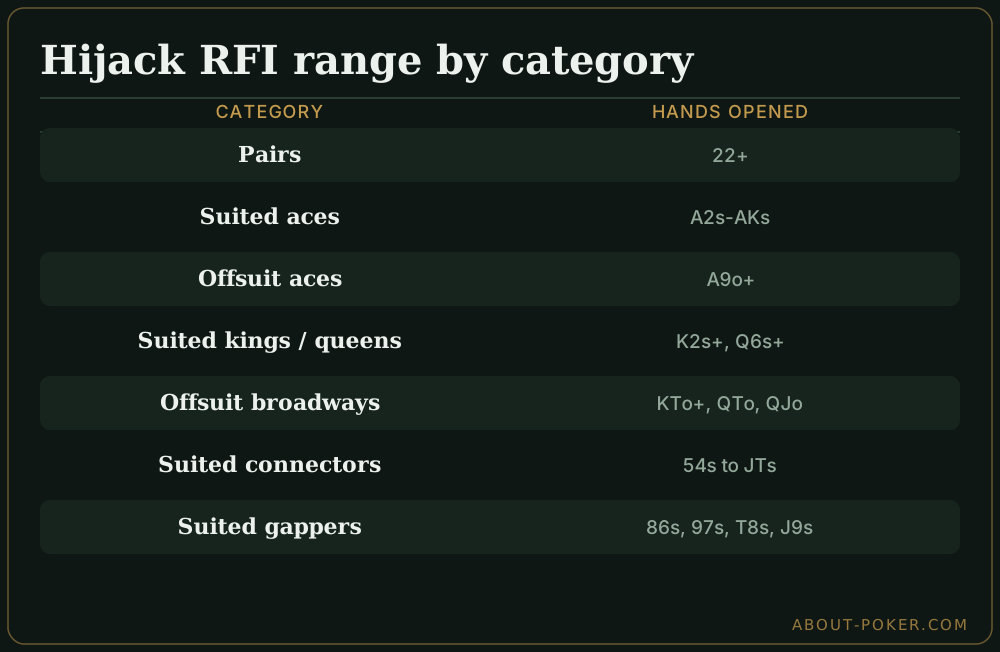
A solid 6-max baseline at 100bb. This is a pure RFI range — you are opening an unopened pot with three players behind.
| Category | Hands opened from the hijack |
|---|---|
| Pairs | 22+ (all pairs) |
| Suited aces | A2s–AKs (all) |
| Offsuit aces | A9o, ATo, AJo, AQo, AKo |
| Suited kings | K2s+ |
| Offsuit kings | KTo, KJo, KQo |
| Suited queens | Q6s+ |
| Offsuit queens | QTo, QJo |
| Suited broadways / connectors | JTs, T9s, 98s, 87s, 76s, 65s, 54s |
| Suited gappers | J9s, T8s, 97s, 86s |
That is roughly 26-28% of the 169 starting-hand types — a solid jump from the ~21% you open on the lojack.
What the hijack adds over the lojack
The widening accelerates here as late position approaches:
- More offsuit aces.
A9oandA8ojoin the range — offsuit aces that were folds in middle position. - Wider offsuit broadways.
KToandQTocome in alongside the KJo/QJo that entered on the lojack. - Suited kings run to K2s and suited queens to Q6s, since domination worries keep shrinking.
- Suited gappers appear — J9s, T8s, 97s, 86s — hands that need a little more room to be profitable.
The result is a range that finally looks aggressive, but still built on a solid core rather than pure junk.
Why the hijack opens this wide
RFI width tracks the number of players behind, and the hijack has only three. That means far less chance of running into a premium and far more spots where you take down the blinds uncontested. Add the postflop upside — you will often have position on the callers — and a large swath of medium-strength hands become clearly profitable opens.
The blinds and the two seats behind can still 3-bet, so the range is not unlimited. But the balance has clearly tilted toward stealing and playing a wide, positional game.
A worked hijack open
You are in the hijack with K♥ T♦. The action folds to you.
KTois an open from the hijack. With only three players behind, an offsuit king-ten has enough equity and steal value to raise.- Raise to about 2.5bb.
Slide that same K♥ T♦ back to the lojack and it is a fold — one more player behind is enough to tip an offsuit KT below the profitability line. The hand is unchanged; the seat moved one spot. KTo sits right on the middle-to-late boundary, which is why it is a clean example of a hijack-specific addition.
How the range shifts with stack depth
The 26-28% baseline assumes a standard 100bb cash-game setup. Move away from that and the range bends:
- Shorter stacks (30-50bb). Trim the most speculative additions first — suited gappers like 86s and the lowest suited kings and queens. These hands profit through implied odds and deep postflop maneuvering, both of which shrink as stacks get shallow. At 40bb your hijack range looks closer to 22-24%, tighter and more high-card-heavy.
- Deeper stacks (150-200bb). The suited gappers and suited connectors gain value because the pots you win when you flop a monster get much bigger. You can also lean slightly harder on suited hands over offsuit ones, since suited hands realize their equity better in the larger, more multiway pots that deep play produces.
The high-card core — pairs, suited aces, offsuit broadways — stays constant across depths. It is the speculative edge of the range that flexes.
Adjusting to the players behind
RFI charts are a starting point, not a script. The three seats behind the hijack are not all identical, and their tendencies should move your range:
- Loose or aggressive 3-bettors in the cutoff or button. If the players in position on you 3-bet relentlessly, tighten the offsuit portion of your range — offsuit broadways like KTo and QTo are the first to suffer, because they play badly when you get 3-bet and have to fold or call out of position.
- Tight, passive blinds. If the blinds rarely defend and rarely 3-bet, widen. A station-y big blind who calls and plays fit-or-fold postflop makes your suited gappers and suited connectors more profitable, since you win small pots often and occasionally stack them.
- A short-stacked player yet to act. If someone behind is sitting on 15-20bb and jamming wide, favor hands that flip or dominate well against a shove range — pairs and strong aces — over thin suited speculators.
Common hijack mistakes
- Opening too tight, like a middle seat. If your hijack range still looks like your lojack range, you are missing a large slice of profitable steals.
- Opening too wide, like the button. The hijack is not the button — offsuit connectors, weak offsuit queens below QTo, and the widest suited gappers are still folds.
- Forgetting the cutoff and button behind. Two of the three players behind sit in position on you postflop, so keep added hands playable.
- Using the same size for value and steals. A consistent 2.5bb open keeps your range disguised. Sizing up only with premiums telegraphs your hand and lets thinking opponents exploit you.
Quick decision checklist
Before you open from the hijack, run through this:
- Is the pot unopened? If someone has already raised, this RFI chart does not apply — you are now in a 3-bet or flat decision.
- Is the hand in the chart above? If it is a clear fold (offsuit connector, weak offsuit queen), let it go.
- Are the players behind unusually aggressive? If so, shade the offsuit additions toward folding.
- Is your stack deep enough to realize the speculative hands? If you are short, cut the suited gappers.
- Size to a standard 2.5bb and keep the range balanced across value and steals.
Wrapping up
The hijack opening range is a wide middle-late range: about 26-28% of hands, adding more offsuit aces, wider offsuit broadways like KTo and QTo, lower suited kings and queens, and suited gappers over the lojack. Open aggressively but on a real foundation, and let the range widen once more as you reach the cutoff. Fit it all into the full preflop strategy framework.
Frequently asked
What is the hijack in poker?
The hijack is the seat two to the right of the button, directly to the right of the cutoff. It is a middle-late position that opens wide because only three players — cutoff, button, and blinds — act behind it in 6-max.
How wide is the hijack opening range?
In 6-max at 100bb, the hijack opens around 26-28% of hands. That includes all pairs, all suited aces and kings, most suited broadways and connectors, and a healthy set of offsuit broadways and offsuit aces down to A9o.
What hands does the hijack add over the lojack?
The hijack adds more offsuit aces (A9o, A8o), offsuit broadways like KTo and QTo, lower suited kings and queens, suited gappers, and more offsuit connectors. The range starts to look genuinely wide as it approaches late position.
Is the hijack late position?
The hijack straddles middle and late position. It is wider than the lojack and early seats but still tighter than the cutoff and button. Many players treat it as the first of the two 'late-ish' seats before the true late positions.