A3 Poker Nickname & Meaning
A3 — ace-three — is nicknamed Baskin-Robbins or Ace-Trey. Where the '31 flavors' name comes from and how to play this ace-rag before the flop.
On this page · 7 sections
A3 — ace-three — carries the nickname Baskin-Robbins, after the ice-cream chain famous for its 31 flavors. It’s an “ace-rag” hand: it looks respectable because of the ace, but that top card can lure you into trouble if you’re not careful about which version you hold.
Baskin-Robbins and Ace-Trey
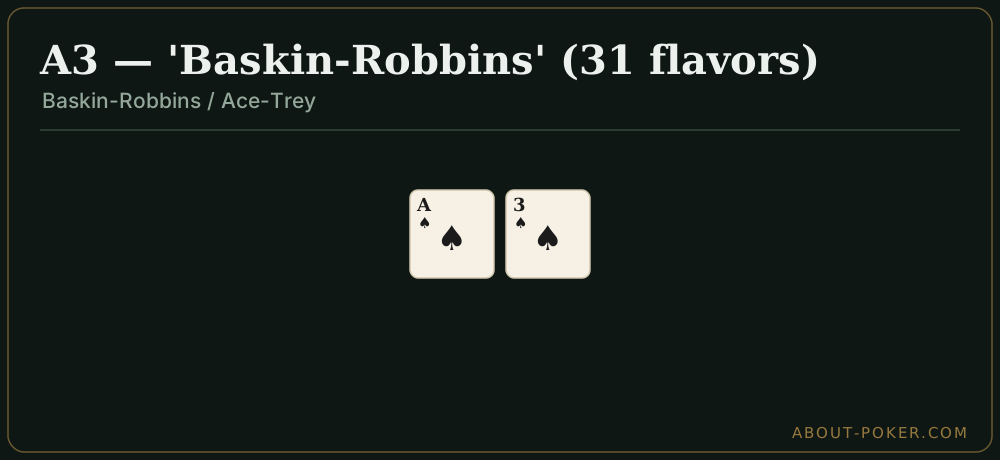
The Baskin-Robbins nickname is a numbers pun. The chain’s slogan is “31 flavors,” and A3 reads as ace-three — flip it and you get 31. That’s the whole gag, and it’s a favorite among players who like a clever name.
The three is also called a trey in card terminology, so you’ll frequently hear Ace-Trey at the table — a plainer, always-understood way to say the same hand.
How strong is A3, really?
It depends entirely on suitedness. The ace is powerful, but a three is a terrible kicker, so the danger with any ace-rag is domination — running into a better ace like AK, AQ, AJ, or AT, where you’re drawing to a lucky three.
A3 suited is the good version. Beyond the occasional top pair, it can make the nut flush and it’s a wheel hand (A-2-3-4-5 is the lowest straight, and the ace-to-five run gives you extra straight equity). Those nut outs make it a legitimate late-position open and a fine big-blind defense.
A3 offsuit loses the flush and most of that appeal. Against a random hand it wins about 57% — decent in a vacuum — but against the tighter ranges people raise with, it’s frequently dominated and should be folded from early and middle positions.
Worked example: the nut-flush payoff
You call from the big blind with A♠ 3♠ and the flop comes K♠ 9♠ 4♦.
You’ve flopped the nut-flush draw — nine spades give you the best possible flush, and no worse flush can beat you. With nine outs you’ll complete by the river roughly 35% of the time, and because it’s the nut flush you’ll rarely be paying off a bigger hand when you get there. That’s the exact scenario A3 suited is built for. Hold A♦ 3♣ instead on that board and you have nothing but two overcards to the four — a hand you’d usually give up. Suitedness is doing all the work.
For the complete breakdown, see how to play ace-three offsuit.
How the play changes by position
A3’s value swings enormously with where you sit, and it’s worth being concrete about the difference. From under the gun in a six-handed game, even A3 suited is a marginal open at best and A3 offsuit is a clear fold — the field of players behind you holds too many better aces, and getting dominated out of position is how ace-rag hands quietly lose money. Move to the cutoff or button and the calculus flips. Now you have position, fewer players left to act, and the blinds are defending with a wide, weak range full of hands you actually beat. A3 suited becomes a comfortable steal, and even A3 offsuit is a reasonable button open against tight blinds.
The blinds add a third context. Defending your big blind against a late-position raise, A3 suited is an easy call: you’re getting a price, you have the nut-flush and wheel outs to fall back on, and you’re up against a range that’s rarely dominating you as heavily as an early-position raise would. A3 offsuit is a much closer defend — take the price against small raises from the button, fold to bigger raises or to early-position openers.
Common mistakes with A3
The single most expensive error is treating A3 offsuit like A3 suited. They are not the same hand. The suited version has a genuine escape hatch — the nut flush — that lets it win a big pot as an underdog. The offsuit version has no such backup, so when it flops top pair with a three kicker it is either winning a small pot or losing a large one.
A second mistake is overvaluing top pair. If you pair your ace on an ace-high board and someone shows real aggression, remember your kicker is a three — you are behind every other ace they might hold, from A4 all the way up to AK. Pot control, not stack-off, is the default. A third trap is chasing the wheel too loosely: A-2-3-4-5 is a beautiful hand, but you rarely flop enough of it to justify calling large bets on the come without additional equity like a flush draw alongside it. As a rough guide, an open-ended wheel draw is only about eight outs — roughly 32% to hit by the river from the flop — so you need a genuine price or extra backup to continue.
Using the term at the table
You’ll hear it in lines like “cracked kings with Baskin-Robbins, runner-runner wheel,” or “raised the button with Ace-Trey suited and flopped the nut-flush draw.” Say “Baskin-Robbins” or “Ace-Trey” and most players will follow.
The takeaway: A3 is a hand where the second card and the suit matter enormously. Lean on the suited version’s nut potential and treat the offsuit version with respect. See how to play ace-three offsuit for the full plan.
Keep going
A3 is Baskin-Robbins — 31 flavors of ace-rag, and only some of them are worth ordering. Learn more vocabulary in the poker terms glossary, explore colorful nicknames in poker slang explained, and get the strategy in how to play ace-three offsuit.
Frequently asked
What is the nickname for A3 in poker?
Ace-three is nicknamed Baskin-Robbins — a nod to the ice-cream chain's '31 flavors,' since the cards read as an ace and a three (A-3, or '31').
Why is A3 called Baskin-Robbins?
Baskin-Robbins is famous for '31 flavors,' and A3 reads as ace-three, which flips to 31. The number connection is the whole joke. You'll also just hear Ace-Trey.
Is A3 a good poker hand?
A3 is a marginal ace-rag hand. Suited A3 has real value as a nut-flush and wheel-draw holding; offsuit A3 is weak and easily dominated by better aces.
Should I play A3 suited or offsuit?
A3 suited is a legitimate late-position open and a good blind defense thanks to its nut-flush potential. A3 offsuit should be played much more cautiously and folded from early seats.