How to Play Ace-Three Offsuit (A3o)
Ace-three offsuit is a weak ace: a fine late-position steal but a dominated call. Here is how to open, blind-battle, and fold A3o correctly.
On this page · 6 sections
Ace-three offsuit (A3o) is a weak ace — a hand that looks better than it plays. The ace gives it two useful properties: a strong high card and a blocker that makes it less likely your opponent holds pocket aces or a big ace. But the three is a poor kicker, so when A3o flops top pair it is frequently outkicked, and offsuit means no flush to fall back on. The result is a hand that is genuinely good as a late-position steal and genuinely bad as a call. Play A3o by raising first in the right seats and folding it when someone else has already shown strength.
Opening ace-three offsuit
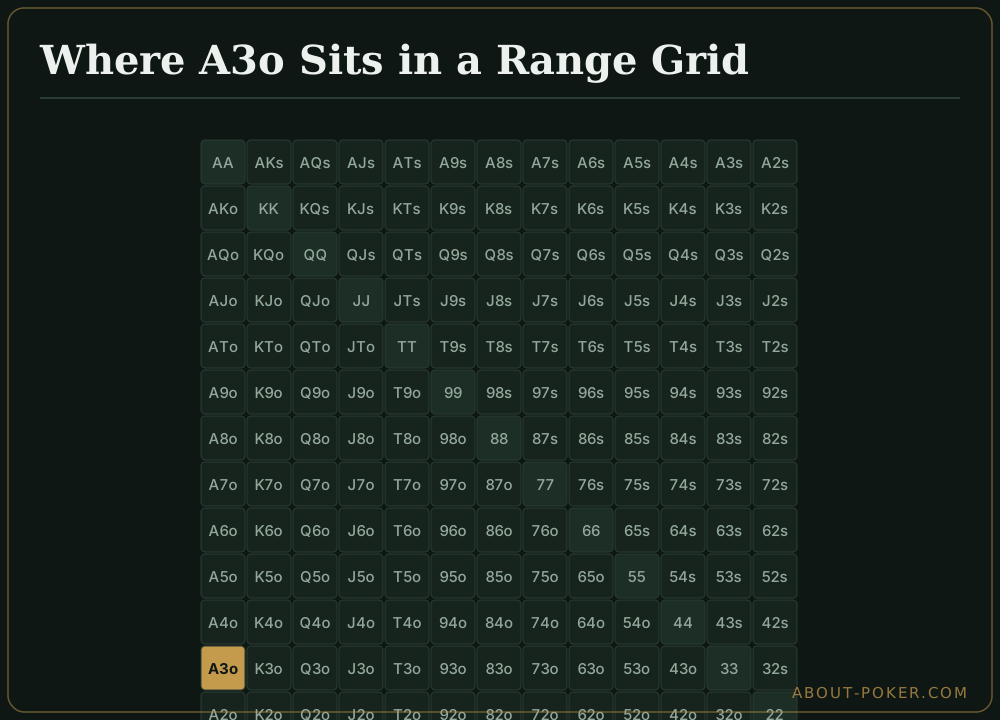
A3o is a standard open from late position — the cutoff, button, and small blind. In those seats you are attacking the blinds, your ace blocks their premium holdings, and you frequently win the pot uncontested. When you do get called, an ace-high flop gives you top pair often enough to keep barreling, and the blocker keeps your opponent from having the very hands that would punish you. From early and middle position, though, A3o is too easily dominated: in full-ring games it folds, and even in 6-max it is a marginal open at best.
The suited version, ace-three suited, plays much wider because the flush and the low straight (the wheel, A-2-3-4-5) add real equity. Stripped of the suit, A3o leans almost entirely on its high card and blocker. Your preflop opening ranges should feature A3o from late position and fold it up front.
The kicker problem when called
The core weakness of A3o is domination. When you open and get called, and the flop brings an ace, you have top pair with the worst possible kicker outside of A2. Every A4 through AK that called now beats you, and you can lose a big pot if you treat your top pair as a monster. The disciplined line is to bet for value against worse but to control the pot size and be ready to fold to serious aggression, because your three-kicker turns “top pair” into a bluff-catcher far more often than a nutted hand.
This kicker problem is also why A3o rarely wants to cold-call. Flatting an open with a dominated ace, out of position, is a recipe for making second-best top pairs. If you are not comfortable raising, folding is usually better than calling.
Blind-vs-blind battles
A3o comes into its own in the blind-vs-blind fight. When the small blind opens into the big blind, or you attack from the small blind yourself, ranges are wide and an ace-high hand with a blocker is comfortably ahead of the field. Here A3o is a raise or a 3-bet-bluff candidate rather than a fold, precisely because your opponent’s range is loaded with weaker unpaired hands your ace dominates.
A worked example
You open A♠3♦ on the button and the big blind calls. The flop is A♥-7♣-2♦. You have top pair, weak kicker. Bet for value — plenty of worse aces, sevens, and floats will pay you off — but keep the pot manageable. If the big blind check-raises and then keeps firing on a blank turn, your three-kicker is a bluff-catcher, not a value hand, and you should be willing to fold rather than stack off. That single flop captures the whole story of A3o: strong enough to bet, too weak to go broke.
Adjusting to opponents
A3o is one of the more opponent-dependent hands in your range, so it rewards a little attention. Against tight players who defend their blinds cautiously, you can steal with A3o more freely and give up cheaply when called, because they fold too often preflop and play too straightforwardly after. Against loose, sticky opponents who call raises light and never fold top pair, the hand loses value: your steals get called more, and your weak-kicker top pairs get paid off only when you are beaten. In those games, tighten your late-position opens and lean on A3o mainly in blind-vs-blind spots where the ranges stay wide. The blocker to aces is constant, but how much you can lean on the steal itself flexes with how your table responds to aggression.
The takeaway
A3o is a raise-or-fold weak ace. Open it from late position, attack with it in blind-vs-blind spots, and fold it from early seats and against 3-bets. When you flop top pair, respect the kicker and control the pot. Used this way, A3o’s blocker and steal value make it a small winner rather than a domination trap.
Frequently asked
Should you open ace-three offsuit?
Yes, from late position. A3o is a standard open from the cutoff, button, and small blind, where its blocker to strong aces and its steal value shine. From early and middle position it is usually a fold in full-ring games and a marginal spot in 6-max.
Is A3o good enough to call a raise?
Usually not. A3o is dominated by better aces and does poorly cold-calling out of position. Facing an open you generally fold it rather than flat, and against a 3-bet you fold it easily. Its value is in raising first, not calling.
Why is the ace blocker useful with A3o?
Holding an ace makes it less likely your opponent has AA or a strong ace, which reduces the chance they wake up with a monster when you steal. That blocker effect is a real reason A3o functions as a late-position and blind-vs-blind attacking hand.