What Is Rabbit Hunt in Poker?
Rabbit hunting means asking to see the cards that would have come after a hand ends. What it means, why many rooms ban it, and the etiquette around it.
On this page · 6 sections
A rabbit hunt is asking to see the community cards that would have come out if a hand had continued after it already ended. Say everyone folds to a turn bet — a curious player might ask the dealer, “Can we rabbit hunt the river?” The dealer then deals the card that would have completed the board, purely to satisfy curiosity. It changes nothing about the pot, which is already awarded.
The term comes from the image of chasing something you’ll never actually catch. It’s harmless in spirit, but it’s also one of the more debated points of poker etiquette, because whether it’s allowed varies wildly by venue.
What Rabbit Hunting Looks Like
Rabbit hunting always happens after the hand is over. The pot has been pushed, the action is dead, and there’s nothing left to play for. A player simply wants to know what would have happened. The most common trigger is folding a big draw — you lay down a flush draw to a large bet, then wonder whether the flush would have gotten there.
The dealer, if the house permits it, burns and turns the appropriate card face-up. If two streets were skipped — say the hand ended on the flop — the dealer would run out both the turn and river the hand never saw. It’s the only time the turn and river get dealt to a finished pot.
A Worked Example
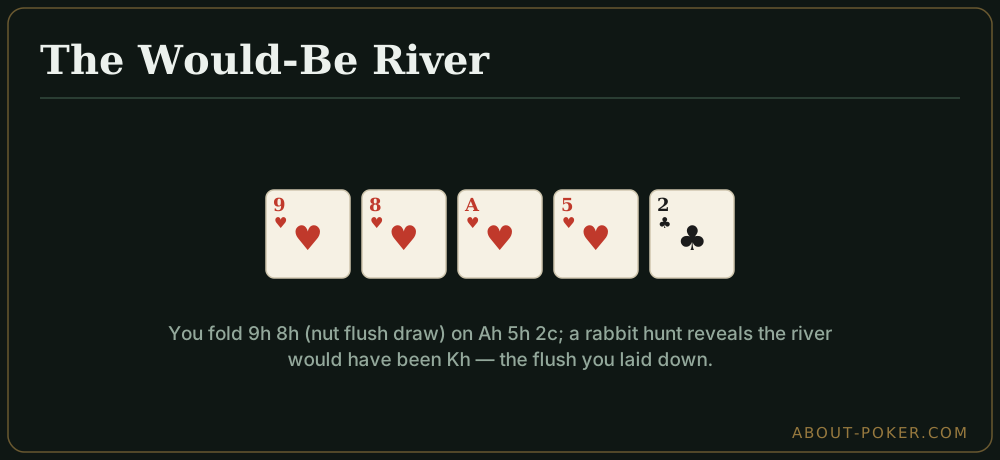
You hold 9h 8h on a flop of Ah 5h 2c, giving you a nut flush draw with nine hearts left to hit. Your opponent bets big on the flop and you decide to fold, respecting a likely strong ace. The hand is over; they take the pot.
Nagged by the “what if,” you ask to rabbit hunt. The dealer turns over the turn and river the hand never reached: 3d, then Kh. That King of hearts would have completed your flush on the river. You’ll never get the pot back, but now you know your fold cost you a winner this time. Emotionally, that’s exactly why some rooms ban it — it’s premium tilt fuel.
Why Many Rooms Ban Rabbit Hunting
Casinos and tournaments frequently prohibit rabbit hunting for practical reasons:
- It slows the game. Every rabbit hunt delays the next hand, and in a raked cash game or a timed tournament, time is money.
- It exposes muck cards. The deck is supposed to stay closed once a hand ends. Revealing future cards leaks information about what’s left in the deck.
- It fuels tilt and disputes. Seeing a fold that would have won, or a call that would have lost, can spark arguments and put players on edge.
Because of this, you’ll often hear a dealer say flatly, “Sorry, no rabbit hunting” in a regulated cardroom.
Where It Is Allowed
Rabbit hunting survives mostly in casual settings:
- Home games, where the vibe is friendly and no rake clock is running.
- Soft, social cash tables where the room permits it to keep recreational players happy.
- Some online sites offer a rabbit-hunt button as a paid or free feature, since a click reveals the runout instantly with no game delay.
Even where it’s allowed, good etiquette is to ask sparingly. Constantly rabbit hunting marks you as a player who can’t let go of folds — not a great look. It also signals to observant opponents that a fold is still bothering you, which is exactly the kind of emotional information a sharp table will happily use against you on the next big hand.
Rabbit Hunting vs. Related Terms
Don’t confuse rabbit hunting with running it twice or showing folded cards. Running it twice deals two full boards during a live all-in to reduce variance, and it affects the pot. Rabbit hunting happens only after the pot is settled and affects nothing. Showing your mucked cards for information is a different courtesy entirely and doesn’t involve dealing new cards.
The Bottom Line
Rabbit hunting is peeking at the cards that would have come after a hand ends — pure curiosity, zero impact on the result. It’s fine and fun in most home games, but banned in many casinos and tournaments because it slows play and exposes the deck. Know your venue’s rule, ask politely if it’s allowed, and don’t let a would-be miracle card tilt you into a bad next hand.
Frequently asked
What is rabbit hunting in poker?
Rabbit hunting is asking the dealer to reveal the cards that would have come on later streets after the hand has already ended. For example, after everyone folds on the turn, a player asks to see what the river would have been.
Is rabbit hunting allowed in poker?
It depends on the venue. Many casinos and tournaments ban it because it slows the game and reveals information from a deck that's still in play. Some home games and softer cash tables allow it as a casual courtesy.
Why do casinos ban rabbit hunting?
Rabbit hunting wastes time between hands and exposes cards that are supposed to stay in the muck. Showing what would have come can also give players information about the deck and fuel tilt or arguments.
Does rabbit hunting affect the outcome of the hand?
No. The hand is already over and the pot is awarded before any rabbit hunt. Seeing the would-be card changes nothing about who won or how much they collected — it's purely for curiosity.