What Is Range Merging in Poker?
Range merging means betting a mix of strong and medium hands together instead of only nuts and bluffs. Learn when a merged range beats a polarized one.
On this page · 6 sections
Range merging means betting a smooth, continuous band of hands, from your strong holdings down through medium-strength value, rather than splitting your betting range into just the nuts and pure bluffs. A merged range targets the many worse hands that will call, usually with a smaller bet size. It is the natural counter to opponents who call far too often.
Merged versus polarized
The cleanest way to understand merging is to contrast it with polarizing. A polarized range is built from two extremes: very strong hands you want to get maximum value with, and pure bluffs that have given up on winning at showdown. Polarized ranges use big bets and overbets, because the strong hands want a big pot and the bluffs need fold equity.
A merged range is the opposite shape. It contains strong hands plus medium-strength hands that are still ahead of the calling range, with few or no bluffs. Because the goal is to get called by worse rather than to fold out better, merged ranges use smaller sizes. The mental picture: a polarized range is a barbell (heavy at both ends, empty in the middle), while a merged range is a solid block from top to middle.
Why merging works against calling stations
Against a player who never folds, bluffing is pointless, so the top-and-bottom polarized approach collapses. But those same calling stations will pay off thinner and thinner value bets. Merging is how you exploit them: you bet not only your monsters but also your medium hands, because they are still better than the wide range of junk your opponent calls with. Every extra medium hand you bet is extra value harvested from a player who cannot fold.
The trade-off is size. Because a merged range includes hands that are only slightly ahead, you bet smaller. A pot-sized bet with second pair would get you value cut, but a one-third-pot bet lets weaker pairs, ace-highs, and draws call, and you profit off all of them.
A worked example
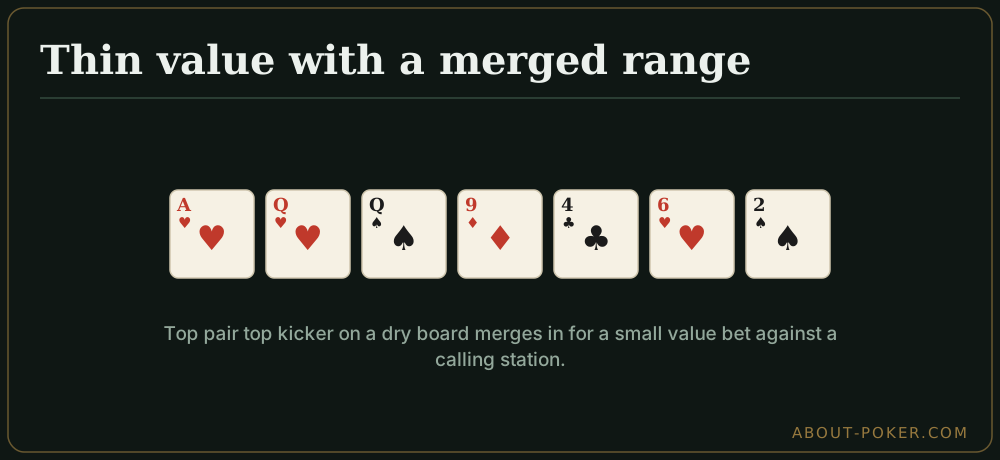
You raise preflop with Ah-Qh and the big blind calls. The board runs out Qs-9d-4c-6h-2s, a dry, disconnected runout. You have top pair, top kicker on the river. Your opponent has been calling loosely all session and rarely folds pairs.
A polarized approach would say check this “medium” hand and only bet nuts or air. But against a station, top pair is a clear value hand. You merge: bet around half pot. Now every worse queen, every nine, every stubborn pocket pair below queens, and every floated ace-high can call. You are not trying to fold anything out. You are milking value from the wide range of worse hands your opponent will not release. That is textbook range merging: a strong-but-not-nutted hand betting for thin value against a calling-heavy opponent.
When to merge and when to polarize
- Merge when the opponent overcalls, rarely raises, and folds too little. Bluffs fail here, so bet thin value with small sizes and pack your betting range with medium-strength hands.
- Polarize when the opponent folds correctly and can be pressured. Big bets and overbets with a barbell of nuts and bluffs work because your bluffs get folds and your value gets max value.
- Read the population first. Low-stakes and live games are full of calling stations, which is why merged, smaller-sizing lines print money there. Tougher games with disciplined folders reward polarized aggression.
Common mistakes with merging
- Merging against good folders. If you bet medium hands small into a player who folds correctly, you get raised by better and folded on by worse, the worst of both worlds. Merge only against loose callers.
- Using big sizes with a merged range. Merging demands small bets. A large bet with a medium hand is a value cut, folding out the worse hands you were trying to get called by.
- Adding bluffs to a merged range. A merged range is value-heavy by design. If you start bluffing a lot with it, you are drifting back toward polarization and lose the exploit against stations.
- Merging out of position without a plan. Out of position you cannot always control sizing across streets. Have a clear idea of how thin you are willing to go before you fire.
Quick reference
- Is my opponent a calling station who rarely folds? Merge.
- Am I betting medium-strength hands that beat their calling range? Merge, with a small size.
- Does my opponent fold correctly and respect aggression? Polarize instead.
- Am I trying to fold hands out? If yes, that is polarizing, not merging.
Range merging is the quiet, high-frequency way to beat loose games. Against opponents who will not fold, stop trying to bluff them and start betting your medium hands thin. The value adds up fast.
Frequently asked
What is range merging in poker?
Range merging means betting a continuous band of hands, from strong to medium-strength value, rather than splitting your range into only very strong hands and bluffs. A merged range targets worse hands that will call, using smaller sizes.
What is the difference between a merged and a polarized range?
A polarized range contains only the nuts-type hands and pure bluffs, and uses large sizes. A merged range contains strong and medium hands with few or no bluffs, and uses smaller sizes to get called by worse.
When should you use a merged range?
Use a merged range when your opponent is calling too often and folds rarely, so bluffs do not work but thin value does. Small merged bets extract from the many worse hands that will not fold.