Calling Too Much
Reflexive calling is the biggest low-stakes leak. Learn the two-question test that justifies any call — value or odds — and how to stop bleeding chips as a station.
On this page · 7 sections
Calling too much is the single most common and most expensive leak among low-stakes players. It doesn’t feel like a mistake in the moment — each individual call seems small and reasonable — but strung together across a session, reflexive calling quietly drains a stack. This guide gives you a simple test to apply to every call so you stop paying off value bets and chasing without a reason.
The two-question test
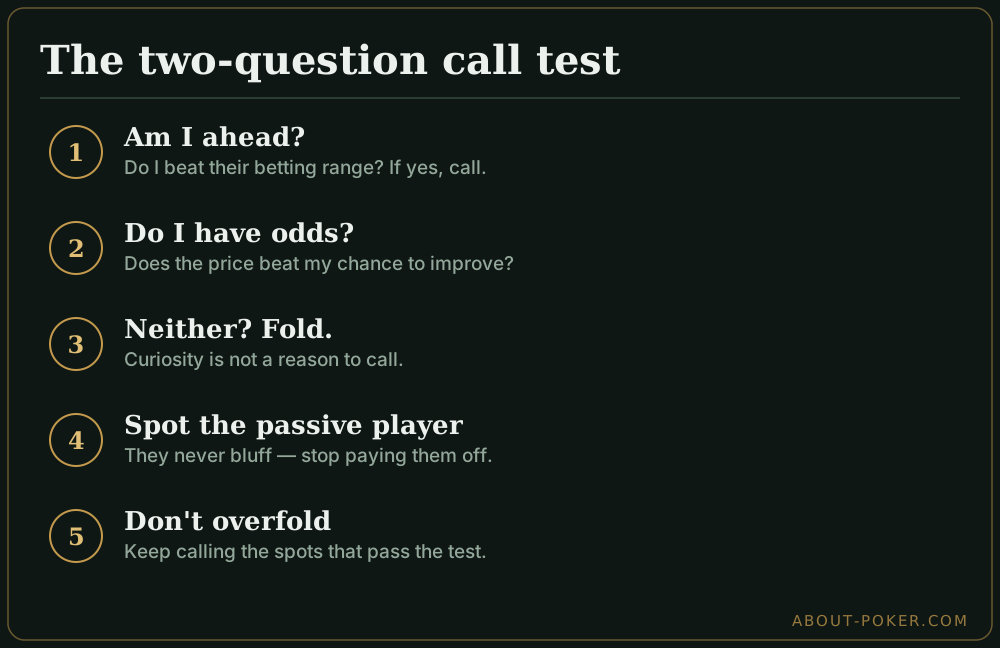
Every call you ever make should pass one of exactly two tests. Ask yourself, before putting the chips in:
- Am I ahead of the hands my opponent is betting? If your hand beats a meaningful chunk of their betting range, calling for value or a showdown is fine.
- Do I have the odds to draw to the best hand? If you’re behind now but have a draw, compare the price you’re paying to your chance of getting there.
If the answer to both is no, the call is a leak — fold. That’s it. The discipline isn’t complicated; it’s just hard to apply when you “really want to see the river.” Most losing calls fail both tests, and the player makes them anyway out of curiosity or stubbornness.
Why stations lose
A “calling station” calls too often and almost never raises or folds. The reason this loses is structural: in poker, the money is made by folding worse hands out and getting called by them, not by calling everything down yourself. When you call too much, you pay off every value bet your opponents make while never applying pressure of your own.
There’s a second cost. Because a station never folds, opponents simply stop bluffing and only bet their strong hands — which the station dutifully pays off. The station’s own bluffs, meanwhile, get called because everyone knows they’ll show up with anything. It’s the worst of both worlds. If you want to see how to exploit this leak in others (and recognize it in yourself), read playing against calling stations.
A worked example on the river
You hold A♥T♣ on a final board of K♠ 9♦ 6♣ 4♥ 2♠. You have ace-high — no pair. The pot is $80, and a tight opponent bets $60 on the river. You need to call $60 to win $140, so you’re getting 140-to-60, or about 2.3-to-1, meaning you need to be good roughly 30% of the time.
Now run the test. Are you ahead of their betting range? A tight player value-betting this dry river has kings, nines, better aces, maybe two pair — you beat none of it. Do they bluff enough busted draws to make ace-high good 30% of the time? On this board there were few draws, and this player rarely bluffs. Both tests fail. This is a clear fold, even though “the pot is big and maybe he’s bluffing.” Making this fold consistently is worth more than any fancy move in your arsenal.
Turning down draws that don’t pay
Chasing is calling too much in disguise. A flush draw completes about 19% of the time on the next card and 35% by the river with both cards to come. If the price you’re paying is worse than those odds — and you don’t have strong implied odds to make up the difference — chasing is a losing call.
Say you have a bare flush draw on the flop, the pot is $50, and your opponent bets $50. You’d be calling $50 to win $100, needing 33% equity, but your one-card equity is only about 19%. Unless you’re confident you’ll win a lot more when you hit (implied odds), this is a fold. Disciplined players fold draws that don’t pay; stations chase them all.
The other side: don’t overfold
The fix for calling too much is not to fold everything. Poker requires calling down in the right spots — bluff-catching against aggressive opponents, defending against players who bet too often, calling with correct odds on your draws. The goal is calibrated calling: fold the spots that fail both tests, and call confidently the spots that pass. Overcorrecting into a nit who folds every marginal spot is its own leak, closely tied to overvaluing top pair in reverse.
Building the folding muscle
Habits change with reps. Before each call, literally pause and run the two questions. It feels slow at first, but within a few sessions it becomes automatic, and you’ll notice how many “obvious” calls actually fail both tests. Reviewing your biggest losing hands afterward — many will be river calls you shouldn’t have made — cements the lesson. This is one of the fastest fixes in the whole game; it’s near the top of top postflop leaks for a reason.
The stop-calling checklist
- Run the two-question test — value or odds — before every call.
- Fold when you beat nothing in your opponent’s betting range.
- Only chase draws when the price beats your real odds of hitting.
- Recognize passive players who never bluff, and stop paying them off.
- Don’t overcorrect: keep calling the spots that genuinely pass the test.
Poker is won by folding your losers and getting paid on your winners. Cut the calls that fail both tests and your win rate climbs immediately.
Frequently asked
What is a calling station in poker?
A calling station is a player who calls far too often and rarely raises or folds. They pay off value bets with weak hands and refuse to fold marginal holdings, which makes them profitable to value bet against but very hard to bluff.
How do I know if I'm calling too much?
If you often reach showdown with weak hands, rarely fold to river bets, and feel you 'have to see it' when facing aggression, you're calling too much. A quick tracker check: if your win rate at showdown is low and you see a lot of showdowns, that's the leak.
When is calling actually correct?
A call is justified only when you're ahead of the hands your opponent is betting, or when your pot odds beat your chance of improving to the best hand. If neither is true, folding is correct. Every call should pass one of those two tests.