How to Play Against a Tight Table
A tight table folds too much, so attack it. Learn to steal relentlessly, respect big raises, and print chips against nits who wait for the nuts.
On this page · 7 sections
A tight table is one where most players enter few pots, fold to aggression, and only commit real money with strong hands. It feels safe and slow, and many players quietly lose money at these tables by folding along with everyone else. That is the trap. The correct response to a room full of people waiting for the nuts is not to join them — it is to attack the mountain of dead money they keep surrendering. Against a tight table you steal early and often, then step on the brakes the instant a nit shows genuine strength.
Why a tight table leaks money to you
Tight players fold too much. That single fact is the whole strategy. When opponents overfold to preflop raises, to continuation bets, and to turn barrels, every uncontested pot is pure profit. In a full-ring game the blinds plus antes and dead limps add up to a meaningful pot before anyone has a real hand, and a table of nits will hand it to whoever bets first. Your job is to be that bettor as often as position and cards allow, collecting small pots that compound into a strong win rate. This is the same dead-money logic that drives stealing blinds in cash.
Widen your opening and stealing ranges
From late position at a tight table, open far wider than a standard chart suggests. Hands like K9 offsuit, Q8 suited, and any two Broadway cards become clear raises when the players behind you fold 70% of the time. From the cutoff and button you can attack the blinds with something close to half your hands, because the immediate fold equity dwarfs the risk. In the small blind, complete less and raise more — a limp invites the big blind to see a free flop, while a raise often just takes it down. The looser the table folds, the wider you press.
Respect a nit’s aggression completely
The flip side of relentless stealing is disciplined folding. A genuinely tight player who raises, three-bets, or check-raises is almost never bluffing. When the rock who has folded for an hour suddenly puts in a big raise, your top pair and even your overpair are frequently beaten. The mistake many players make is stealing wide, getting called, and then refusing to believe the nit when he wakes up on the turn. Steal the dead money, but the moment real chips come back at you from a tight opponent, fold everything short of a very strong hand.
A worked example
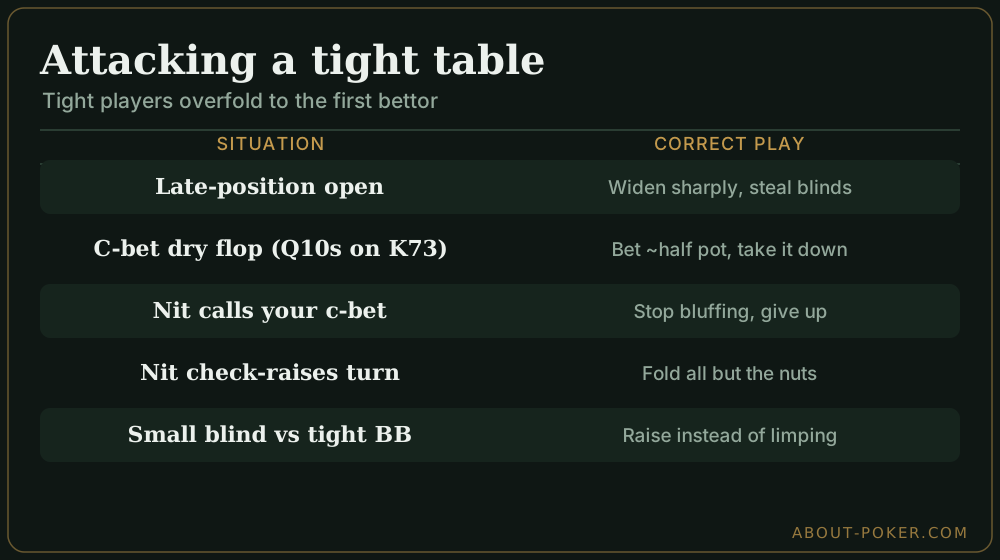
You open the cutoff to 3 big blinds with Q♥ 10♥ at a full-ring table where four of the six players behind you are visible nits. The button and small blind fold, and the big blind — a tight, straightforward player — calls. The flop comes K♠ 7♦ 3♣. You have nothing but backdoor equity, yet you fire a continuation bet of about half the pot. A tight big blind who missed this dry board folds a huge share of the time, and you take it down with queen high. Now compare the alternative line: the big blind check-raises the flop. Against a tight opponent, that raise is loaded with kings, sets, and strong pairs, so you simply give up. You bluffed the fold and folded to the raise — exactly the pattern that beats a tight table.
Adjust by stack depth and position
Deep stacks reward implied-odds hands that can stack a nit when he finally commits, so suited connectors and small pairs gain value because a tight player’s big bets are honest and easy to read. Shorter stacks favor pure steal-and-fold poker, since you cannot get paid off big and are simply harvesting blinds. Position matters even more than usual here — acting last lets you steal with impunity and fold cheaply when someone fights back. Seat selection with the tightest players on your left, as covered in table selection and seat selection, turns their passivity into your positional edge.
Common mistakes against tight tables
The biggest leak is playing tight yourself. If everyone folds and you fold too, you simply pay the rake while the aggressor collects. A second mistake is barreling into calls — a nit who calls your flop bet usually has something, so stop bluffing rather than firing again into obvious strength. A third is stacking off with one pair when a tight player raises the river; that raise is the nuts far more often than at a normal table. Finally, do not tilt when a nit finally traps you. He was always going to, occasionally, and the steady stream of stolen pots more than pays for it.
Checklist for a tight table
Open and steal wider from late position, especially against tight blinds. Continuation bet relentlessly on dry boards where nits fold. Give up when a tight opponent calls, and fold outright when he raises. Use position and seat selection to attack the passive players. Keep the pots small unless you have a genuinely strong hand, and understand your edge here is many small wins, not stacks. Play it right and a room full of rocks becomes one of the most reliably profitable games you can find, a cornerstone idea in full-ring cash game strategy.
Frequently asked
How do you beat a tight poker table?
Widen your opening range and steal relentlessly, because tight players fold far more than they should to preflop and continuation-bet aggression. When a nit finally raises or check-raises, believe him and fold marginal hands. You win the many small pots and dodge the few big ones.
Should you bluff a tight table?
Yes, but bluff the checks and the folds, not the calls. Small continuation bets and steal raises pick up dead money constantly against tight players. Once a nit puts real chips in on later streets, stop bluffing and give him credit for a strong hand.
Is a tight table good or bad for winning?
A tight table is easy to beat for small, steady profit but hard to win huge pots at, because opponents rarely stack off light. You grind the blinds and dead money rather than felting people, so expect a lower but more consistent win rate.