How to Play Against an Aggressive 3-Bettor
An aggressive 3-bettor bluffs too often, so stop over-folding. Learn to call in position, 4-bet light, and turn a light 3-bettor's aggression into profit.
On this page · 7 sections
An aggressive 3-bettor is the player who reraises your opens far more often than a solid strategy warrants, applying constant preflop pressure and betting you off pots after the flop. Facing him for the first time, most players react by folding everything except premium hands — which is exactly the trap. A high 3-bet frequency mathematically guarantees a wide, weak, bluff-heavy range, and over-folding hands it money for free. The correct response is to stop respecting his reraises so much and start fighting back with well-chosen calls and light 4-bets.
Why a wide 3-bettor is beatable
Range math tells the story. A balanced player 3-bets somewhere around 7 to 10% of hands. When an opponent’s 3-bet frequency climbs to 15% or more, the extra hands are not premiums — they are the junky bluffs and speculative holdings that pad the range. If you respond by folding everything but queens, kings, aces, and ace-king, you are folding roughly 90% of the time against a range that is often mostly air. That imbalance is the leak you attack. The general framework for reraising is covered in 3-betting in cash games; against an aggressive 3-bettor you are turning that framework back on him.
Call more in position
The cleanest counter is to call his 3-bets in position with a wider, playability-focused range. Hands like pocket pairs, suited connectors, and suited Broadway cards flop well, retain equity, and let you outplay a wide range after the flop. When you have position, you see his continuation bet before acting, control the pot size, and can float or raise as the board dictates. Because his range is weak, his flop bets are often continuation stabs he will abandon, so calling and then applying pressure on later streets is highly profitable. Out of position, tighten considerably — you realize far less equity there.
4-bet light to punish him
Calling is not your only weapon. Against a player who 3-bets too much, a light 4-bet is enormously effective, because his wide range folds out a large share of the time. Choose blocker hands such as ace-five suited or ace-four suited, which remove some of his premium combinations while retaining the ability to make the nut flush or wheel if called. King-jack and ace-ten also make fine 4-bet bluffs. The immediate fold equity is large, and when he does continue you often have a hand with real equity or a clean shove. The mechanics of when and how to size these are laid out in 4-betting in cash games.
A worked example
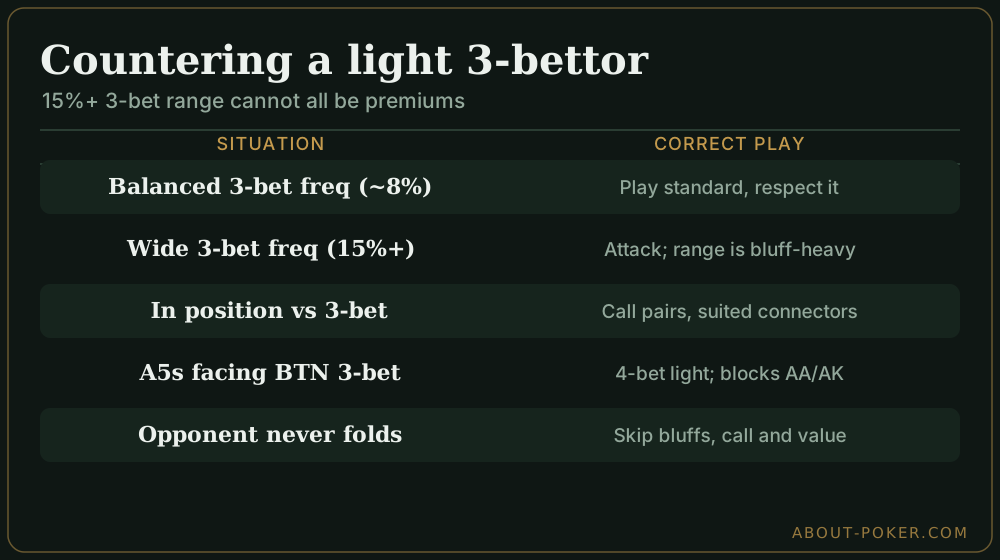
You open the cutoff to 3 big blinds with A♥ 5♥, and a habitual aggressive 3-bettor on the button makes it 10. You know his button 3-bet frequency is enormous, so instead of folding a hand that plays poorly as a flat call, you 4-bet to 24. Ace-five suited is an ideal choice: it blocks his ace-ace and ace-king combos, and if he shoves you still have a hand that flops flushes and wheels. Most of the time he folds his junk and you take a nice pot uncontested. Occasionally he 5-bet shoves and you fold, having invested little relative to the dead money you scoop the rest of the time. Over many repetitions, punishing his wide range this way prints money.
Adjust by opponent type and position
Not every aggressive 3-bettor plays the same. A thinking reg who 3-bets wide will fold to your 4-bets appropriately, making light 4-betting profitable, while a stubborn recreational player who 3-bets wide but never folds calls you down and demands a call-and-value approach instead. Position governs everything: 4-bet and call wider when you have position on the 3-bettor, and tighten sharply when he acts after you. Deep stacks favor calling with implied-odds hands; shallower stacks favor the 4-bet-or-fold decision. Reading whether the aggression is disciplined or reckless, and calibrating accordingly, overlaps heavily with adjusting to aggressive regs.
Common mistakes
The dominant leak is over-folding — treating every 3-bet as a premium and surrendering your entire opening range except the top few percent. A second mistake is 4-bet bluffing into players who never fold, turning a good exploit into a spew. A third is calling 3-bets out of position with weak hands that cannot realize their equity, then check-folding the flop repeatedly. Finally, some players tilt at a light 3-bettor and start 4-bet jamming garbage, overcorrecting until they are the one spewing. The counter is deliberate, not emotional.
Checklist against an aggressive 3-bettor
Recognize the wide, bluff-heavy range and stop over-folding. Call more in position with pairs, suited connectors, and suited Broadways that flop well. Add light 4-bets with blocker hands like ace-five suited to punish his frequency. Tighten out of position and against opponents who never fold. Read whether the aggression is disciplined or reckless before choosing to bluff or to call down. Handled correctly, the player who tries to run you over preflop becomes one of your most reliable sources of chips.
Frequently asked
How do you play against an aggressive 3-bettor?
Stop over-folding to his 3-bets and start fighting back. Call more in position with hands that flop well, and mix in light 4-bet bluffs to punish his wide range. His 3-bets contain so many weak hands that folding everything but premiums simply donates money.
Should you 4-bet light against an aggressive 3-bettor?
Yes, selectively. When someone 3-bets far too often, a light 4-bet with hands like ace-five suited or king-jack picks up the pot immediately or sets up a strong shove. Choose blocker hands and stop only against opponents who never fold to 4-bets.
What hands should you call an aggressive 3-bet with?
In position, call with hands that flop strong equity and playability, such as pairs, suited connectors, and suited Broadway hands. Out of position, tighten up because you realize less equity. Prefer calling hands that make top pair, sets, or big draws over weak offsuit holdings.