Playing Against Maniacs
Maniacs bet and raise with anything, so let them bluff into your strong hands. Learn to trap, call down wider, sit for position, and stop firing back with air.
On this page · 7 sections
A maniac is the player who raises, re-raises, and barrels with almost anything, seemingly allergic to folding or checking. It feels chaotic to sit next to one — but a maniac is one of the most profitable opponents in poker if you keep your composure. The core idea is simple: stop trying to out-aggress them and instead let their recklessness pour chips into your strong hands. Tighten up, call down wider, trap, and get position, and the maniac becomes a bankroll booster rather than a headache.
Maniac versus thinking aggressor
First, don’t confuse a maniac with a skilled loose-aggressive reg. A LAG applies pressure deliberately and stays balanced; a maniac bets with no coherent plan and no fold button. The counter-strategies overlap but differ in degree — against the disciplined version you need the nuanced adjustments in adjusting to aggressive regs, whereas against a true maniac you can be far more straightforward and just let them hang themselves.
The tell is consistency of nonsense. A maniac 3-bets junk, barrels missed draws into obvious strength, and stacks off with bottom pair. If the aggression never stops and rarely makes sense, you’ve found your maniac.
Tighten your opening range
Because a maniac will raise and re-raise constantly, weak speculative hands lose value — you’ll frequently face a 3-bet and have to fold, forfeiting your investment. Tighten up preflop and enter pots with hands that can comfortably continue against aggression: big pairs, strong broadways, and suited hands with playability.
The payoff is that when you do have a hand, the maniac supplies the action. You don’t need to build the pot yourself; you just need a holding strong enough to call their barrels.
Call down wider than feels comfortable
This is the adjustment most players fail to make. Against a maniac whose betting range is stuffed with air, your bluff-catchers rise sharply in value. Top pair, and even second pair, becomes a call-down hand because so much of their range is nothing. Folding a decent pair to a maniac’s triple barrel is exactly the mistake they’re counting on.
Steel yourself for the variance: you will sometimes call three streets and lose to a rare made hand. That’s fine. Over the long run, calling down wide against a player who bluffs relentlessly is hugely profitable.
Trap instead of raising
When you flop a monster against a maniac, your instinct might be to raise for value. Resist it — raising often blows them off their bluffs. Instead, just call and let them keep firing. A maniac who fires three barrels into your slow-played set will stack off far more often than one you raised on the flop, because the raise signals strength even to a reckless player.
This is the mirror image of the calling-station approach, where you do the betting. Against a maniac, they do the betting, so your job is to keep the trap baited.
A worked example
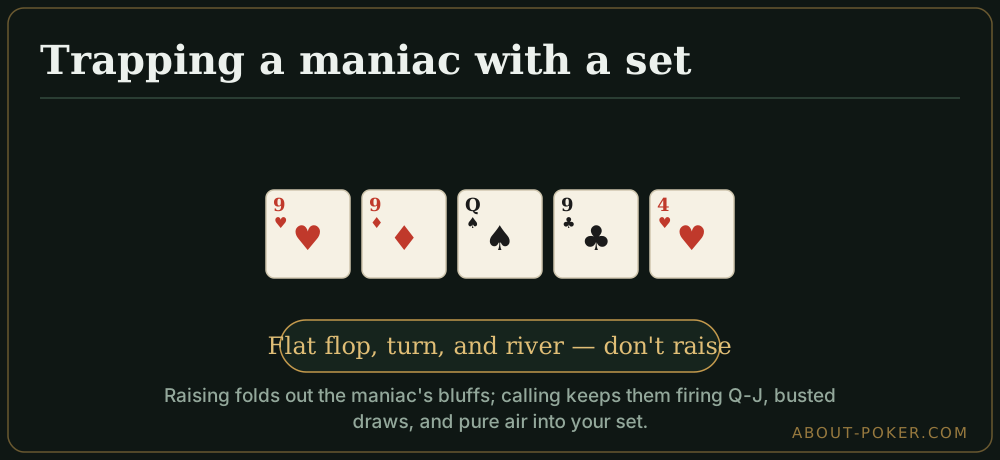
You call a maniac’s raise on the button with 9-9. The flop comes Q-9-4 rainbow, giving you middle set. The maniac fires three-quarters pot. Rather than raise, just call — the board is dry, you’re crushing their range, and a raise likely folds out their air.
The turn is an offsuit 2. The maniac barrels again, near pot. Call again. The river is an offsuit 7. The maniac shoves. Now you snap-call. A disciplined opponent would rarely put three big bets in with a bluff, but a maniac does it constantly — with Q-J, with busted draws, with pure air. By trapping instead of raising, you’ve won a full stack that a flop raise would have cost you.
Get position and pick your seat
Position magnifies every edge against a maniac. Acting last lets you call down with more information and control the size of the pots you’re bluff-catching. Whenever possible, seat yourself to the maniac’s left so their raises come before your decisions. The seat-selection fundamentals are the same ones covered in table and seat selection — and against a maniac, that left seat is worth even more than usual.
Maniac counter-strategy checklist
- Tighten preflop; play hands that can withstand aggression.
- Call down wider — their range is mostly air.
- Trap monsters by calling, not raising, to keep them bluffing.
- Don’t bluff them; they won’t fold.
- Take the seat to their left for position on every pot.
- Accept the variance; the long-run edge is large.
Sit back, let the maniac do the work, and pay them off with patience rather than pride.
Frequently asked
How do you beat a maniac in poker?
Let them do the betting for you. A maniac raises and bluffs with a huge range of weak hands, so tighten up preflop, call down wider than normal, and trap your strong hands instead of fast-playing them. Their reckless aggression turns your good hands into gold mines.
What is the difference between a maniac and a LAG?
A LAG is a loose-aggressive but thinking player whose aggression is deliberate and balanced. A maniac is reckless — they bet and raise with almost anything regardless of the situation, without a coherent plan. Maniacs are far more exploitable because their aggression is unfiltered.
Should you bluff a maniac?
Rarely. A maniac won't fold to your bluffs because they either have a hand or plan to bet themselves, so bluffing burns chips. Instead, let them bluff into you and win by showing down the better hand more often.