C-Betting Monotone Boards
Monotone flops (three of a suit) flatten equities and reward small, controlled c-bets. Learn how to attack flush boards, use your suit blockers, and when to check.
On this page · 6 sections
Monotone boards — three cards of the same suit, like K♥9♥4♥ — are the trickiest common texture to c-bet. A flush is already on the table, so equities across both ranges bunch together in an unusual way, and the normal instinct to bet big can quickly turn into a disaster. The winning approach is controlled: small bets, careful frequency, and heavy use of suit blockers to pick your bluffs.
Why Monotone Boards Are Different
On most flops, the gap between the best and worst hands is enormous. On a monotone board that gap compresses. A made flush is a monster, but a single card of the suit gives anyone a one-card flush draw with nine outs — and there are a lot of those hands in both ranges. Meanwhile a strong offsuit hand like top two pair is suddenly mediocre because any fourth card of the suit can flip the winner. Equities run close together, which is exactly the condition that argues against big, polarizing bets.
Neither player’s range hits a three-suited board especially hard. Made flushes are rare (you need two of the suit in a specific way), and the rest of both ranges is a soup of one-card draws and vulnerable made hands. This flat equity distribution is the opposite of the leverage you get on a wet flop where you hold a big combo draw.
Bet Small, at a Moderate Frequency
Because equities are close and the board doesn’t favor you strongly, c-bet small — one-third pot — and don’t bet your whole range. A small bet keeps the pot controlled on a texture where a single card can reverse the hand, still charges the naked one-card draws a fee, and lets you continue cheaply with your marginal made hands. There’s no reason to blast big: a large bet only gets called by made flushes and strong flush draws, folding out the exact hands you’d rather keep in.
Frequency is lower than on a dry board. On K-7-2 rainbow you can approach a pure range bet; on K♥9♥4♥ you should mix in more checks, because so many of your opponent’s hands have real equity and can continue or raise. Overbetting the frequency here just hands the initiative to a competent opponent who’ll float and raise your air.
Blockers Decide Your Bluffs
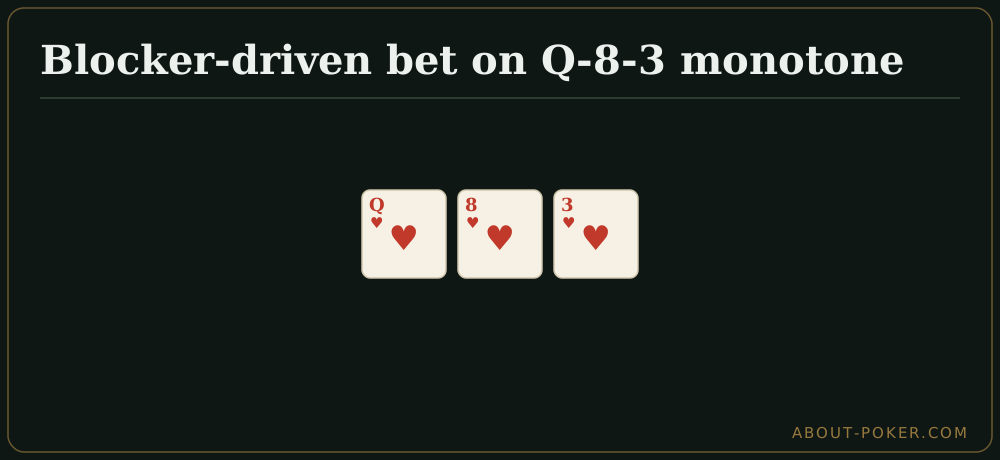
The single most important skill on monotone boards is reading blockers. Which of your bluffs should fire? The ones that hold a card of the board’s suit — ideally the ace of that suit. If you hold the A♥ on a heart board, your opponent literally cannot have the nut flush and can’t have the nut flush draw either. That dramatically shrinks their continuing range and makes your bluff far more likely to work.
Conversely, a bluff with no heart in it runs into the full weight of your opponent’s flushes and draws. So the rule is simple: bluff with your suit blockers, check your air that has no suit card. This is a purely combinatorial edge, and it’s one of the clearest, most profitable applications of blocker theory in the game.
A Worked Example
You raise A♥K♠ on the button, the big blind calls, and the flop is Q♥8♥3♥ in a 5.5bb pot. You don’t have a made hand, but you hold the A♥ — the nut flush blocker plus the nut flush draw yourself.
C-bet one-third pot (1.8bb). Your A♥ means the caller can never have a made nut flush or the nut flush draw, so their continuing range is capped. If a fourth heart comes on the turn, you hold the nut flush and can barrel big. If not, you can often keep applying pressure because your blocker makes their range weak. This is a semi-bluff supercharged by a blocker — a textbook combination covered in playing draws postflop.
Now hold 7♣6♣ on the same board — a no-suit bluff with a gutshot. This is a check. You hold no heart, so the caller’s flushes and flush draws are all live, and firing here just donates chips into a range that’s happy to continue. Save the aggression for the hands that block their nuts.
Common Mistakes
The top leak is betting big to “protect” a made hand like a set on a monotone board. Sets are vulnerable here and a big bet folds out worse and gets called by flushes — bet smaller and be ready to pot-control. The second is ignoring blockers entirely and bluffing random air, which walks into made flushes. The third is c-betting too often, treating a flush board like a dry board and getting punished by check-raises.
Quick Checklist
On a monotone flop, ask: How flat are the equities? (Very — bet small.) Do I hold a card of the board’s suit, especially the ace? (If yes, this hand is a bet; if no, lean toward checking.) Am I building a pot I can defend on a fourth-suit turn? Control the pot, lean on your blockers, and let the naked air check. Monotone boards reward precision, not power.
Frequently asked
What is a monotone board in poker?
A monotone board is a flop where all three cards are the same suit — for example K♥9♥4♥. A flush is already possible, and any player with one more card of that suit holds a made flush or a one-card flush draw.
How should you c-bet a monotone flop?
Bet small and at a moderate frequency. Equities run close together because so many hands have a flush or flush draw, so a small one-third-pot bet controls the pot while still applying pressure and protecting your equity.
Why do blockers matter on monotone boards?
Holding one card of the board's suit — especially the ace — blocks your opponent's best flushes and flush draws, making your bluffs more likely to succeed. Suit blockers are the main tool for choosing which hands to bet as bluffs.