Fold vs Hero Call
Fold or make the hero call? Learn how pot odds, blockers, and opponent tendencies decide whether calling a big river bet with a bluff catcher shows a profit.
On this page · 6 sections
The river bet lands, it’s big, and your hand beats only bluffs. This is the fold vs hero call moment, one of the purest tests in poker. Fold too often and observant opponents bluff you relentlessly; call too often and you pay off every value hand. The right answer is not a feeling; it’s a collision of pot odds, blockers, and what you know about the player across the table.
Start with the pot odds
Every river call has a break-even point set by the price. The formula is simple: your break-even bluff frequency equals the bet divided by the sum of the pot after your call. Facing a pot-sized bet, you’re risking one unit to win two, so you need to be good roughly one time in three, a break-even bluff frequency of about 33%. Facing a half-pot bet you risk one to win three, needing to be right only about 25% of the time. A big overbet demands you be right far more often.
This number is your anchor. The question is never “do I think he has it?” in a vacuum; it’s “does his range contain enough bluffs to clear my break-even price?” If you need him bluffing a third of the time and you believe he’s bluffing half the time, call. If he almost never bluffs, fold even a strong bluff catcher. Our guide to bluff catching the river drills this frequency thinking.
A worked example on a scary river
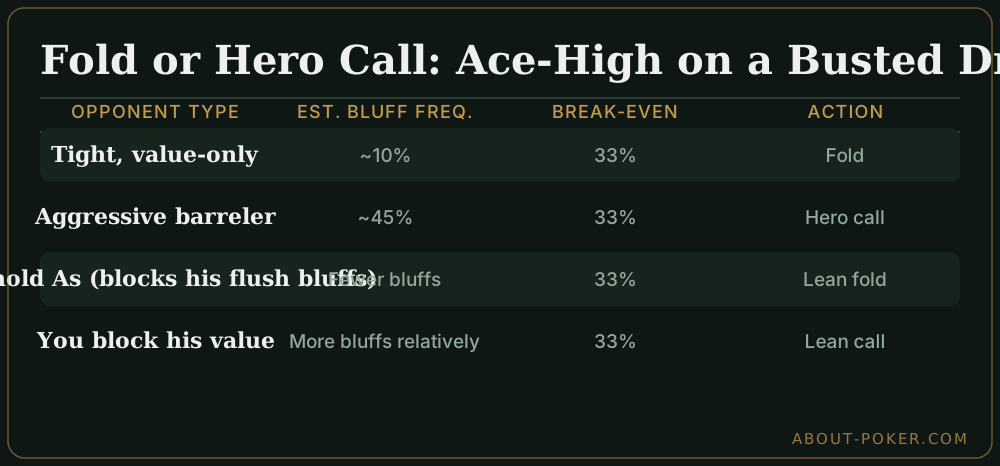
You call a raise from the big blind with As5s. The flop is Ks 9s 4d, giving you the nut flush draw and an ace. You check-call a c-bet. The turn is the 2h, missing you; you check-call again. The river is the 7c, the flush misses, and your opponent bets pot. You hold ace-high.
Fold or hero call? Run the math and the reads. Facing a pot-sized bet you need him bluffing about a third of the time. Your busted flush draws and ace-high hands are exactly the region that wants to bluff catch, and crucially you hold the As, which blocks a chunk of his own busted flush draws, so he has fewer natural bluffs than it seems. That blocker actually pushes toward a fold, because it removes bluffs from his range while leaving his value intact. Against a tight, straightforward player who bets pot on the river only with value, this is a fold. Against a hyper-aggressive player who barrels every missed draw and turns weak pairs into bluffs, ace-high can be a profitable hero call. Same hand, same board, opposite decisions based on the human.
Blockers can flip a close spot
Blockers cut both ways, and reading them correctly is what separates a good hero call from a spew. Holding a card that blocks your opponent’s value hands makes a bluff more likely, favoring a call: if the nut straight requires a specific card and you hold one of them, there are fewer combos of the nuts in his range. Holding a card that blocks his bluffs does the opposite, favoring a fold, because you’ve removed the very hands you were hoping to catch.
The disciplined move is to ask which part of his range your card removes. Block his value, lean call. Block his bluffs, lean fold. This is subtle and it’s where many players go wrong, calling because “I have the ace” without noticing the ace blocks the busted flushes they needed him to hold. Overbets sharpen this even further, which is why we devote a full guide to facing a river overbet.
Opponent tendencies are the tiebreaker
When the math is close, the player decides. Calling stations who never bluff make hero calls losing propositions no matter how tempting the board; against them, fold your bluff catchers and only call with real value. Aggressive, imaginative players who barrel missed draws and overbet as bluffs make hero calls profitable more often than the math alone suggests.
Also weigh the story. Does the line make sense for value? A player who checks the flop and turn and then jams the river represents a narrow, often polarized range. Sizing tells you plenty too: many recreational players bet big with value and small with bluffs, so a huge river bet from a straightforward opponent is a fold flag, while a huge bet from a known bluffer is a call flag. Piecing the streets together is the heart of how to play the river.
Common mistakes
The classic leak is calling on principle, “I’m not getting bluffed off this,” turning a disciplined fold into an ego call that pays off value every time. The opposite leak is folding every time it’s close, which trains opponents to bluff you at will and quietly destroys your win rate. Both are failures to combine the math with the read.
A quick decision checklist
Ask: What bluff frequency does the bet price demand? Does his range plausibly contain that many bluffs? Do my cards block his value or his bluffs? Does the betting story make sense for value on this runout? What type of player is he, and how does his sizing map to value versus air?
When the price, the blockers, and the read all point the same way, the decision is easy. When they conflict, weight them by how much you trust each read, and remember that a correct fold against a non-bluffer is just as much a win as a correct hero call against a maniac.
Frequently asked
What is a hero call in poker?
A hero call is calling a big bet with a hand that only beats a bluff, because you believe your opponent is bluffing often enough to make the call profitable. It's a read-based or math-based bluff catch against a range you think is too heavy on air.
How do pot odds decide a hero call?
Pot odds set the break-even bluff frequency you need. Facing a pot-sized bet you risk one to win two, so you need to be right about a bluff at least a third of the time. If your opponent bluffs more often than that break-even number, calling profits; if less, fold.
Do blockers help me decide to hero call?
Yes. Holding a card that blocks your opponent's value hands (like an ace that blocks the nut flush or a card that blocks the completed straight) makes it more likely they're bluffing, tilting a close spot toward a call.