Facing a River Overbet
A river overbet is polarized: nuts or air. Learn the pot-odds math, which hands to bluff-catch with, and how to use blockers when facing a river overbet.
On this page · 6 sections
Nothing tightens the chest at the poker table like a bet bigger than the pot on the river. An overbet is a loud, deliberate move, and by the time it lands the player has already narrowed their own range for you. Facing a river overbet is less about your hand’s raw strength and more about decoding a polarized range — and then finding the right price, the right blockers, and the discipline to act on the read.
What an overbet actually says
An overbet on the river is almost always polarized: the nuts (or something close) versus a bluff, with very little in the middle. Nobody overbets a medium-strength hand for thin value — they’d get called only by better and folded out by worse. So the sizing itself is the tell. Your opponent is representing a hand that either crushes you or beats nothing.
That structure is what makes overbets both dangerous and exploitable. You’re rarely in a marginal spot where you barely win or lose; instead you’re usually flipping between “I’m way ahead of the bluffs” and “I’m drawing dead to the value.” The whole game is estimating that ratio. Start with reading overbets to build the pattern recognition for when the sizing is credibly nutted versus a desperate blast.
The pot-odds math
Your call needs a minimum equity set by the price. Equity needed = amount to call ÷ (final pot after you call). The bigger the overbet, the more equity you need:
- Pot-sized bet: call needs about 33% equity.
- 1.5x pot overbet: needs about 37.5%.
- 2x pot overbet: needs about 40%.
Read that the other way and it becomes a defense rule. To bet-fold-proof their overbet, your opponent must show up with roughly the right mix of value and bluffs. Against a 2x pot bet, a balanced bettor is bluffing only about 40% of the time — so you only need to be right two times in five to break even on a call. That’s a lower bar than most players feel it is, which is exactly why folding every time to an overbet is a leak.
Blockers decide the close spots
When your equity is near the threshold, blockers break the tie. The principle from blockers in poker: hold cards that make the value hands less likely and the bluffs more likely.
If the overbet’s value range is the nut flush, holding the ace of that suit blocks a big chunk of their value — call more. If you hold cards that are exactly the busted draws they’d bluff with, you unblock nothing helpful and effectively make bluffs less likely from their side — lean toward folding. The best bluff-catcher isn’t your strongest pair; it’s the hand that beats their bluffs while blocking their nuts. This is the core skill in bluff-catching the river.
A worked example
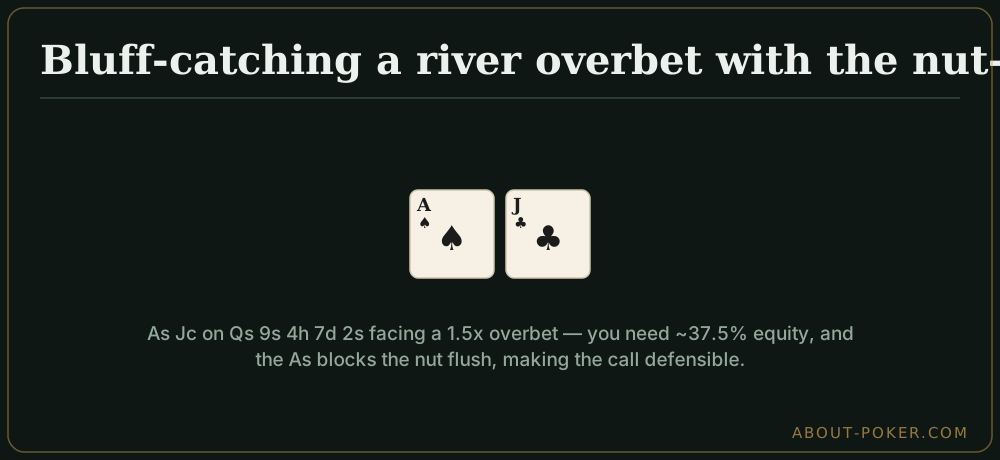
You hold A♠ J♣ on a final board of Q♠ 9♠ 4♥ 7♦ 2♠. The flush completed on the river. Your opponent — who checked the turn — suddenly overbets 1.5x pot. That checked turn followed by a big river blast reads polarized: either they slow-played or turned equity into a bluff on the third spade, or they made the flush.
You beat only bluffs here — ace-jack is bottom of your range at showdown, purely a bluff-catcher. The math says you need about 37.5% equity. Now the blocker question: you hold the A♠, which blocks the nut flush and the ace-high flush combos entirely. That single card removes a large slice of their value range and makes the busted straight and pair-plus-spade bluffs relatively more likely. With that blocker, ace-jack becomes a defensible call against a balanced overbetter. Strip away the A♠ — say you held A♥ J♣ instead — and the exact same “top pair” is now a much easier fold, because you no longer block the flushes.
Common mistakes
The first leak is folding everything to overbets. If you never call, thinking opponents will exploit you by overbetting every bluff, and you hand them a printing press. Some of your range must continue.
The second is calling with the wrong hands — picking your prettiest pair instead of your best blocker. Absolute strength barely matters against a polarized range; relative-to-their-range strength is everything.
The third is ignoring who’s betting. A balanced regular is bluffing near the correct frequency, so lean on the math. A passive, straightforward player who suddenly overbets is almost never bluffing — fold your bluff-catchers and save the chips.
Checklist for facing a river overbet
Ask: What price am I getting, and what equity does it require? Is this player’s range actually polarized, or is this a rare bluff from a station? Do my cards block their value or their bluffs? And do I have the discipline to call a bluff-catcher when the blockers and math both say go — and to fold the same hand when they don’t? Get those four right and river overbets become one of your most profitable spots to face.
Frequently asked
What does a river overbet mean?
A river overbet is a bet larger than the pot, and it almost always signals a polarized range — either the nuts (or near-nuts) or a bluff, with very little in between. Because the sizing itself is the message, your job is to figure out which side of that polarized range your opponent is on.
What pot odds does a river overbet lay you?
You need to defend based on the price. Against a pot-sized bet you need about 33% equity to call; against a 1.5x pot overbet you need 37.5%; against a 2x pot overbet you need 40%. The bigger the overbet, the more often it must be value, so you can defend fewer combos and lean on your best bluff-catchers and blockers.
Should you call a river overbet with one pair?
Usually only with the right blockers and a good read. Against a polarized overbet, top pair is often just a bluff-catcher, so its absolute strength matters less than whether it blocks the value hands and unblocks the bluffs. A hand that blocks the nutted combos and beats the bluffs is a call; a hand that blocks the bluffs is often a fold.