Bluff-Catching the River
Bluff-catching the river is the art of calling with a hand that beats bluffs but loses to value. Learn the math, blockers, and reads that make it profitable.
On this page · 7 sections
Bluff-catching is one of the most misunderstood skills in poker. A bluff-catcher is a hand that beats every bluff in your opponent’s range but loses to every value bet — so the call is never about your cards being “good.” It’s a pure frequency question: does your opponent bluff often enough to make your call profitable? Get this right and you punish over-aggressive players. Get it wrong and you bleed chips hero-calling honest bettors. This is the river skill that separates thinking players from the field.
What a bluff-catcher actually is
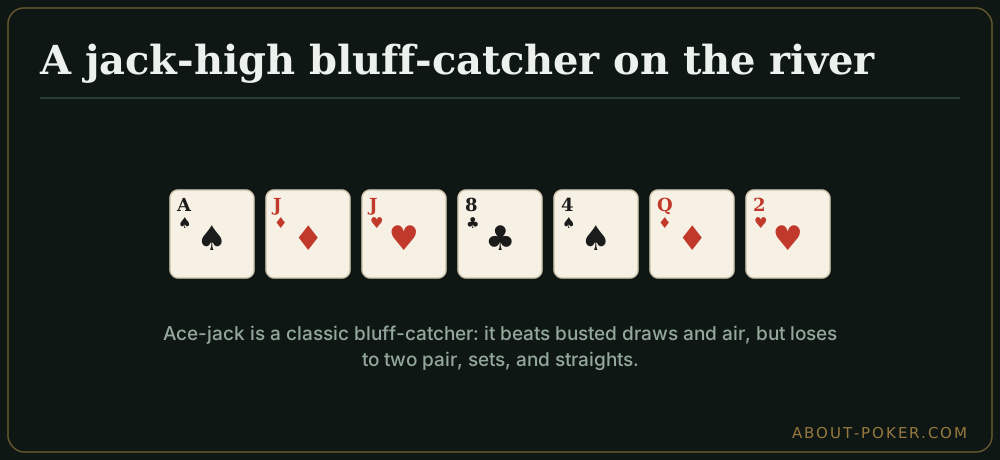
By the river every draw is decided, so hands are simply made or missed. A bluff-catcher sits in the awkward middle: it beats nothing your opponent bets for value, but it beats every busted draw and air hand they might fire as a bluff.
The classic example is one pair on a scary board. Say you hold A-J on a final board of J-8-4-Q-2 with no flush possible. You have middle pair, top kicker. If your opponent shoves, your jacks can only beat a bluff — any two pair, straight, or set crushes you. So the question is never “is jacks a good hand?” It’s “how often is this specific opponent turning air into a shove here?”
The core math: pot odds set the bar
Your call needs to be right often enough to break even. That threshold comes straight from pot odds. The formula is: required win rate = bet ÷ (pot + bet + call).
- Opponent bets half pot: you call 0.5 into a pot of 1.5, risking 0.5 to win 1.5. Break-even = 0.5 ÷ 2 = 25%. They must be bluffing at least a quarter of the time.
- Opponent bets full pot: risk 1 to win 2. Break-even = 1 ÷ 3 = 33%.
- Opponent overbets 2x pot: risk 2 to win 3. Break-even = 2 ÷ 5 = 40%.
The bigger the bet, the more often they need to be bluffing for your call to pay. This is exactly why overbets are so uncomfortable to face — they demand you be right 40% of the time or fold. Note this is the mirror image of the bettor’s job: a balanced bettor sizes bluffs so you’re indifferent, which ties directly into minimum defense frequency.
Worked hand: catching an over-barreler
You hold A♠ 8♠ in the big blind. A loose-aggressive regular opens the button, you call. Flop K♠ 9♠ 4♦ — you have the nut flush draw. You check-call. Turn 2♣ bricks; you check-call again. River 7♦ — your flush missed. Pot is $100 and he bets $60.
Your hand is now ace-high — it beats nothing for value but beats every busted draw. Pot odds: you risk $60 to win $160, break-even = 60 ÷ 220 = about 27%. Against a tight player, ace-high is a fold. But this is a player who barrels three streets with every missed draw and float. His river range here is stuffed with busted spade draws, missed T-J, and pure air. If he’s bluffing more than a quarter of the time — and an over-barreler usually is — calling with ace-high is correct. This is a genuine hero call, and it only works because his range is bluff-heavy.
Blockers tilt the decision
Which specific cards you hold changes how likely your opponent has value. This is the power of blockers. When you block the value hands they’re representing, value becomes less likely and their range skews toward bluffs — call more. When your hand blocks their bluffs, call less.
Back to the flush example: because you hold the A♠, you block the nut flush and the A-high flush combos. Your opponent is less likely to hold a made spade flush he’s value-betting, which makes his shove more likely to be a bluff. That single blocker meaningfully improves your call. Conversely, if you held the exact busted draw he might be bluffing with, you’d remove combos from his bluffing range and should call less.
When to catch and when to fold
Bluff-catching profits from opponents who bluff too much. Adjust to the player:
- Over-aggressive regs and maniacs: widen your calling range. They fire too many bluffs, so even weak bluff-catchers clear the pot-odds bar.
- Calling stations and passive players: fold almost every bluff-catcher. These players don’t bluff the river — their big bets are value, full stop. Trying to hero-call them is spewing chips.
- Unknown players: default toward folding thin bluff-catchers unless the line makes no sense as value. Most of the population under-bluffs the river.
Also read the story. A polarized line — bet, bet, big bet on a run-out where obvious draws bricked — has more bluffs than a small, cautious bet. And a bet size that’s “too big” often means the player picked a size that fits either the nuts or nothing, which is exactly a polarized, bluff-catchable spot.
A bluff-catching checklist
Before you call a river bet with a marginal hand, run through this:
- Is this truly a bluff-catcher? Confirm your hand beats bluffs but loses to value. If it beats some value too, that’s a thin value-call — a different, easier decision.
- What’s the pot-odds bar? Compute bet ÷ (pot + bet + call) to get your required bluff frequency.
- Does the range clear that bar? Estimate how many bluff combos versus value combos your opponent has here.
- What do my blockers do? Do I block their value (call more) or their bluffs (call less)?
- Who is this player? Aggressive players get called; passive players get folded to.
Putting it together
Bluff-catching is frequency math wearing a poker face. You’re not asking whether your hand is strong — you’re asking whether your opponent bluffs often enough to beat your price. Anchor every decision to the pot-odds threshold, adjust for blockers, and above all adjust for the human across the table. Sharpen the other side of the coin with value betting, study how blockers reshape ranges, and return to the postflop hub to connect river play to the streets before it.
Frequently asked
What is a bluff-catcher in poker?
A bluff-catcher is a hand that beats your opponent's bluffs but loses to all of their value bets. Calling with it can only win when the opponent is bluffing, so the decision hinges entirely on how often they bluff versus value bet in that spot.
How often does my opponent need to be bluffing to call?
You need your opponent to be bluffing at least as often as your pot odds require. Facing a half-pot bet you risk 1 to win 3, so you need to be right about 25% of the time. Facing a pot-sized bet you need to be right 33% of the time.
Do blockers matter when bluff-catching?
Yes. Holding a card that blocks the value hands your opponent is representing makes it less likely they actually have that value, which tilts the range toward bluffs and makes calling better. Blocking their bluffs does the opposite.
Should I bluff-catch against calling stations?
Rarely. Bluff-catching profits from opponents who bluff too much. A passive calling station almost never bluffs the river, so their big bets are overwhelmingly value. Against those players, fold your marginal hands and value bet thinner instead.