Playing Top Pair Weak Kicker
Top pair with a weak kicker is a pot-control hand, not a stack-off hand. Learn how to size, when to bet, and when to fold with a worked example.
On this page · 6 sections
Top pair weak kicker — like K-6 on a K-9-3 flop — is one of the most misplayed hands in poker. It feels strong because you paired the top card, but the weak kicker means you’re crushed by every better top pair and only beating worse pairs, draws, and air. The right approach is almost always the same: extract a little value or protection early, then keep the pot small and aim for a cheap showdown. This is a pot-control hand, not a hand you stack off with.
Why the kicker changes everything
Two hands can both make top pair and play completely differently. A-K on a K-8-3 board is top pair top kicker — you dominate every other king and can bet three streets for value. K-6 on the same board makes the identical pair, but now K-Q, K-J, K-T, and A-K all have you out-kicked. The board card is the same; your kicker decides whether you’re the one applying pressure or the one getting stacked.
The core problem with a weak kicker is reverse implied odds. When you get action on later streets, the hands that keep calling or raising are usually better kickers. The worse hands — second pair, missed draws — tend to fold. So piling money into the pot builds a pot you mostly win small and occasionally lose big. That’s the opposite of what value betting should do. If you want the contrast, review how to play top pair with a strong kicker first.
The default line: one bet, then control
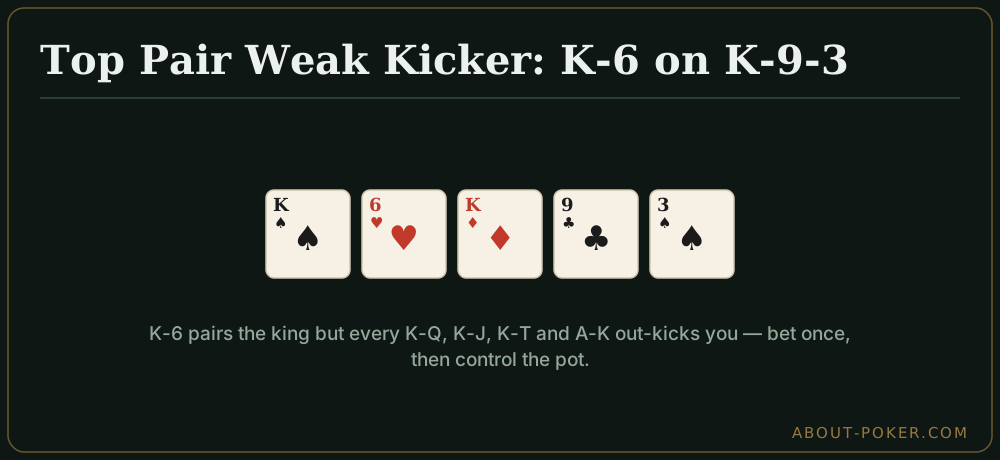
On the flop, betting once is correct with a weak kicker. You have real equity to protect — overcards and draws can outdraw you — and worse hands (middle pair, gutshots, ace-high) will call. A standard 33–50% pot c-bet does the job.
The mistake comes on the turn and river. Once the obvious draws either complete or miss, a second and third barrel stop making sense. Villain’s continuing range is now weighted toward better kickers and slowplayed monsters. This is exactly where pot control earns its keep: check back, take a free card if you’re in position, and try to show down cheaply.
A worked example
You open K-6 offsuit from the button, the big blind calls. Flop comes K-9-3 rainbow. Villain checks, you bet 40% pot, villain calls. So far, standard — you bet for thin value and protection.
Turn is the 2 of clubs, a total blank. Villain checks again. Many players fire a second barrel here “for value,” but think about who calls: K-7 and worse are rare, while K-T, K-J, K-Q, and A-K all continue. Checking back is better. You realize your showdown value, deny villain the chance to check-raise you off the hand, and keep the pot manageable.
River is the 5 of hearts. Villain leads for 60% pot. This is a fold or a bluff-catch decision, and against a straightforward opponent it’s often a fold — a low river card rarely makes a bluff for them, and value hands here beat you. Your six kicker simply isn’t a calling card against a big bet. You lost the minimum precisely because you controlled the pot on the turn.
How opponent and position shift the plan
Against a loose, calling-station opponent, a weak kicker gains value — worse kickers and second pairs call you down, so a second thin bet can be fine. Against a tight, aggressive player, do the opposite: their raises and barrels mean better hands, and you should fold more.
Position matters just as much. In position you control the pot for free by checking behind. Out of position you’re forced to guess, so lean toward check-calling one street and giving up rather than betting into unknown strength. If you want to understand when a bet is genuinely for value versus just bloating the pot, the value betting fundamentals apply directly.
Common mistakes to avoid
- Barreling all three streets. You fold out worse and get called by better. This is the single biggest leak with weak top pair.
- Never folding. Top pair is still one pair. Against clear strength, muck it and move on.
- Overvaluing it multiway. In a three- or four-way pot, top pair weak kicker is close to a bluff-catcher. Tighten up hard.
- Ignoring the runout. If the turn or river brings a card that pairs a likely kicker or completes a draw, your relative strength drops fast.
Quick checklist
Before you put more money in with top pair weak kicker, ask: Is a worse hand calling this bet? Is a better hand folding? If the answer to both is no, check instead. One bet for protection, then pot control, then a cheap showdown — that discipline turns a trouble hand into a small, steady winner instead of a stack-losing trap.
Frequently asked
What is top pair weak kicker?
It's when you pair the highest board card but hold a low second card — for example K-6 on a K-9-3 flop gives you top pair with a weak six kicker. You beat worse pairs and draws but lose to any better king.
Should you bet top pair weak kicker?
Usually one bet for protection and thin value, then slow down. Firing multiple large barrels only folds out worse hands and gets called by better kickers, so you keep the pot small and try to reach a cheap showdown.
Can you fold top pair weak kicker?
Yes, and good players do it regularly against sustained aggression on scary boards. Top pair is one pair — when a tight opponent raises or triple-barrels, a weak kicker rarely has enough showdown value to call down.