Pot-Sized Bet Strategy
When to use a pot-sized bet: how full-pot bets apply pressure, the exact bluff-to-value ratio they support, and a worked example on a polarized board.
On this page · 5 sections
The pot-sized bet sits between the everyday two-thirds bet and the overbet. It is a pressure tool: a full-pot bet builds a big pot quickly, charges draws heavily, and lays your opponent tough odds. But it is not a default — used on the wrong board or with the wrong range it fails just like any other mismatched size. This guide explains when the pot-sized bet is the right choice and how to build a balanced range around it.
What a pot-sized bet does to the odds
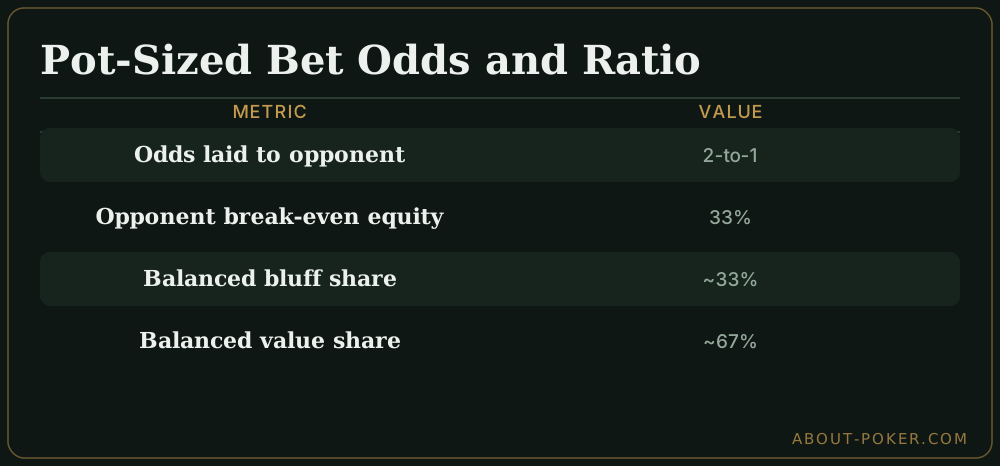
A pot-sized bet lays your opponent exactly 2-to-1. If the pot is 100 and you bet 100, they must call 100 to win 200, so they need to be good at least 33% of the time to break even. That price does two useful things at once. It forces draws to fold unless they have enough equity — a bare flush draw with about 19% equity on the turn cannot profitably call a pot bet on raw odds. And it puts real pressure on medium-strength hands, which must either defend with a strong enough range or over-fold.
Because it lays 2-to-1, the pot bet also fixes your ideal bluff ratio at roughly one-third. To make a calling opponent indifferent, about 33% of your betting range should be bluffs and 67% value. That is more value-heavy than an overbet allows but more bluff-friendly than a small bet, which is why the pot bet pairs naturally with strong-but-not-nutted boards.
Pot bets want a polarized-leaning range
Like the overbet, the pot-sized bet performs best when your range leans polarized — strong value and credible bluffs rather than a pile of medium hands. Full-pot pressure is wasted on marginal made hands that gain nothing from folding out worse and hate getting raised. Reserve it for spots where your value hands genuinely want a big pot and your bluffs genuinely want maximum fold equity. Our polarized range guide covers how to construct one.
The pot bet also shines when charging draws matters. On wet, dynamic boards with live flush and straight draws, a full-pot bet makes those draws pay the steepest price to continue, and grows the pot for your sets and two pair. This is a core reason it appears in aggressive double and triple barreling lines.
A worked example
You raise A♠K♠ from the button, the big blind calls, and the flop is K♦9♠4♠, giving you top pair top kicker plus the nut flush draw. The pot is 6 big blinds.
This is a strong spot for a pot-sized bet. Your hand wants to build a big pot — you are ahead of most of the big blind’s range and, when behind, you have the nut flush draw as a backup. Your range on this board is polarized-leaning: sets, two pair, strong kings, and flush draws for value and semi-bluff, plus air with a spade or a gutshot as bluffs. A pot-sized bet of 6 big blinds charges the opponent’s own flush and straight draws the maximum, denies equity to hands like QJ or T8, and starts building a pot you are happy to play for stacks. A small 33% bet would let all those draws call cheaply and would not extract enough from the worse kings that pay you off.
When the pot-sized bet is wrong
Do not reach for a pot bet with a merged range on a dry board — there you fold out worse and only get called by better, and a small range bet is far more efficient. Avoid it when your opponent’s range is capped and full of hands that simply fold to any big bet; if you are just charging folds, a smaller size wins the same pot for less risk, and if you truly dominate, an overbet may extract even more. Also watch your bluff count: if you bet pot with only value, observant opponents fold their bluff-catchers and you win nothing extra. For the value side of the equation, see value betting in poker.
Pot-sized bet checklist
Before you bet the full pot, confirm:
- Is my range polarized-leaning — strong value plus credible bluffs, not medium hands?
- Are there live draws I want to charge the maximum, or a range I want to pressure hard?
- Is my bluff-to-value mix near one-third bluffs, two-thirds value?
- Would a smaller bet win the same pot more cheaply, or an overbet extract more?
- Am I building a pot my value hands actually want to play for stacks?
When these line up, the pot-sized bet is a clean, powerful choice. When they do not, drop down to a two-thirds or small bet, or check.
Frequently asked
When should I bet the full pot?
Bet pot-sized when your range is polarized and you want to charge draws heavily or apply strong pressure on a board that favors you. It lays your opponent 2-to-1, forcing them to defend with a strong range or fold a lot, and it builds a big pot fast for your value hands.
What bluff ratio does a pot-sized bet need?
About one-third bluffs. A pot bet lays the opponent 2-to-1, so they need to win 33% of the time to call profitably; to make them indifferent, roughly 33% of your betting range should be bluffs and 67% value.
Is a pot-sized bet too big for value?
Not on polarized boards or against ranges that will still call. A pot bet extracts more from strong calling ranges and charges draws the maximum. It becomes too big only when your range is merged or the opponent will fold everything you beat.