Playing Two-Tone Flops
Two-tone flops carry a flush draw and shift toward bigger, more selective betting. Learn how the draw changes sizing, who has the advantage, and how to barrel.
On this page · 6 sections
Two-tone flops — two cards of one suit and a third off-suit, like K♥9♥4♠ — are the most common wet texture in poker, and they demand a real gear change from the small-bet approach you use on dry boards. The presence of a flush draw means someone can pick up nine live outs on the flop, and that single fact reshapes your sizing, your barreling plan, and how much you fear the turn. Master these and you handle the majority of postflop pots correctly.
The Flush Draw Changes the Math
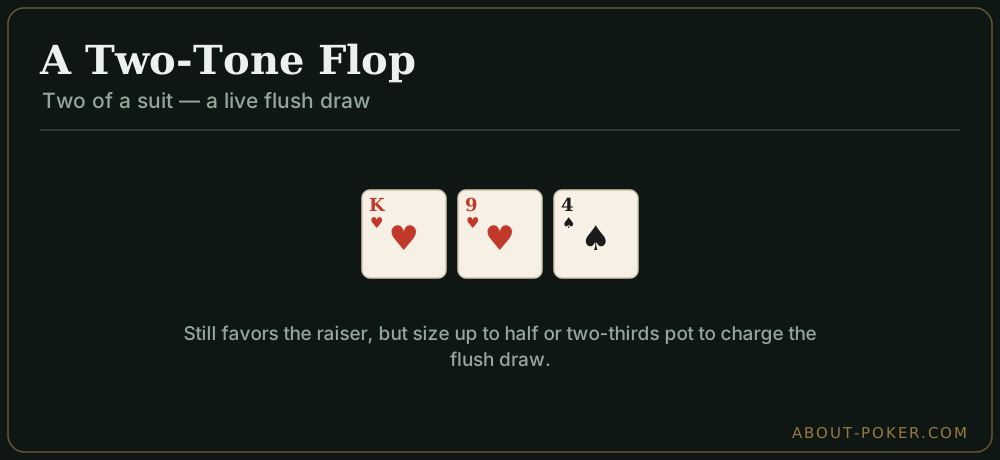
The whole difference between a dry board and a two-tone board is the flush draw. A hand with two cards of the suited pair has roughly a 35% chance to complete its flush by the river — nine outs is a lot of equity. That means you cannot let those hands continue cheaply the way you would let a naked overcard tag along on a dry flop. You have to charge them. The comparison is spelled out on the wet vs dry board texture page: the more equity floats around in draws, the more your sizing has to grow.
At the same time, a two-tone board is not as scary as a fully connected one. A K♥9♥4♠ flop still favors the preflop raiser reasonably well — you have plenty of top pairs and overpairs — you simply have to defend that advantage with a bet that respects the draw.
Bet Bigger to Charge the Draw
On a two-tone board, size up from your dry-board default to roughly half to two-thirds pot. A bet in that range makes the flush draw pay a price that is not correct to call in a vacuum, builds the pot with your strong made hands, and still generates fold equity for your bluffs. This mirrors the c-betting wet flops framework — the flush draw is the equity you are betting against, so your sizing has to reflect it. Betting one-third pot here is a leak: it prices in the draw and gives away free equity.
A Worked Example
You open K♠Q♠ from the button, the big blind calls, and the flop comes K♥9♥4♠. You have top pair, good kicker — a clear value hand — on a board with a live flush draw. Bet two-thirds pot. You want the many heart draws to pay the maximum, and you want to grow a pot you are usually winning.
Now the turn matters. If it is an offsuit blank like the 2♣, keep barreling — the draw missed and your hand is still strong. If the third heart arrives, slow down and reassess: your top pair is now a bluff-catcher, and how you proceed depends on whether you hold a heart blocker. Playing that same draw from the other seat is its own skill, covered in playing a flush draw out of position.
Barreling and the Turn Card
Your turn plan on a two-tone board hinges on what the card does to the draw. Cards that complete the flush polarize both ranges: your value hands become the nut flushes and sets, your bluffs become hands that block the flush, and your medium hands often check. Cards that leave the draw live let you keep barreling your value and your strong draws. Blank turns that also fail to help your opponent are prime double-barrel spots against a range that has been peeling with a draw or a weak pair.
Common Mistakes
The two big leaks are sizing too small and failing to adjust on the turn. Betting one-third pot on a flush-draw board hands equity to your opponent; you must charge draws to profit from your made hands. The second leak is barreling on autopilot after the flush completes — a completed draw is exactly the card that flips your top pair from favorite to bluff-catcher, and blindly firing turns your value hand into a spew.
Checklist for Two-Tone Flops
- Respect the flush draw: it is worth roughly nine outs and cannot be let in cheaply.
- Size up to half or two-thirds pot to charge draws and build pots with value.
- Keep barreling on blank turns; reassess hard when the third suited card arrives.
- Use suit blockers to decide whether to value bet, bluff, or check when the flush completes.
- Do not autopilot — a completed draw usually turns your top pair into a bluff-catcher.
Frequently asked
What is a two-tone flop?
A two-tone flop has two cards of one suit and a third of another, such as K♥9♥4♠. A flush draw is present, so any player with two cards of the suited pair holds a nine-out draw, which raises the stakes on sizing and barreling.
How should you size on a two-tone board?
Bet larger than on a dry board — often half to two-thirds pot — because you need to charge the flush draw a real price. Betting too small lets draws continue cheaply and realize their equity against you.
How do you barrel two-tone boards?
Fire again on turns that complete or shift the draw and on cards that improve your range. When the flush completes, use blockers to decide whether to value bet, bluff, or shut down, since the draw's arrival changes everyone's range sharply.