How to Play Ace-Eight Offsuit (A8o)
A8o is a weak, dominated ace that only opens late and folds to most pressure. Learn where A8 offsuit is a profitable steal, when to fold it, and how to play.
On this page · 7 sections
Ace-eight offsuit (A8o) is the kind of hand that looks respectable and plays worse than it looks. It has an ace, so beginners open it everywhere and call raises with it — and those are exactly the mistakes that bleed money. A8o is dominated by every better ace (AT, AJ, AQ, AK) and by all the ace-x hands people 3-bet with. Its job is narrow: steal from late position, fight in the blinds, and otherwise get out of the way.
Where A8o belongs preflop
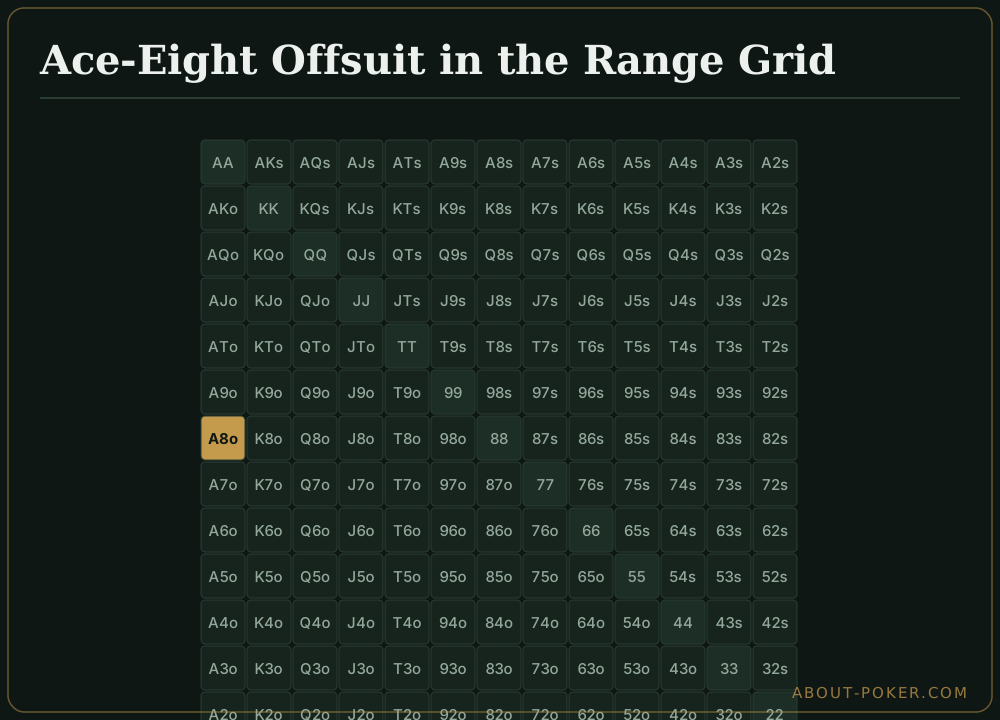
A8o is a raise-or-fold hand, and it only raises from the back seats:
- Early and middle position: fold. You run into too many dominating aces, and offsuit A8 has almost no way to continue profitably when the action heats up.
- Cutoff: a marginal open at best, and many solid ranges fold it here in tougher games.
- Button: a standard open. With only the blinds left to act, A8o steals often and can flop top pair against random defends.
- Small blind: open (raise) rather than limp when it folds to you.
- Big blind: a routine defend against a single open, especially against late-position steals where you’re getting a price.
For the exact seat-by-seat borders, anchor yourself in the preflop opening ranges and notice that A8o sits right at the bottom edge of the ace-x hands you’re allowed to open.
The domination trap
The core problem with A8o is kicker trouble. When you make top pair with the ace, your eight kicker is second-best against most of the hands willing to keep putting money in. Someone who calls your raise and then bets big on an ace-high board very often holds a better ace. That’s why A8o should almost never be cold-called: flatting an open out of position with a dominated offsuit ace is one of the most common losing plays in low-stakes poker.
Where A8o gains value is against wide ranges. The ace in your hand is a useful blocker — it removes some of the AA, AK, and AQ combos from a stealer’s range — so A8o can appear as an occasional light 3-bet or blind-defend bluff against a loose button or small-blind open. Those spots are the exception, not the rule. The framework for choosing which hands attack wide openers lives in blind vs blind play.
Facing 3-bets and 4-bets
When you open A8o and get 3-bet, you’re usually done. Against a tight 3-bettor, fold — you’re dominated and out of position too often to call profitably. Against a very wide, aggressive 3-bettor from the blinds you can occasionally call in position, but you should never feel married to the hand. The general decision tree for these spots is covered in defending against 3-bets.
A 4-bet is an automatic fold. The value part of any 4-betting range crushes you, and A8o has neither the equity nor the price to continue.
A worked example
You open A♣8♦ from the button. The big blind, a straightforward regular, calls. The flop comes A♠ 7♦ 2♣ — top pair, weak kicker. You make a small continuation bet and get called. The turn is a 4♥. Now think about what continues against you: better aces (AT–AK) and the occasional two-pair or set. Your eight kicker beats almost none of the hands that want to build a big pot. Against a passive opponent you can bet thin for value once more, but against a bet or raise you should be ready to fold — this is a one-pair, small-pot hand, not a stack-off. Heads-up, A8o has roughly 59% equity against a random hand, but that number collapses once real money goes in and only better hands stay.
Played tightly — open from the button and blinds, fold everywhere else, and don’t get attached postflop — A8o is a small, honest contributor. Played loosely, it’s a steady leak.
How stack depth changes A8o
A8o’s biggest weakness — domination — gets worse as stacks get deeper and better as they get shorter. At 100bb, making top pair with a bad kicker deep is a trap: the deep money flows toward the player with the better ace, and A8o’s lack of a flush or straight backup means it can’t make a hand big enough to justify a big pot. So deep, A8o wants small pots and easy give-ups.
Short stacks flip that. Under about 20bb in a tournament, A8o becomes a push-or-fold hand from late position and the blinds. All-in, the ace is live and the domination problem shrinks — even against a better ace like AT you have roughly a coin-flip’s worth of the flop-based outs plus fold equity, and against non-ace hands you’re often ahead. From the button or small blind with 12–18bb when it folds to you, A8o is a routine shove: you fold out the field and flip or better when called. This is the one situation where A8o’s ace becomes an asset rather than a liability.
The through-line: get the money in before the flop when you’re short and the ace matters most, and keep the pot small when you’re deep and the kicker matters most.
A8o versus its neighbors
It helps to place A8o on the ace ladder. A9o and ATo are clearly stronger — a better kicker means fewer dominated top pairs and a real second-pair fallback — so they open from one seat earlier. A7o and below are weaker and open only from the button and small blind, if at all. A8o sits right on the line: it’s the marginal offsuit ace that opens late, defends the big blind for a price, and folds everywhere else.
The suited version, A8s, is a different animal entirely. Its nut-flush potential and better equity realization let it open wider, flat more, and even show up as an occasional 3-bet bluff — none of which A8o can do. Whenever you’re tempted to overplay A8o, remember you’re holding the weaker, drawless version of a hand that’s already marginal suited.
Quick decision checklist
- Early or middle position: fold.
- Cutoff: marginal open, tighter in tough games.
- Button / small blind, folded to you: open (deep) or shove (short).
- Big blind vs a single open: defend for the price, especially vs late steals.
- Facing a 3-bet: usually fold; call only in position vs a very wide blind 3-bettor.
- Facing a 4-bet: always fold.
- Flopped top pair, weak kicker: one thin value bet at most; fold to real aggression.
Frequently asked
Is A8 offsuit a good hand?
A8o is a below-average ace that is dominated by every stronger ace and can be outkicked when it makes top pair. It is a fine late-position steal and a blind-vs-blind hand, but it is a fold from early and most middle positions.
Should I 3-bet with A8 offsuit?
Rarely as a pure value 3-bet. A8o works better as a fold or a call against most opens. It can appear as an occasional light 3-bet or blocker bluff versus wide late-position steals, since the ace blocks the strong aces in their range.
Can I call an open with A8 offsuit?
Usually no. Cold-calling offsuit aces out of position is a classic leak because you are frequently dominated. A8o plays best as a raise-or-fold hand from late position, not as a flat-caller.