How to Play Ace-Two Suited (A2s)
Ace-two suited is a low suited ace with the nut-flush blocker and wheel potential. Learn when to open, 3-bet bluff, and fold A2s the GTO way.
On this page · 7 sections
Ace-two suited (A2s) is the smallest of the suited aces, and it lives in the marginal zone of most ranges. On its own it makes only bottom pair when it pairs the deuce, so its value comes almost entirely from three things: the nut-flush potential, the wheel straight (A-2-3-4-5), and the ace blocker that sits in your hand every time you hold it. Play A2s for those upside outs and its blocker value, not as a hand that wants to make top pair.
Where A2s belongs in your opening range
A2s is a late-position open, not an any-seat hand. From the button and cutoff it is a comfortable raise-first-in at typical cash and tournament stack depths, because you have position, fold equity, and a suited hand that can flop the nut-flush draw. As you move toward the preflop opening ranges for earlier seats, A2s drops out — from under the gun it is dominated too often by the better aces that continue against you.
The reason it plays better than an offsuit deuce-ace is the flush. That single suited card turns a weak, dominated holding into one with real equity when the board runs out in your suit. Without it, A2 offsuit is a fold from almost everywhere.
A2s as a 3-bet bluff
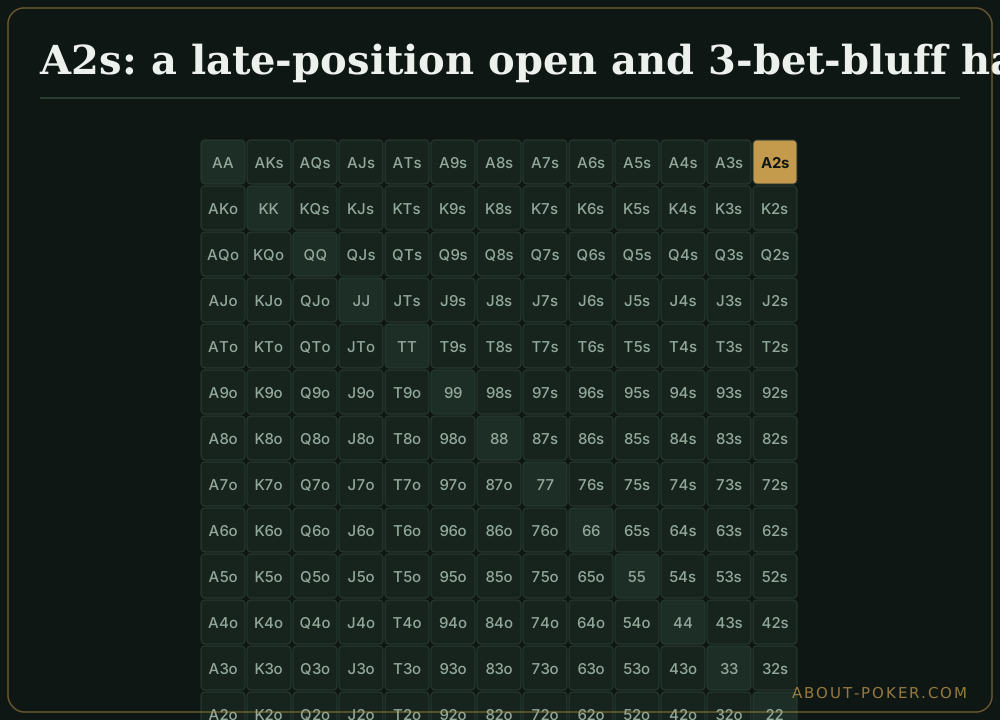
The most profitable way to use A2s aggressively is as a 3-bet bluff. It is a textbook candidate for a light 3-bet range because holding the ace removes a big chunk of your opponent’s strongest continuing hands — AA, AK, and AQ all become less likely when you hold an ace yourself. That blocker effect means your 3-bet gets through more often, and when it gets called you still have a suited hand with a nut-flush draw to fall back on.
This is exactly the profile solvers like for a bluff: low made-hand value, high blocker value, and a backup draw. Compare that to a hand like K7o, which blocks nothing important and flops poorly — A2s is far better suited to the job.
A worked example
You hold A♠2♠ in the big blind. The button opens to 2.5bb and everyone folds to you. You choose to 3-bet to 11bb rather than flat.
Your ace blocks AA, AK, and AQ, so the button’s premium continuing range shrinks. If they fold — which they do a large share of the time against a blind 3-bet — you pick up the pot immediately. If they call, you take a flop with a suited ace that can flop the nut-flush draw, an ace-high, or a wheel gutshot. On a flop like Q♠8♠4♦ you have the nut-flush draw with roughly 35% equity against a single pair, giving you a strong semi-bluff to keep barreling. Blocker plus backup draw is why A2s makes a better 3-bet bluff than most of your range.
Playing A2s postflop and defending blinds
When you do reach a flop with A2s, remember what you are drawing to. Bottom pair (a paired deuce) is rarely worth stacking off; your real value is the flush and the wheel. On flush-draw boards you have a semi-bluff worth betting; on dry boards where you have ace-high, you can often check and give up cheaply rather than bloating a pot with a weak made hand.
In blind-vs-blind battles, A2s is a solid part of defending the blinds. Against a small-blind raise or a wide button steal, it has enough equity and blocker value to defend by calling or 3-betting rather than folding. The suit and the ace give it more ways to win than its raw pair value suggests.
How stack depth changes the plan
A2s is a leverage hand, and leverage depends on how deep the stacks are. At 100bb and deeper, the 3-bet bluff shines: you have room to barrel a semi-bluff over multiple streets, the nut-flush draw can win a large pot, and the wheel outs matter. This is the depth where A2s earns its keep as a low-frequency but profitable re-raise.
As stacks get shorter, the profile flips. Around 15-25bb — common in the middle of a tournament — the 3-bet-bluff logic weakens because there is no room to apply pressure on later streets, and a call or a shove becomes the cleaner play. Near 12bb and below, A2s is a comfortable open-shove from late position: the ace blocks premium calls, and you rarely need the flush because you are usually taking the blinds uncontested or flipping when called. The deeper you are, the more you value the draw; the shallower you are, the more you value the blocker and the fold equity.
Adjusting to opponent type
The 3-bet bluff with A2s only prints against opponents who fold enough. Against a tight, straightforward player who opens a strong range and folds to 3-bets often, A2s is an excellent bluff — your ace blocker plus their high fold rate is exactly the setup you want. Against a loose station who calls 3-bets with a wide, sticky range, the bluff loses value fast: you get called too often and have to win at showdown with a hand that flops one small pair at best. Against that opponent, prefer flatting and realizing your equity cheaply in position, or simply folding when out of position.
A2s decision checklist
- Early position, unopened pot: fold. It is dominated too often to open here.
- Cutoff or button, unopened pot: open-raise. Position plus suitedness makes it a standard steal.
- Facing a late-position open from the blinds: mix a 3-bet bluff (blocker + backup draw) with folds; flat only against loose callers.
- Deep stacks: lean toward the 3-bet bluff and postflop leverage.
- Short stacks (under ~12bb): open-shove from late position rather than mini-raise.
- Postflop: chase the flush and the wheel, not the paired deuce.
The core plan for A2s: open it in late position, fold it from early seats, deploy it as a blocker-heavy 3-bet bluff, and postflop chase the flush and the wheel rather than the deuce. Treat it as a hand with a high ceiling and a low floor, and play toward that ceiling.
Frequently asked
Is ace-two suited a good hand?
It is a marginal but useful hand. A2s makes the nut flush, can make the wheel straight (A-2-3-4-5), and holds the ace of its suit as a blocker. It is not strong enough to call raises from early position, but it opens profitably from late position and works well as a 3-bet bluff.
Should you 3-bet ace-two suited?
Sometimes, as a bluff. A2s is a classic 3-bet-bluff candidate because the ace blocks your opponent's strong aces (AA, AK, AQ) and the suit gives you a backup nut-flush draw. Mix in 3-bets from the blinds and button against late-position opens rather than always flatting.
Can you play A2s from early position?
Usually no. From under the gun and other early seats, A2s is below the threshold of a solid opening range at most stack depths. It is dominated by better aces and rarely gets to realize its equity. Save it for late position and blind-vs-blind spots.