How to Play Eight-Seven Suited (87s)
Eight-seven suited is a premium suited connector that flops massive draws and disguised straights. Learn how to open, 3-bet bluff, and play 87s postflop.
On this page · 6 sections
Eight-seven suited (87s) is a true suited connector — no gap, both cards live, same suit — and it sits near the very top of the connector food chain. Only a couple of connectors flop as much raw draw equity. 87s makes straights from both ends, flops flush draws, and turns marginal boards into disguised monsters that opponents rarely see coming. It is a hand you want in your range in almost every non-early seat, and it is one of the strongest speculative hands you can hold when the money goes in postflop rather than preflop.
Where 87s belongs preflop
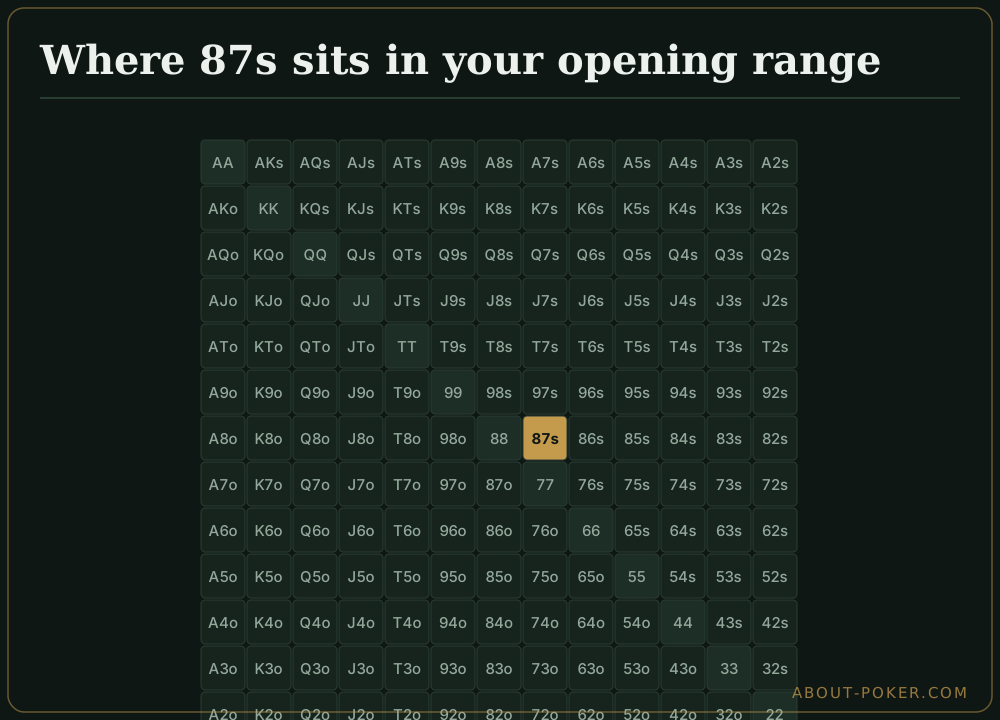
By seat, 87s is a wide-range hand that only tightens up in the earliest positions:
- Early position: a marginal open in many 6-max games, a fold in tight or full-ring games.
- Middle position: a standard open.
- Cutoff and button: a clear, comfortable open every time it folds to you.
- Small blind: open (raise) when it folds to you.
- Big blind: one of your best defending hands against late opens.
Set the borders using the preflop opening ranges. Because it is fully connected, 87s opens a touch wider than gappers and one step below its slightly higher-ranked cousin nine-seven suited only in the sense that 97s reaches one more high-card straight — in draw quality they are very close.
Why 87s is a draw machine
A fully connected suited hand makes the maximum number of straights available to any two ranks: it completes with boards on either side (5-6, 6-9, 9-T structures) and it flops open-enders far more often than a gapper. Add the flush draws from its shared suit and you get a hand that flops a strong draw of some kind on a huge share of flops. The value is almost entirely potential, not high-card strength, so 87s wants position to barrel its draws and fold its air cheaply. That is the whole identity of the hand: play it aggressively when it connects, abandon it quietly when it misses.
Facing a raise
Against an opener, 87s is a premium 3-bet bluff or a positional flat. From the blinds or the button against a wide late raiser, 3-bet bluffing 87s is excellent — it has real equity when called and it plays beautifully postflop. In position at a good price, flatting a single raise is fine because you flop so many draws. Out of position against a tight early raiser, prefer folding or an occasional 3-bet bluff rather than a cold call. Slot it into your bluffing structure using the 3-bet range.
A worked example
You open 8♥7♥ from the cutoff and the button calls. The flop comes 9♦ 6♠ 2♥ — you have flopped an open-ended straight draw (any five or ten completes a straight, eight outs) plus a backdoor flush draw. You continuation-bet as a semi-bluff. With eight clean outs you have roughly 31% equity to improve by the river with two cards to come, plus the fold equity when the button gives up. He calls. The turn is the T♣ — you make a disguised straight that top pair or two pair will pay off, because the board texture does not scream danger. You bet for value and get called by a nine. That hidden payoff is exactly where 87s prints money.
Now suppose the flop had come 8♣ 4♦ 2♠ — top pair, eight-high, with a seven kicker. That is a marginal one-pair hand: take thin value at most and fold to real pressure. 87s earns with draws and straights, not with its middling pairs.
Postflop in one paragraph
When 87s flops a straight or flush draw, semi-bluff it hard — the equity plus the disguised payoff is enormous. When it completes a draw, bet for value and expect to be paid by hands that cannot read the run-out. When it flops top pair or a weak made hand, control the pot and take small value. When it whiffs, give up cheaply. As with every true connector, its strength is what it can become, so lean into the draws and stay disciplined on the misses.
Where to go next
87s is one of the best suited connectors in poker, rewarding position and aggression while asking for discipline on the misses. Dial in your opens with the preflop opening ranges, compare it to the closely related nine-seven suited, and tie the framework together at the preflop strategy hub.
Frequently asked
Is eight-seven suited a good hand?
Yes. 87s is one of the best true suited connectors in the deck. It flops straight draws, flush draws, and disguised made hands more often than almost any other holding. It is a standard open from middle position onward and a premium blind-defense and 3-bet-bluff candidate.
Can you open eight-seven suited under the gun?
In many 6-max games, yes, as a marginal open. 87s is right on the border under the gun and a clear open from middle position and later. In full-ring or against tight tables, tighten up and open it from later seats where you have position to realize its equity.
Should you 3-bet bluff with eight-seven suited?
Yes. 87s is a prime suited-connector 3-bet bluff, especially from the blinds or button against a late opener. It has strong equity when called, plays well postflop in position, and blocks a few of the opponent's connected hands. It is near the top of the connector-bluff pile.