How to Play Eight-Three Suited (83s)
Eight-three suited is a near-trash four-gapper that is a fold from almost every seat. Learn the rare spots where 83s is playable and why it usually is not.
On this page · 6 sections
Eight-three suited (83s) is a four-gapper — the eight and three are separated by the entire seven-six-five-four run — which puts it firmly in the near-trash tier of suited hands. With four gaps, its straight potential is effectively nonexistent: it would need the board to supply four consecutive cards to make a straight, which almost never happens. That leaves 83s with a mediocre flush draw and a very weak pair as its only equity, and neither is enough to justify entering pots. In a standard strategy 83s is a fold from every seat, a step below even the marginal eight-four suited three-gapper.
Where 83s belongs preflop
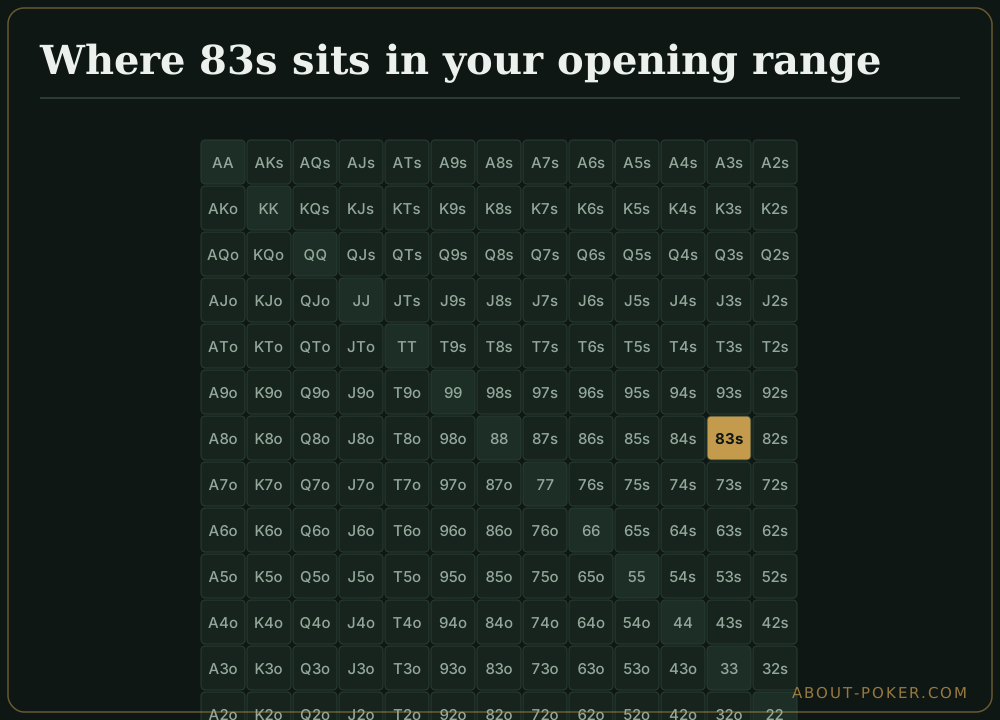
By seat, 83s is a fold across the board:
- Early, middle, cutoff: fold, always.
- Button: fold in a default strategy; a rare exploitative steal only against unusually tight blinds.
- Small blind: fold.
- Big blind: the one defensible continue — an occasional discounted defend against a wide late open.
Anchor the borders in the preflop opening ranges. 83s falls below the eight-four suited three-gapper and is not part of a default opening range from any position.
Why 83s is essentially unplayable
The value of a suited hand comes from two engines: straights and flushes. Four gaps switch off the straight engine almost completely, and 83s is left running on the flush alone — with the added problem that when it does make a flush, it is often a low flush that can be beaten by a bigger one. Pair it with a weak, dominated made-hand ceiling (an eight or three that any better kicker outkicks) and there is simply not enough equity to overcome the times you flop nothing. This is why 83s does not clear the bar that hands like the eight-four suited three-gapper barely clear on the button.
The one spot it earns a look
The single defensible use of 83s is a discounted big-blind defend. When a late-position player opens small and it folds to you in the big blind, you are getting a price that lets you see a flop cheaply with any two cards, and a suited hand at least retains its flush draw. Even here you should defend it near the bottom of your range and be ready to fold on most flops. Manage these thin defends through defending the blinds rather than treating 83s as a hand you go looking for.
A worked example
Suppose you defend 8♠3♠ in the big blind against a button open. The flop comes 8♥ 5♠ 2♠ — you have flopped top pair plus a flush draw, the best 83s can realistically hope for. Your nine flush outs give you roughly 35% equity to complete the flush by the river with two cards to come, on top of a weak pair. You can check-call or lead small; if the flush comes you have a made hand, though note it is only an eight-high flush and can lose to a higher one. That combo-draw flop is the rare case where 83s continues.
Now suppose the flop had come 8♦ 9♣ 4♠ — top pair, eight-high, weak kicker, no flush draw. That is a trap, not a hand: check and fold to any pressure. Without the flush draw, 83s has essentially nothing, which is exactly why it starts in the fold pile.
Postflop in one paragraph
When 83s somehow flops a flush draw or combo draw, that is the only reason to keep going — play it as a draw and be aware your flush may be second-best. When it flops top pair without a draw, keep the pot minimal and fold to real aggression. When it whiffs, fold immediately. Because a four-gapper has no straight potential and only a low flush, treat 83s as a fold-by-default hand and never build a pot with it.
Where to go next
83s is a near-trash four-gapper that folds from every seat and continues only as a rare discounted big-blind defend. Sharpen the hands that actually belong in your range with the preflop opening ranges, compare it to the marginally stronger eight-four suited, and tie the framework together at the preflop strategy hub.
Frequently asked
Is eight-three suited a good hand?
No. 83s is a four-gapper with essentially no straight potential and a low-quality flush. It is a fold from every seat in a standard strategy, and playable only as an occasional discounted big-blind defend or a bottom-of-range button steal.
Can you open eight-three suited?
Almost never. 83s should be folded from every position in a solid opening strategy. At most it is a rare, exploitative button steal against very tight blinds, but it does not belong in a default opening range.
Should you 3-bet bluff eight-three suited?
No. 83s is a poor 3-bet bluff with weak equity when called and almost no straight potential. Use suited connectors and small suited aces for connector and blocker bluffs instead, and keep 83s in the fold pile.