How to Play Eight-Five Suited (85s)
Eight-five suited is a speculative two-gapper playable mainly on the button and in blind defense. Learn how to open, 3-bet bluff, and play 85s postflop.
On this page · 6 sections
Eight-five suited (85s) is a two-gapper — the eight and five straddle a missing seven and six — which puts it well down the suited-connector ladder. Two-gappers still flop the occasional draw and always carry flush potential, but they make noticeably fewer straights than the eight-six suited one-gapper and far fewer than a true connector. That drop in straight equity is the whole story of 85s: it is a speculative, position-dependent hand that lives mostly on its flush draws and its ability to steal, not on any high-card strength.
Where 85s belongs preflop
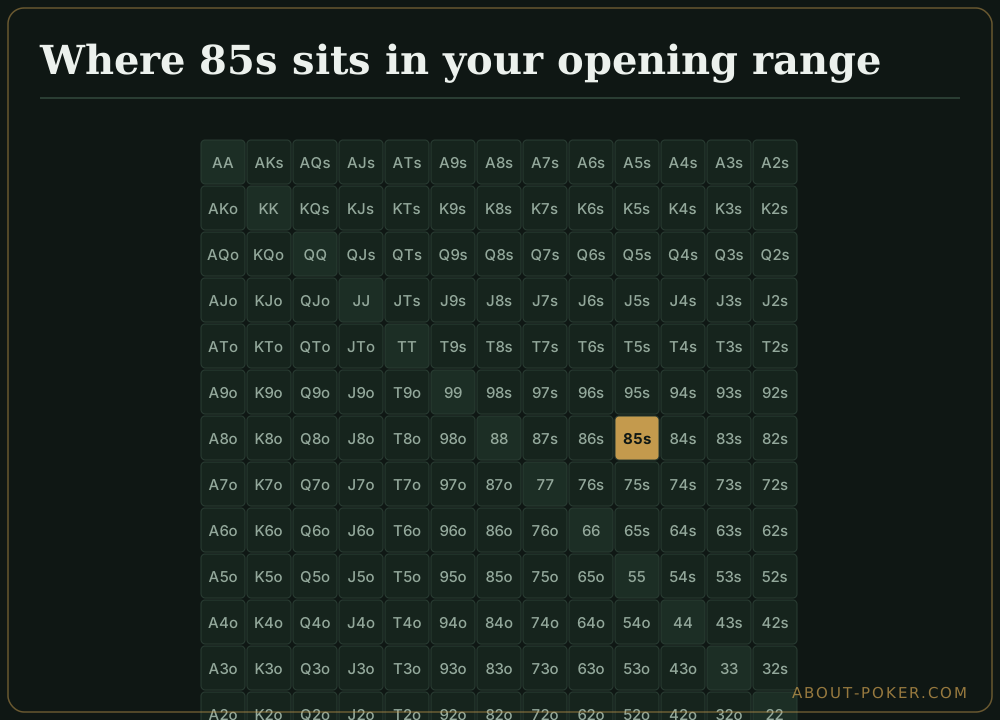
By seat, 85s is a button-and-blinds hand and little else:
- Early and middle position: fold. There is no case for a two-gapper this weak from up front.
- Cutoff: a fold or a very marginal open in loose, passive games only.
- Button: a reasonable open when it folds to you — position plus the suited element carries it.
- Small blind: a marginal open against tight blinds.
- Big blind: defend selectively against late opens at a good price.
Anchor the borders in the preflop opening ranges. 85s sits toward the very bottom of the suited hands you would ever open, well tighter than the eight-six suited one-gapper.
How the two-gap changes things
Every additional gap removes straight combinations. Where a connector flops open-enders freely, a two-gapper like 85s often flops only gutshots that need a specific card, and it makes fewer distinct straight structures overall. What remains intact is the flush draw, which is worth the same regardless of gap, plus a bit of blocker and disguise value. Because its made-hand ceiling is low and its straight equity thin, 85s wants position even more than the connectors above it — out of position it simply cannot realize enough of its equity to be worth playing.
Facing a raise
Against an opener, 85s is a fold in most spots and an occasional low-priority 3-bet bluff or blind defend. From the big blind at a good price against a late raiser, defending is fine — you are getting a discount and can flop draws. From the button or small blind against a wide late opener, an occasional 3-bet bluff is acceptable but should sit below the connectors in your bluffing frequency. Anywhere out of position against a tight range, just fold. Manage the marginal defends through defending the blinds.
A worked example
You open 8♦5♦ on the button and the big blind calls. The flop comes 8♣ 6♦ 2♦ — you have flopped top pair plus a flush draw. That is a strong combination: your pair has showdown value and your nine flush outs give you roughly 35% equity to hit the flush alone by the river with two cards to come, on top of the pair. The big blind checks and you bet for value and protection. He calls, the turn is the K♦, and you complete the flush and bet again for value. This is 85s at its best — the flush draw, not the straight potential, does the heavy lifting.
Now suppose the flop had come 8♠ 7♦ 2♣ — top pair, eight-high, with a five kicker and no flush draw. That is a thin, easily dominated one-pair hand: take small value at most and fold to real pressure. 85s earns with flushes and steals, not with weak pairs or thin straights.
Postflop in one paragraph
When 85s flops a flush draw, semi-bluff it and continue aggressively — that is its main source of equity. When it flops a combo draw or a completed flush, play it hard for value and protection. When it flops top pair without a draw, control the pot and take modest value. When it whiffs, give up cheaply. Because a two-gapper leans on flushes rather than straights, be more willing to fold the marginal made hands than you would with a true connector.
Where to go next
85s is a speculative two-gapper for the button and blinds that survives on flush potential and position, not high-card value. Sharpen your opens with the preflop opening ranges, compare it to the stronger eight-six suited, and tie the framework together at the preflop strategy hub.
Frequently asked
Is eight-five suited a good hand?
It is a marginal, speculative hand. 85s is a two-gapper, so it makes fewer straights than 86s or 87s and relies heavily on its flush potential and position. It is playable as a button open and a big-blind defend, but it is a fold from most other seats.
Can you open eight-five suited?
Only from late position. 85s is a reasonable button open and a marginal small-blind open, but it should be folded from early and most middle positions. Without position it is too weak to realize its equity profitably.
Should you 3-bet bluff eight-five suited?
Occasionally, and only from the button or blinds against a wide late opener. 85s is a lower-priority suited 3-bet bluff than the connectors above it; it has some blocker value and flush potential but weaker straight equity, so use it sparingly.