How to Play King-Five Offsuit (K5o)
K5o is a weak offsuit king that plays best blind-vs-blind and folds early. Learn where K5 offsuit is playable and how to dodge kicker trouble postflop.
On this page · 8 sections
King-five offsuit (K5o) is a weak offsuit king with a familiar problem: a strong top card and a bad kicker. When it flops top pair, that pair is frequently dominated by a better king, and the offsuit form gives you no flush to bail you out. K5o isn’t worthless — a king is often the best hand heads-up, and it has a mild blocker to A-K and K-K — but it’s a hand you should fold far more than you play, and handle with pot control when you do.
Where K5o belongs preflop
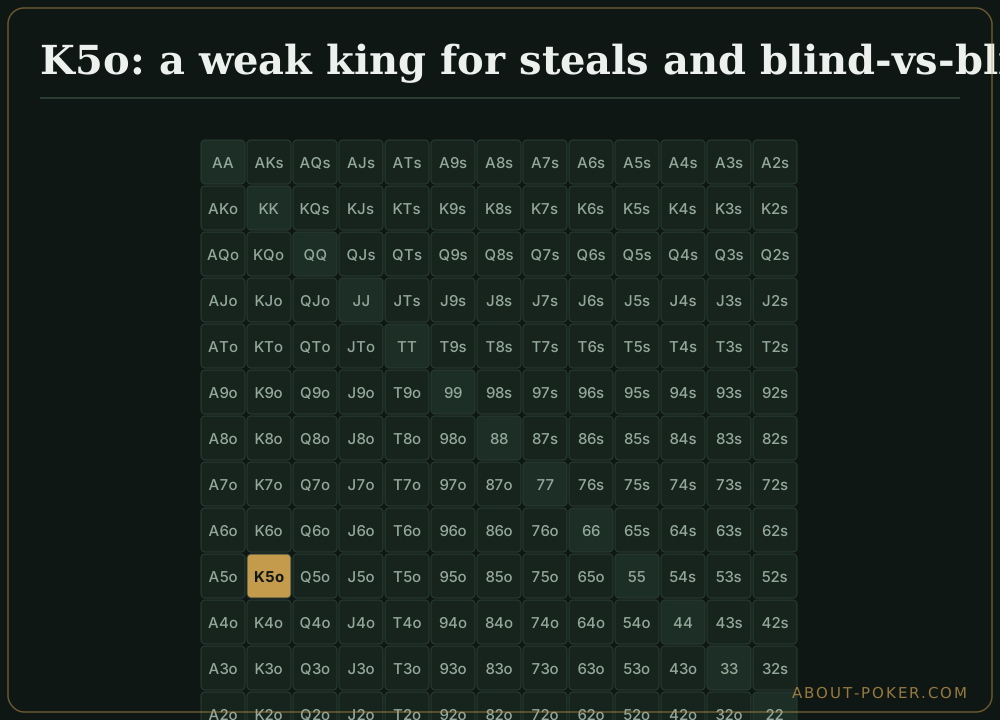
- Early and middle position: fold. Opening a weak king into a full field invites domination and 3-bets you’d rather avoid.
- Cutoff: a fold at a full ring, at most a marginal open at 6-max.
- Button: a reasonable steal against tight blinds — this is its main opening spot.
- Small blind: a steal-raise when the big blind over-folds; otherwise fold.
- Big blind: defend against small opens, then play cautiously — the king plays, the kicker doesn’t. Compare where it sits at the edge of a chart in preflop opening ranges.
K5o’s best environment is heads-up, where a king shoots up in value. See blind vs blind play for why offsuit broadway-and-a-blank hands become live in single-combat pots.
The kicker problem
The whole game with weak kings is avoiding the domination trap. When you flop a king, you beat every worse king and every pair below kings, but you lose to K-6 through K-Q and to two pair or better. The offsuit version can’t win the pot with a flush the way K5 suited sometimes can, so K5o has to win at showdown with one pair — which means keeping the pot small when you’re not certain you’re ahead. That’s the entire strategic difference between a hand you stack off with and one you pot-control.
A worked example
You’re on the button. It folds to you and you open K♣5♦ as a steal. The big blind, a straightforward player, calls.
Flop: K♦ 8♠ 3♥. You’ve flopped top pair, weak kicker. Against the big blind’s calling range this is ahead of a lot of hands (worse pairs, draws, floats) but crushed by any better king. The right approach is a small continuation bet or a check to control the pot — you want to get to showdown cheaply, not build a monster with a five kicker. If the big blind check-raises or leads big on later streets, you’re often beaten and can fold without agony.
Now flip the flop to 9♥ 5♣ 2♦: you have a middle pair of fives. That’s a showdown-value hand at best, a check-back or one-street bet, never a hand to bloat the pot with. K5o’s profit comes from cheap showdowns and steals that just take the blinds — not from paying off better hands.
Postflop shorthand
- Top pair (king), weak kicker: pot-control; don’t stack off. Thin value in position only.
- Middle pair (fives): showdown value, keep the pot small.
- King-high, no pair: occasional blocker bluff; a mild block on A-K and K-K.
- Facing big aggression on paired boards: fold — your kicker rarely holds up.
How position and opponents change K5o
K5o’s playability is unusually sensitive to the situation, because its whole profit comes from cheap showdowns and steals rather than from making strong hands.
- Heads-up vs. multiway. A king is often the best hand when only one opponent is involved, which is why blind-vs-blind is K5o’s home. In a multiway pot the same king-high or weak top pair is far more likely to be beaten, and the hand collapses in value. Never treat a multiway flopped top pair with a five kicker the way you would treat it heads-up.
- Position. In position you can check back to control the pot, take free cards, and bluff-catch cheaply. Out of position you lose all of that control, which is why K5o should be folded from early seats and played carefully even as a big-blind defend.
- Opponent type. Against a tight player who only continues with real hands, your flopped top pair is often beaten when they keep betting — fold to aggression. Against a loose player who calls with all kinds of worse kings and pairs, your king climbs in value and you can bet thinly for value.
A second example: turning kicker trouble into a fold
You defend K♠5♠ in the big blind against a cutoff open and the flop comes K♦ Q♥ 6♣. You have top pair, but this is a dangerous board: the cutoff’s opening range is full of better kings (KQ, KJ, AK) and the queen gives them plenty of two-pair and pair-plus-draw combinations.
Check-call one small bet if you like, but plan to fold to sustained pressure. If the cutoff fires the flop and barrels the turn, your five kicker is almost never good — you are drawing thin against the exact hands that keep betting. The correct read is that K5o has showdown value against a checked-down pot, not against a bettor who is representing a better king. Recognizing that difference is the entire skill of playing weak kings: you extract a cheap showdown when you can and you fold before the pot balloons.
When to just fold
Fold K5o from early and middle position, against any 3-bet, and in multiway raised pots out of position. It’s a heads-up, in-position, or cheap-defend hand only. If you can muck it automatically from up front, you’ll dodge the classic weak-king losses that come from overvaluing top pair. The single most expensive mistake with this hand is stacking off with top pair, weak kicker — if you cut that leak, K5o becomes a small, harmless part of your steal and defense ranges.
Where to go next
K5o is a discipline hand: steal with it late, fight with it blind-vs-blind, and never let a five-kicker top pair cost you a stack. See the stronger suited version in K5 suited, master its best spot in blind vs blind play, and place it in your full chart at the preflop strategy hub.
Frequently asked
Is K5 offsuit a good hand?
K5o is a weak, kicker-troubled hand. It's a fold from early and middle position, a marginal late-position steal, and it plays best blind-vs-blind where a king is often the best hand heads-up. Top pair with a five kicker is easily dominated, so it needs careful postflop handling.
Should you open K5 offsuit?
Only from the button or small blind as a steal, and even then it's near the bottom of the range. From the cutoff and earlier it's a fold at a full table because too many better kings and aces sit behind you.
How does K5o compare to K5 suited?
K5 suited is clearly stronger — it adds flush potential and better playability, so it opens a bit wider and can even appear as a light 3-bet bluff. K5o keeps only the king blocker and the weak kicker, so it's played more tightly and folded more often.