How to Play Ten-Two Offsuit (T2o)
T2o — 'the Doyle Brunson' — is one of the weakest hands in Hold'em and a near-universal fold. Learn the rare spots it's playable and how to handle it postflop.
On this page · 6 sections
Ten-two offsuit (T2o) is one of the weakest starting hands in No-Limit Hold’em — and, thanks to Doyle Brunson’s back-to-back WSOP Main Event wins with it in 1976 and 1977, one of the most famous. The nickname “the Doyle Brunson” is a great story, but don’t let it fool you: T2o is a fold from nearly every seat. The ten can pair, but it’s easily dominated, the deuce is dead weight, and unlike T2 suited there’s no flush draw to add equity.
Where T2o belongs preflop
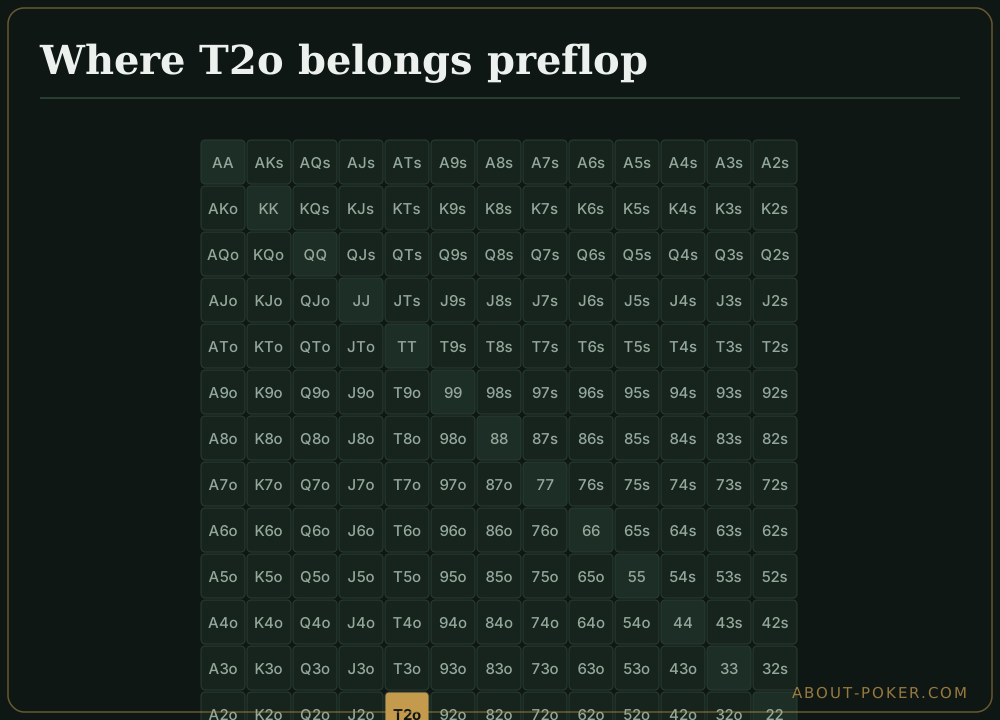
In 6-max, T2o is not part of any early-, middle-, or cutoff-opening range. The only seat that might include a few combos is the button, opening wide against two blinds, and even there it’s a low-frequency, optional raise rather than a standard one. If you want to confirm how far down the chart a hand this weak sits, the preflop opening ranges reference shows it opening from the button at best.
Its realistic home is big-blind defense. Against a late-position open at a good price, you can flat a few T2o combos because you’re closing the action cheaply and only need a sliver of equity to continue. You never 3-bet T2o — it has no value and blocks little of a caller’s range.
Why T2o is so weak
The ten is a middling card that runs into domination constantly — KT, QT, JT, AT, and every overpair all beat a flopped pair of tens. The deuce kicker adds no realistic straight potential and no kicker help. Without the flush equity a suited hand provides, T2o is left with “pair the ten and hope,” which is a thin, easily-dominated way to try to win a pot. That’s precisely why it lives at the bottom of every equity chart.
A worked example
Brunson’s legend aside, here’s the reality. You defend T♦2♣ in the big blind against a button open at a good price, and the flop comes T♠ 8♥ 4♦ — top pair, deuce kicker.
Check to the raiser. If they c-bet small, you can call once with a made hand on a fairly dry board, but you’re keeping the pot small. As soon as the pressure builds — a big turn bet, a raise — you should be ready to fold, because the button’s continuing range here is loaded with better tens, overpairs, and sets. Your deuce kicker gives you no way to climb the ladder of hand strength.
Now the fantasy version: the flop comes T♠ T♥ 4♦ and you’ve flopped trips. This is the Doyle Brunson dream, and now you happily bet and build a pot. But note how rare that is — flopping trips or two pair is the only time T2o becomes a genuine moneymaker.
How the decision shifts by situation
The rare times T2o is even a discussion depend heavily on context, and it helps to know which levers move it toward “play” and which pin it to “fold.”
- Stack depth. At 100 big blinds deep, T2o has essentially no place in an opening range because deep play punishes dominated hands over multiple streets. At very short stacks — say 8 to 12 big blinds in a tournament — hand values compress and open-shoving ranges from the button and small blind widen, but even then T2o is on the outer fringe and usually just below the shove threshold. It is one of the last hands you add, not one you reach for.
- Position. The button is the only open seat, and only because just two players remain behind you. Move it one seat earlier to the cutoff and the extra player to act tips it firmly into the fold pile.
- Blind tendencies. If the blinds fold too often, a button T2o open picks up dead money and never has to see a flop. If they defend wide and play well after the flop, drop the open entirely — you will be flatted and outplayed by a range full of better tens and live cards.
- Opponent type. Against a calling-station big blind who never folds, stealing with T2o is pointless because the fold equity that justifies the open disappears. Against a nitty blind that surrenders to any raise, the steal is at its best.
A quick decision checklist
Before you ever put a chip in with T2o, run through this:
- Am I on the button with the action folded to me? If not, fold.
- Do the blinds fold too often? If not, fold.
- Am I defending the big blind at a genuine discount against a late open? If yes, a cheap call is defensible; if the price is normal, fold.
- Postflop, did I flop trips, two pair, or an actual big draw? If not, give up cheaply.
If any answer points away from action, the hand goes in the muck. That is the correct answer the overwhelming majority of the time.
The lesson behind the legend
Brunson’s wins came from hitting the flop hard, not from T2 being playable. The everyday takeaway is the opposite of romance: fold T2o from nearly everywhere, defend it only at a bargain price, and don’t get married to a dominated pair. Its natural habitat is blind-versus-blind and wide button spots, where ranges stretch to their widest; for how those play out, see blind vs blind play.
Enjoy the story, respect the fold. Discipline with hands like T2o protects far more of your win rate than any long-shot flop ever will.
Frequently asked
Is T2 offsuit a good hand?
No. T2o is one of the weakest hands in Hold'em and a fold from nearly every position. It appears only in wide button opens and cheap big-blind defenses. Famously, Doyle Brunson won two WSOP Main Events with T2, which is a fun story, not a strategy.
Why is T2 called the Doyle Brunson?
Doyle Brunson won the WSOP Main Event in both 1976 and 1977 with ten-deuce, giving the hand his name. Both wins came from hitting big on the flop, not from T2 being a strong holding.
Can I open Ten-two offsuit?
Only from the button in wide games, and even then it's a low-frequency, optional open. From every earlier seat, fold. It's also defensible in the big blind at a very good price.