Isolating a Fish
Isolating a fish means raising to play a pot heads-up against a weak opponent. Learn iso-raise sizing, hand selection, and a worked example you'll use nightly.
On this page · 6 sections
Isolating a fish means raising over a weak player’s limp or open specifically to get the pot heads-up, in position, against the one opponent you most want to play. It is one of the highest-EV adjustments in live and soft online games. A recreational player — the “fish” — calls too much, plays face-up, and pays off value. Your job is to convert that leak into chips by playing as many pots against them as possible on your terms.
Why isolating a fish is so profitable
Most of your edge in poker comes from opponents making mistakes you don’t. A fish makes big ones: calling raises with dominated hands, chasing draws at bad prices, and paying off when beaten. But those mistakes only pay you if you’re the one heads-up with them. If three players see the flop, the fish’s stack often goes to someone else.
Raising to isolate solves this. By making it expensive to continue, you fold out the field and set up a one-on-one pot where your skill and position translate directly into money. This is a textbook exploitative play — you’re deviating from a balanced strategy because a specific opponent is far from balanced themselves. If you want the theory behind that trade-off, see GTO vs exploitative preflop.
Sizing your iso-raise
The classic formula: your normal open size, plus one big blind for every limper. If your default open is 3bb:
- One limper → raise to about 4bb.
- Two limpers → raise to about 5bb.
Against a passive fish who calls anyway, don’t be afraid to go bigger — 5x to 6x over a single limp is fine when you hold a strong hand and want a bloated pot heads-up. Larger sizing does two jobs: it denies the field a cheap multiway flop, and it charges the fish more to see cards with the weak holdings they refuse to fold. This overlaps heavily with general isolating limpers technique.
Which hands to isolate with
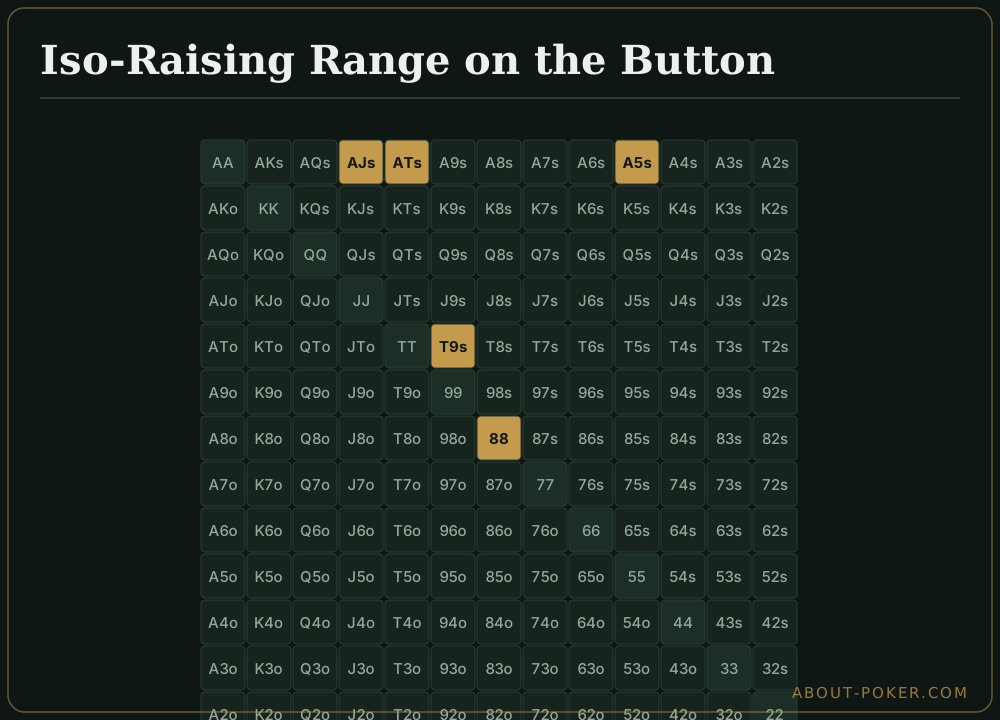
Because you expect to be heads-up and in position against a weak, wide range, you can raise much looser than a standard opening range. Prioritize hands that:
- Dominate the fish’s calls — A-J, K-Q, A-T beat the weaker aces and kings they call with.
- Flop equity and playability — suited connectors and suited aces make strong draws and let you barrel.
- Make top pair often — any broadway, and any pocket pair.
Position matters enormously. In the cutoff or on the button over a limper, isolate aggressively. From early position or the small blind — where players can wake up behind you and where you’ll be out of position postflop — tighten up toward a normal value range. For the base case of simply reacting to a limp, review facing a limp.
A worked example
You’re on the button with A♠J♠. A loose-passive recreational player limps from middle position, and it folds to you. Blinds are 1/2 with 100bb stacks.
Your default open is 3bb. With one limper, iso to 4–5bb — call it 5bb here to charge the fish and discourage the blinds. The blinds fold, the fish calls. You’re now heads-up, in position, holding a hand that dominates most of their limping range (weak aces, small pairs, suited junk) and that flops top pair, the nut flush draw, and gutshots readily.
Flop comes A♦7♣3♠. The fish checks. You bet about two-thirds pot for value; A-J is well ahead of the worse aces and pairs they float with. This is the entire point of isolating — you engineered a heads-up pot where your dominating hand extracts maximum value from a player who won’t fold top pair no matter how weak the kicker.
Common mistakes when isolating
- Isolating out of position with weak hands. Being in the small blind with Q-9 offsuit over a limper isn’t a great spot; you’ll play the whole hand blind-first. Save wide isos for the cutoff and button.
- Under-sizing so the field calls anyway. A 3bb iso over two limpers often gets both to tag along, defeating the purpose. Add a blind per limper.
- Isolating into other strong players. If a tight regular is still to act behind you, they can 3-bet or flat and turn your iso into a bad multiway spot. Iso is a weapon against the weak seat, not the table.
- Continuing to fire when the fish clearly won’t fold. Isolation gets you the pot heads-up; from there, value bet relentlessly and cut out the bluffs. A calling station is isolated so you can value them, not bluff them.
Quick checklist
Before you iso-raise, ask:
- Is the limper/opener genuinely weak and likely to play a big pot badly?
- Am I in position on them, or at least not out of position to a stronger player?
- Does my hand dominate their range or flop well enough to barrel?
- Is my size = open + 1bb per limper (or bigger against a sticky fish)?
- Is the field behind me unlikely to wake up with a hand?
If you can answer yes to most of these, fire the iso-raise. Getting the recreational player alone and in position is where the money is.
Frequently asked
What does it mean to isolate a fish?
Isolating a fish means raising after a weak player has entered the pot so that you push out the other players and play the hand heads-up against the weak one. Because a fish makes big, predictable mistakes postflop, getting them one-on-one and in position is where most of your profit comes from.
What size should I use to isolate a limper?
A standard iso-raise is your normal open plus one big blind for each limper. If you'd open to 3bb, iso to about 4bb over one limper and 5bb over two. Sizing up denies cheap flops to the field and makes your value hands more profitable.
What hands should I isolate with?
Iso wide when in position with hands that flop well and dominate the fish's range: broadways, suited aces, suited connectors, and any pair. You can raise looser than a normal open because you have a positional and skill edge, but tighten up out of position and against fields likely to call behind.