Small Blind Opening Range (RFI) Chart
The small blind is the trickiest RFI seat: you open wide but play out of position. See a solver-based SB opening chart and the raise-or-limp debate.
On this page · 6 sections
The small blind is the only opening seat where you raise wide yet play the whole hand out of position. When the action folds to you, just one player remains — the big blind — and you already have half a big blind invested. That pushes you to attack, but you’ll be out of position for every postflop street, which pulls the other way. Getting the balance right is what makes the small blind the trickiest RFI seat.
The core tension
Two forces collide in the small blind.
You want to open wide because you face only one opponent, and that opponent must defend from the big blind. Steal attempts print money when they fold. You also already have a half-blind in the pot, so the price to continue is discounted.
But you’ll be out of position if the big blind calls. Position is worth real expected value, and giving it up means you realize less of your hand’s equity postflop. A hand that’s a fine open on the button is often a marginal one from the small blind precisely because you’ll be acting first after the flop.
For the wider blind dynamic, see blind vs blind play.
The small blind RFI chart (6-max, 100bb)
A clean raise-only baseline opens roughly 40 to 45 percent of hands at a 3bb size:
- All pocket pairs.
- All suited aces and kings, plus offsuit aces down to about A5o and offsuit kings to K9o.
- Most suited broadways and connectors down to 65s, 54s.
- Offsuit broadways like KJo, QJo, KTo, JTo.
The larger 3bb size (versus a 2.2bb button open) is deliberate: it denies the big blind a cheap, wide call that would exploit your positional disadvantage.
Raise or limp?
Solvers construct a mixed strategy in the small blind: a raising range plus a limping (completing) range. Because you face only one player and get a discount to complete, limping some hands can be theoretically correct. Weak-but-playable hands like 74s or K4o may complete rather than fold.
For most players, though, a raise-or-fold approach is the better practical choice. It’s far simpler to execute, avoids building a hard-to-defend limping range, and captures most of the expected value. Only add a limping range once you’re comfortable playing it. The trade-offs are laid out in limping vs raising.
A worked example
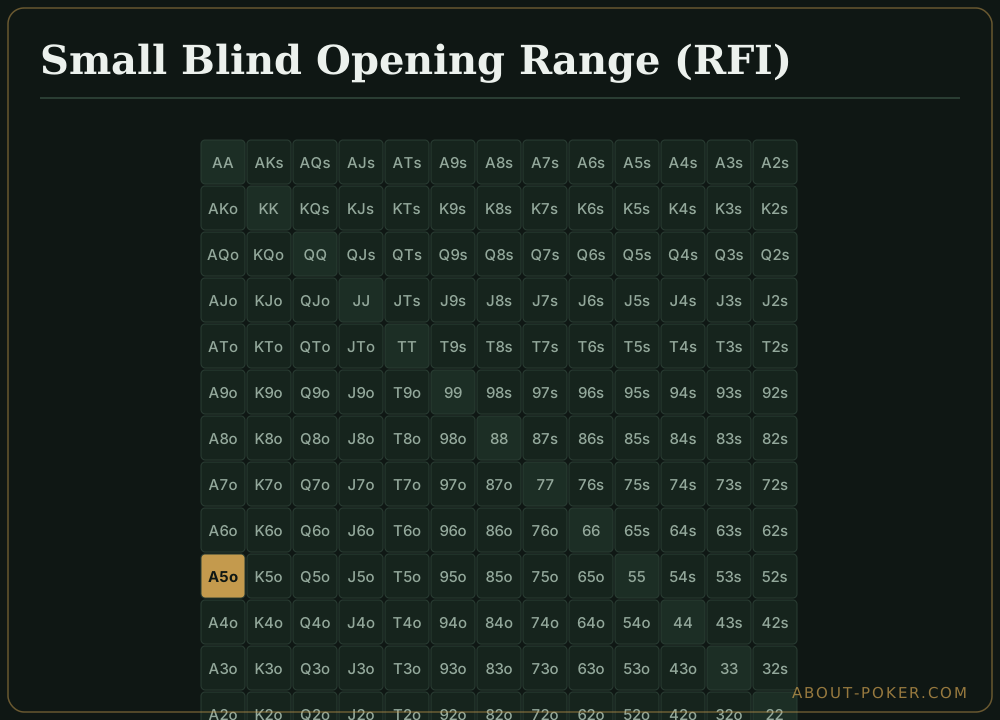
It folds to you in the small blind with A5o, 100bb deep. Raise or fold?
Raise. A5o has three things going for it: an ace blocks the big blind’s strongest continues, the five gives you a straight and wheel potential, and against a single opponent your fold equity is high. If you make it 3bb and the big blind folds — which happens often against one player who was dealt a random hand — you pick up 1.5bb. When called, the ace-high hand can flop top pair or back into a wheel draw.
Compare that to A5o from under the gun, where it’s a clear fold: five opponents can wake up with a better ace, and you’d be opening into far more risk. The single-opponent steal dynamic is exactly what promotes A5o from a fold to a raise in the small blind.
Practical adjustments
- Against a big blind who over-folds — widen your raising range and pressure relentlessly.
- Against a big blind who calls and plays well postflop — tighten toward hands that flop strong, since your positional disadvantage bites hardest against a good caller.
- Against a frequent 3-bettor — drop the weakest offsuit hands you can’t comfortably continue against a raise.
For where the small blind fits among all seats, review preflop opening ranges.
Common small blind leaks to avoid
Two mistakes plague small blind play, and both come from the half-blind you’ve already posted.
The first is over-completing — limping in weak hands just because “it’s only half a blind more.” That instinct ignores the positional cost. You’ll play the rest of the hand out of position against the big blind, and a weak hand that flops nothing becomes a check-fold machine. If a hand isn’t good enough to raise or complete with a plan, fold it.
The second is under-3-betting against opens. When another player opens and it folds to you in the small blind, remember that the big blind still lurks behind you. Flatting invites a multiway pot from the worst seat, so against a raise you should lean heavily toward a 3-bet-or-fold strategy rather than cold-calling. Treat the unopened-pot RFI range covered here as separate from your response to a raise — they’re different decisions with different math.
Fixing these two leaks alone will meaningfully improve your small blind win rate, which for most players is one of their most negative positions.
Frequently asked
How wide should you open from the small blind?
When it folds to you in the small blind, a common pure-raise baseline is around 40 to 45 percent of hands with a larger 3bb size. Solvers often prefer a mixed strategy that also includes a limping range, which can push total participation higher.
Should you raise or limp from the small blind?
Both are used. A raise-only strategy is simpler and effective for most players. Solvers construct a mixed strategy with a raising range and a limping range because you're only facing one player and getting a discount to complete the pot, but the mixed approach is harder to execute well.
Why is the small blind hard to play?
You've already invested half a big blind, which tempts you to continue too wide, but you'll be out of position against the big blind for the entire hand. Being out of position costs equity realization, so you must balance the incentive to attack a single opponent against the positional disadvantage.
What size should a small blind open be?
3 big blinds is a solid, common raise size from the small blind. A larger size than a button open is justified because you're out of position and want to deny the big blind a cheap, wide call that would exploit your positional disadvantage.