83 Poker Nickname & Meaning
83 offsuit — eight-three — is one of the weakest starting hands in Hold'em. Learn its nickname, why it's called the sunflower, and how to play it.
On this page · 6 sections
83 is poker shorthand for eight-three — being dealt an eight and a three as your hole cards. It’s one of the weakest starting hands in Texas Hold’em, and because nobody wants to play it, it has picked up only a couple of tongue-in-cheek nicknames rather than the famous ones reserved for premium hands. If you hear someone call it the “sunflower” or the “Fernando Valenzuela,” they’re poking fun at a hand that mostly belongs in the muck. This kind of table talk is covered in our broader poker slang explained guide.
The nickname and where it comes from
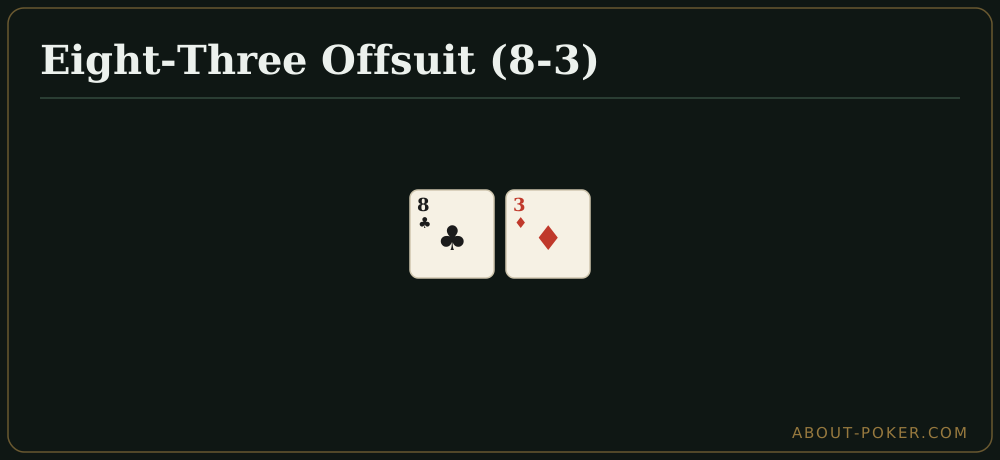
The most repeated nickname is the sunflower, though there’s no clean origin story — it’s the sort of name that spread because the hand needed something to be called. You’ll also hear:
- Fernando Valenzuela — the Dodgers pitcher wore number 34, and depending on the room you’ll hear his name attached to 83 or 34 in the same joking spirit.
- Just “eight-three” — most players don’t bother with a nickname at all, because they’ve already folded it.
Unlike aces or kings, weak hands like 83 don’t inspire affectionate names. The nickname is the punchline, not a badge of honor.
Why 83 is such a weak hand
There are three things a starting hand can have going for it: high card rank, the ability to make straights (connectivity), and the ability to make flushes (being suited). Eight-three has almost none of them.
- Rank: an eight-high or three-high pair loses to most other pairs. Even when you pair up, you’re often outkicked.
- Connectivity: the eight and three are five ranks apart, so they can never make a straight together without four other cards filling the gap — practically speaking, they don’t make straights.
- Suitedness: 83 suited can make a flush, but it’s a low flush that loses to bigger flushes, and the gap between the cards kills most straight potential.
Put together, 83 offsuit is close to the bottom of any starting-hand chart. Understanding why a hand is weak is more useful than memorizing the chart — it’s the same logic that shapes every hand in your range.
A worked example
You’re on the button with 8♣ 3♦ and the action folds to you. It’s tempting to attack, but 83 offsuit is one of the very few hands not worth even a steal-raise here. If you get called, you’ll flop a pair only about a third of the time, and when you do it’s usually a weak pair that can’t stand pressure. You’d rather steal with a hand that has some backup — a suited card, a connector, a live kicker — so 83 goes in the muck.
Now change the seat: you’re in the big blind, everyone folds to a single limper, and you check your option with 8♣ 3♦. You see a free flop. The board comes 8♠ 5♥ 2♣. You’ve got top pair with a terrible kicker. This is exactly the trap of a hand like 83 — it can flop “top pair” and still be behind or barely ahead, so you keep the pot small and don’t fall in love with it. The free flop was fine; committing chips is where 83 gets you in trouble.
Common mistakes players make with 83
Weak hands cause more losses through poor decisions than through simply being weak. The usual traps with a hand like 83:
- Limping it from the small blind “for cheap.” Completing from the small blind with 83 offsuit puts you in the pot out of position with a hand that flops badly and can’t defend against a raise. The half-bet you save by not folding turns into a full-bet mistake more often than not.
- Falling in love with a flopped pair. When 83 hits a board like 8-5-2, that top pair with a three kicker feels like a hand. It isn’t. You’re beaten by any better eight, every overpair, and drawing dead against a set. Check it down or fold to pressure; don’t build a pot.
- Bluffing it just because it “has to do something.” 83 is a poor bluffing candidate because it blocks almost nothing in your opponent’s range — it doesn’t remove the strong hands you’re trying to fold out. If you want a bluff, pick a hand with a live overcard or a backdoor draw instead.
- Playing it multiway. The more players in the pot, the more a low, disconnected hand gets dominated. 83 wants to be heads-up at best, and ideally not in the pot at all.
How suitedness barely helps
You’ll sometimes see 83 suited defended and wonder if the suit rescues it. It doesn’t do much. A suited hand makes a flush only about once in every hundred-odd flops on its own, and when 83 suited does complete a flush it’s an eight-high flush that loses to any bigger one — a classic way to stack off drawing to the losing end. The suit adds a couple of equity points, enough to occasionally take a free flop in the big blind, but not enough to open or call a raise with. Treat 83 suited and 83 offsuit almost the same: both are folds outside of the free-look big-blind exception. This is the same reasoning that governs every hand in your range — value comes from rank, connectivity, and suitedness working together, and 83 has none of the three pulling its weight.
The bottom line on 83
When you hear “eight-three,” the sunflower, or a pitcher’s name thrown at it as a joke, know that it’s shorthand for one of the least playable hands in the deck. It has no rank, no connectivity, and only a weak flush when suited. Fold it from almost everywhere, take the occasional free flop from the big blind, and save your chips for hands that can actually win a big pot. For more on which hands are worth playing and why, start with the terms and glossary hub.
Frequently asked
What is 83 called in poker?
Eight-three (83) is sometimes called the 'sunflower' or 'Fernando Valenzuela' after the pitcher's jersey number. It's a joke nickname more than a household name, because 83 is such a weak hand that it rarely gets discussed.
Is 83 a good hand in poker?
No. Eight-three is one of the worst starting hands in Texas Hold'em. It has no straight connectivity, low card rank, and even suited it makes only weak flushes. In almost every position it's a fold.
Should I ever play 83 offsuit?
Rarely. 83 offsuit is essentially never a raise or call from most positions. The main exception is the big blind when you can check and see a free flop against a single limper, or a very occasional bluff in the right spot.