89 Poker Nickname & Meaning
89 — eight-nine — is a classic suited connector. What players call it, why 89 suited is a favorite speculative hand, and how to play it before the flop.
On this page · 8 sections
89 — eight-nine — is one of the most popular suited connectors in Texas Hold’em. Unlike the face-card hands, it doesn’t carry a famous pop-culture nickname; players simply call it “eight-nine” or refer to it as a mid suited connector. What it lacks in a catchy name it makes up for in playability.
What players call it
There’s no widely used slang name for 89 the way JJ is “Fishhooks” or KJ is “Kojak.” At the table you’ll hear it described by what it is rather than a nickname:
- Eight-nine suited — the standard way to say it.
- A mid connector — placing it among hands like 78, 9T, and JT.
- A speculative hand — poker shorthand for a holding that plays for implied odds, not raw strength.
The absence of a nickname is telling: 89 earns its place through function, not flash.
Why suited connectors matter
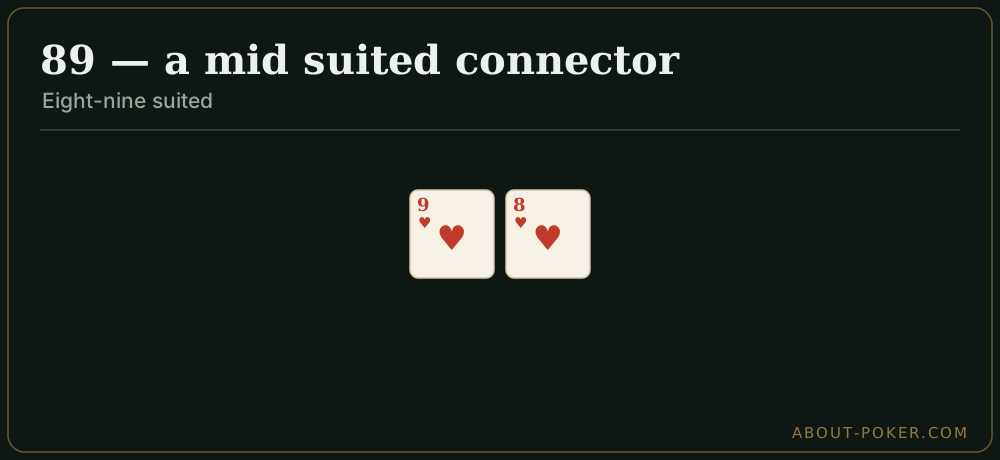
A suited connector is two same-suit cards one rank apart. They’re valued because they attack the board from two directions — they can make straights and flushes, and they flop combo draws that can be favorites even against a made hand. 89 sits in the sweet spot: high enough that its straights are strong, low enough that it disguises well and rarely dominates you against a raiser’s range.
89 suited is a genuine middle-position and late-position open, and a solid hand to call raises with when you have position and the stacks are deep enough to reward you when you connect. That’s the key to speculative hands — you’re paying a small price now to win a big pot when the flop hits.
Worked example: the combo draw that flips the script
You call a raise in position with 9♥ 8♥ and the flop comes 7♥ 6♠ 2♥.
Now count your equity. You have an open-ended straight draw (any five or ten completes it — eight outs) plus a flush draw (nine hearts, four of which also make the straight). Stripping out the double-counted cards leaves about 15 outs. With one card to come you’ll improve roughly 54% of the time, meaning this draw is actually a favorite over a hand like top pair. Against A♠ A♦ on that exact flop, your combo draw is around a coin flip — enormous equity for a hand that costs almost nothing to see the flop with.
That single flop explains why suited connectors like 89 are worth playing: they turn small preflop investments into monster draws. See the full plan in how to play nine-eight suited.
Suited vs. offsuit: it’s not a small gap
The most common mistake with this hand is treating “eight-nine” as one holding. It isn’t. 89 suited and 89 offsuit are two very different hands, and the difference is almost entirely the flush.
- 89 suited picks up flush draws on roughly 11% of flops and, crucially, stacks those flush outs on top of its straight outs to build the 15-out combo draws that make it dangerous. That extra dimension is why it can be a favorite over a made hand rather than a modest underdog.
- 89 offsuit can still make straights and two pair, but it never makes a flush. Strip out the suit and the hand loses the very feature that justified paying to see a flop. It goes from a genuine speculative open to a hand that is mostly a fold outside of button steals and cheap big-blind defends.
A useful rule of thumb: for mid connectors, suitedness is worth on the order of three to four percent of raw equity, but far more than that in real money because the flush is a nut-type hand that wins big pots. Do not extend the reputation of 89 suited to its offsuit cousin.
How the hand changes by position and stack depth
89 suited is a speculative hand, and speculative hands live and die on two things: position and stack depth. Both change how you should play it.
- Early position: usually a fold at a full-ring or 6-max table. You want to be behind the money with implied-odds hands, not first in from up front where players behind can 3-bet you and force you to fold your equity.
- Cutoff and button: a comfortable open. You steal blinds, you realize your equity in position, and you get to see turns and rivers cheaply when you flop a draw.
- In the blinds vs. a raise: call in the big blind when the price is right, but avoid getting into bloated out-of-position pots from the small blind.
Stack depth matters even more. Implied odds are the whole point: you are risking a little to win a lot when the flop hits. At 100bb or deeper, 89 suited shines because a stacked-off opponent pays you the full value of your straights and flushes. As stacks get shallow — say 25bb or less — the implied odds evaporate, and a hand that relies on winning big pots loses much of its appeal. Short-stacked, prefer high-card strength over drawing hands.
Quick decision checklist for 89
Before you put chips in with eight-nine, run through this:
- Is it suited? If not, lean toward folding unless you’re stealing on the button or defending cheaply.
- Am I in position? Late position is where the hand makes money; early position usually isn’t.
- Are stacks deep enough? You need implied odds to justify a speculative call — deeper is better.
- Did I flop a draw or a made hand? If yes, play aggressively; combo draws are worth building a pot around. If you flopped nothing, give up cheaply.
Follow those four checks and 89 suited becomes exactly what it should be: a low-cost hand that occasionally wins you a very big pot.
Using the term at the table
You’ll hear it in lines like “flopped a huge combo draw with eight-nine suited and got it all in good,” or “folded eight-nine off but the suited version I’m always coming in with.” Say “eight-nine suited” and everyone knows you’re describing a bread-and-butter speculative hand.
The lesson: 89 doesn’t need a nickname to be one of the most rewarding hands to play well. Lean on the suited version, play it in position, and hunt for the combo draws. See how to play nine-eight suited for the complete approach.
Keep going
89 is the quintessential mid suited connector — no nickname, all substance. Learn more vocabulary in the poker terms glossary, explore colorful table talk in poker slang explained, and get the strategy in how to play nine-eight suited.
Frequently asked
What is the nickname for 89 in poker?
Eight-nine doesn't have a single famous nickname the way face-card hands do. It's usually just called 'eight-nine' or, when suited, described as a mid suited connector.
Is 89 a good poker hand?
89 suited is a strong speculative hand — a mid suited connector that flops straights, flushes, and combo draws well. 89 offsuit is much weaker and more of a fold.
What is a suited connector?
A suited connector is two cards of the same suit that are one rank apart, like 89, 78, or T9. They're prized because they can make both straights and flushes, giving them big drawing potential.
How should I play 89 suited?
Open it from middle and late position, call raises in position when you have room to see a flop cheaply, and look to play big pots when you flop strong draws or made hands.