How to Play Nine-Eight Suited (98s)
98s is a strong suited connector that flops flushes and straights. Learn where it opens, how to defend it against 3-bets, and how to play its many draws postflop.
On this page · 6 sections
Nine-eight suited (98s) is one of the best suited connectors in the deck. As a direct connector with a flush attached, it flops draws constantly: flushes, flush draws, straights, open-enders, and gutshots all come up at a high rate. That makes 98s a genuinely playable hand — not because it makes strong made hands preflop, but because it turns flops into profitable postflop situations more often than almost any offsuit holding. It plays well as an open, as a 3-bet bluff, and as a big-blind defend.
Where 98s belongs preflop
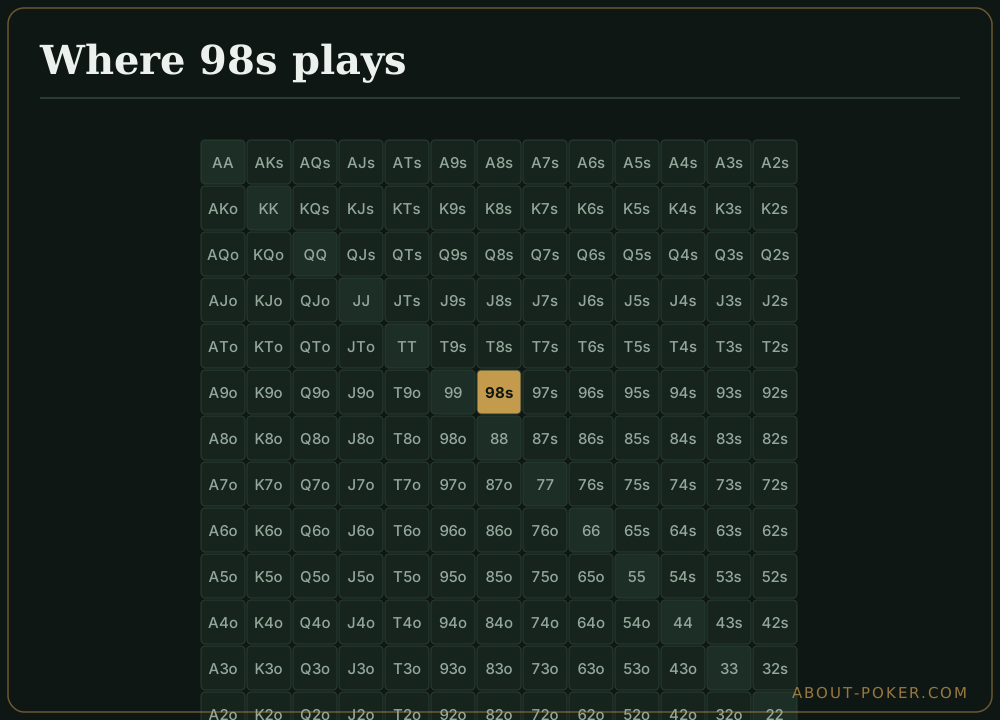
By seat, 98s is a broadly playable hand:
- Early position: a marginal open at 6-max and a fold at a full ring. It is right at the edge here, so open it when the table is passive and fold it when players behind fight back.
- Middle position: a standard open at 6-max. Its playability starts to outweigh its domination risk once the field narrows.
- Cutoff and button: a comfortable open. In position, 98s realizes its equity beautifully.
- Small blind: open as a raise against folded action rather than limping.
- Big blind: defend widely against opens; the price plus 98s’s drawing power make it an easy continue.
If those borders feel fuzzy, anchor them in the preflop opening ranges and compare with the slightly stronger T9 suited, which plays a very similar role one rank higher.
Why the connectivity matters
98s’s value is almost entirely about flopping draws. Being a suited direct connector, it can make:
- Flushes and strong flush draws whenever two of its suit appear.
- Straights and open-ended straight draws across the 5-6-7-8-9 through 9-10-J neighborhoods.
- Combo draws — a flush draw plus a straight draw on the same flop — that carry huge equity.
These draws are what let 98s realize equity so well. Even when it does not make a pair, it frequently has a hand worth continuing with, which is exactly the profile you want in a hand you play out of the blinds and in position. It is a poor hand for making top pair (the nine and eight are easily out-kicked), but that is not how it earns money.
Facing a raise: call or 3-bet bluff
When someone else has opened, 98s has two good options:
- Call: the default in position and in the big blind. Its equity-realization is excellent, so flatting and playing draws postflop is highly profitable.
- 3-bet bluff: a strong candidate against late-position opens. 98s blocks some straights and flushes, has good equity when called, and plays well on later streets. It is a textbook bluffing hand — see how these get selected in the 3-bet range breakdown.
Out of position against a tight early raiser, 98s is closer and sometimes a fold, since it cannot realize its equity as freely.
A worked example
You open 9♥8♥ from the button and the big blind defends. The flop comes 7♥ 6♠ 2♥ — you have flopped a combo draw: a flush draw plus an open-ended straight draw.
Count the equity. You have nine hearts for the flush and, of the straight outs, the non-heart tens and fives add roughly six more clean outs — on the order of fifteen outs, which makes you a favorite or near-coinflip against many made hands. You bet as a semi-bluff with real fold equity and a monster draw behind it. On the turn, if a heart, ten, or five comes, you have made a strong hand and can bet for value; if the board bricks, you still have equity to barrel with. This kind of huge combo draw is exactly why 98s is worth playing.
Contrast that with 98s making a bare top pair of nines on a K-9-4 board — a fragile, easily dominated hand you would play cautiously. The draws, not the pairs, are the point.
Postflop in one paragraph
98s’s dream flops are combo draws and flush draws, which it semi-bluffs aggressively thanks to huge equity and fold value. Straights and flushes get bet for value, often disguised, and can stack opponents who cannot put you on such a connected hand. Top or middle pair is fragile and should be played for pot control. When 98s completely misses, it becomes a give-up hand, but that is rare given how often it flops something. Favor coordinated, suit-connected boards where its draws are live.
Where to go next
98s is a premium suited connector — a wide open, a strong 3-bet bluff, and an easy big-blind defend. Compare it with the closely related T9 suited, tighten your opens with preflop opening ranges, and connect it all through the preflop strategy hub.
Frequently asked
Is 98 suited a good hand?
Yes, 98s is one of the stronger suited connectors. It flops flushes, flush draws, straights, and open-enders at a high rate, which gives it excellent playability in position. It opens comfortably from middle position onward and makes a fine 3-bet bluff and big-blind defend.
Should I 3-bet 98 suited?
Yes, as a bluff. 98s is a classic light 3-bet candidate: it has good equity when called, blocks some of an opponent's straight and flush combinations, and plays well postflop thanks to its many draws. Mix it into your 3-bet range against late-position opens rather than always flatting.
Can 98 suited call a raise?
Yes, especially in position and in the big blind. 98s realizes equity well because it flops draws so often, so calling an open with it — or defending your big blind — is standard. Out of position against an early raiser it is closer and sometimes a fold.