What Is Action in Poker?
Action has three meanings in poker: whose turn it is, the bets and raises in a hand, and how loose a game plays. A clear guide to all three, with examples.
On this page · 6 sections
Action is one of the most-used words at the poker table, and it carries three distinct meanings. It can mean whose turn it is to act. It can mean the betting itself — the bets, calls, and raises that make up a hand. And it can describe the overall character of a game — how loose, aggressive, and lively the table is. Which meaning applies is almost always clear from context, but new players often mix them up, so it is worth separating them cleanly.
Getting comfortable with all three uses makes you sound like a regular and, more importantly, helps you follow rulings and table talk without confusion.
Action as “Whose Turn It Is”
The most literal meaning is turn order. When someone says “the action is on you,” it means it is your decision. Play moves clockwise, and each player in turn must act: check, bet, call, raise, or fold. The action passes seat to seat until the betting round is complete.
This is why you will hear a dealer say “your action, sir” — they are prompting the player whose turn it is. Acting out of turn is a breach of etiquette because it gives away information and can affect the players who have not yet acted, so wait until the action is genuinely on you.
Action as “the Betting in a Hand”
The second meaning is the money going in. “There was a lot of action on the flop” means there was plenty of betting and raising. “The pot got heavy action” means several players called and raised, building a big pot.
Related phrases follow from this:
- Giving action means putting money in — calling or raising rather than folding.
- Getting action means opponents are calling or raising your bets. If you have the nuts, you want action; if you are bluffing, you do not.
- Reopening the action happens when a raise is large enough to give earlier players the right to raise again.
The rules that govern this betting — like the requirement to declare or move in one motion — are why a string bet is not allowed: it muddies who has really acted and how much.
Action as “How the Game Plays”
The third meaning describes the table’s temperament. An action game is loose and aggressive, with many players seeing flops and pots getting big. A tight game has little action — lots of folding, small pots. Players seeking excitement look for action; players seeking safety avoid it.
From this comes the term action player: someone who plays many hands and bets and raises freely, generating pots. At recreational tables this is often a compliment from the other players’ point of view, because a loose, aggressive opponent makes the game more profitable for everyone patient enough to wait for strong hands.
A Worked Example
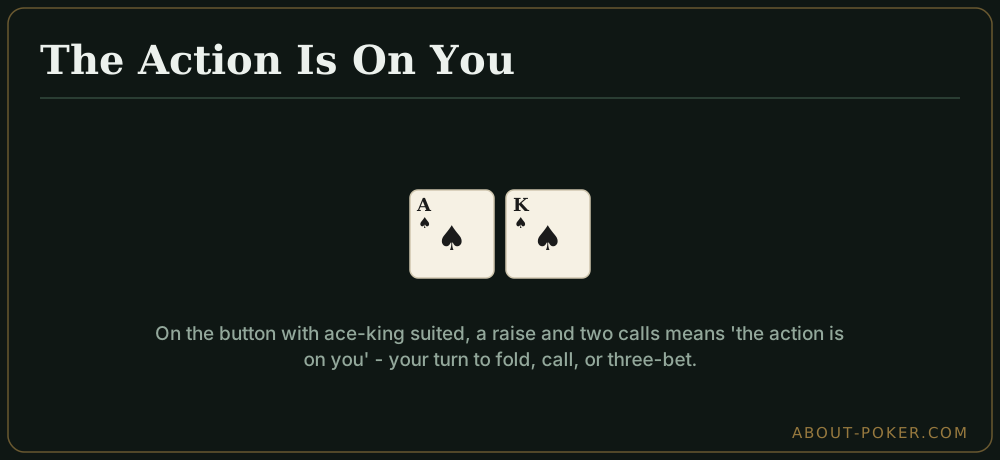
You are on the button with As-Ks. Under the gun raises, two players call, and now “the action is on you.” That phrase is meaning one — it is your turn. You decide to three-bet, and everyone calls. The dealer might later say “there was a ton of action pre-flop” — that is meaning two, describing the four-way betting that built a big pot.
You win a large pot, and a regular remarks, “This is a great action table tonight.” That is meaning three — the table is loose and lively. Notice how the same word carried three different senses across a single hand. Reading the context is all it takes to keep them straight.
Common Mistakes and Confusions
- Acting out of turn because you did not track whose action it was. Watch the clockwise order and wait for the dealer’s prompt.
- Confusing “getting action” with something bad. With a strong hand, getting action is exactly what you want — it means you are being paid.
- Assuming “action player” is an insult. At most live tables it describes a valuable, loose opponent, not a criticism of skill.
- Missing when the action reopens. A full raise gives you the right to raise again; a short all-in sometimes does not. Ask the dealer if unsure.
Quick Checklist
When you hear “action,” ask which of the three it means: whose turn (turn order), how much betting (the money in a hand), or how the game plays (loose vs tight). Wait for your turn, size your bets to the action you want, and pick tables whose action level suits your game. Handle those and the word stops being ambiguous and starts being useful. For more table language, keep exploring the terms glossary.
Frequently asked
What does action mean in poker?
Action has three related meanings. It can mean whose turn it is to act, as in 'the action is on you.' It can mean the betting in a hand — bets, calls, and raises. And it can describe how loose or aggressive a game is, as in 'a lot of action.'
What does 'the action is on you' mean?
It means it is your turn to make a decision: check, bet, call, raise, or fold. Play moves clockwise, so the action passes from one player to the next until the betting round is complete.
What is an action player?
An action player is someone who plays a lot of hands and bets and raises frequently, creating big pots. They generate action for the table. The term is often positive at recreational tables because they make the game livelier and more profitable for others.
What does it mean to give a hand action?
Giving action means putting money in — calling or raising rather than folding. A player who 'gives action' is willing to play back and build pots, as opposed to a tight player who folds most hands and rarely puts chips at risk.