What Is LAG Player in Poker?
A LAG plays many hands with relentless aggression. Here's what loose-aggressive poker means, why it profits, how it differs from a maniac, and how to beat one.
On this page · 7 sections
A LAG — short for loose-aggressive — is a player who enters a lot of pots with a wide range of hands and then plays them with heavy betting and raising rather than passive calling. The “loose” part describes how many hands they play; the “aggressive” part describes how they play them. Combine the two and you get a player who is constantly in the action, constantly putting you to decisions, and rarely giving you a comfortable spot to relax.
Done well, LAG is one of the most profitable styles in poker. Done badly, it’s just fast bleeding. The line between the two is discipline.
Breaking down the two halves
Every style label in poker mixes two axes: how loose or tight you are, and how aggressive or passive you are.
- Loose means a high VPIP — the percentage of hands you voluntarily put money in with. You can read more in our note on what VPIP means. A LAG might play 25–35% of hands in a 6-max game, where a tight player plays 15–18%.
- Aggressive means a high bet-to-call ratio. When a LAG is in a pot, they’d rather raise than call and rather bet than check.
The opposite corner of the grid is the nit: tight and passive, folding constantly and betting only with the goods. The LAG is the nit’s mirror image — always involved, always pressing.
Why the LAG style prints money
The power of loose-aggressive play comes from a simple truth: most pots are won by the last person still betting, not by the best hand at showdown. A LAG wins in three ways at once:
- Fold equity. By betting and raising relentlessly, they take down pots uncontested when opponents give up.
- Wide value. Because their range is wide, they flop strong hands opponents don’t expect and get paid.
- Disguise. Since they play so many hands, no one can put them on a narrow holding, so their big hands and their bluffs look identical.
That last point is the real engine. Balance between value and bluffs is what makes a LAG impossible to read.
A worked example
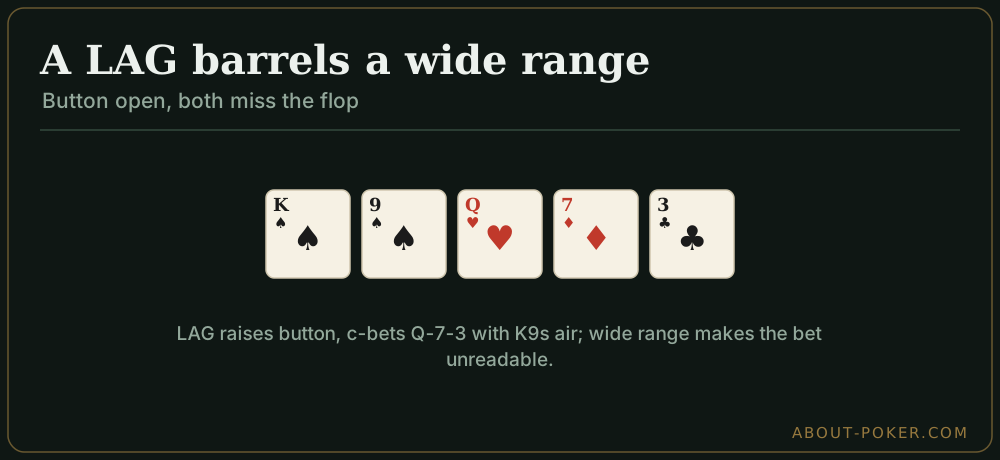
You’re in a 6-max cash game and a strong LAG raises from the button. You defend the big blind with K♠ 9♠. The flop comes Q♥ 7♦ 3♣ — you both miss.
You check, the LAG bets two-thirds pot. Here’s the tension: a tight player betting this dry board usually has a queen or better. But the LAG’s range is enormous — every two overcards, every backdoor draw, plenty of pure air. Their bet tells you almost nothing, which is exactly the point.
You call. The turn is the 2♠, giving you a flush draw. You check, the LAG barrels again. Now you’re facing a second bullet with king-high and a draw. Against a nit you’d fold; against a LAG, this is often a call or even a raise, because a large slice of their range is bluffing and folds to pressure. The LAG’s aggression creates your profit — you just have to be willing to fight back.
LAG versus maniac
People confuse a LAG with a maniac, but the difference is everything.
| LAG | Maniac | |
|---|---|---|
| Hands played | Wide but chosen | Nearly all of them |
| Aggression | Purposeful | Reflexive |
| Bluffs | Balanced with value | Random and endless |
| Long-run result | Winning | Losing (donates chips) |
A LAG has a reason for every barrel and knows when to shut down. A maniac just keeps firing. The maniac feels scarier at the table, but the LAG is the one you should actually worry about.
Common mistakes new LAGs make
Trying to copy a strong LAG without the discipline is a fast way to go broke. The usual leaks:
- Bluffing stations. Firing three barrels at a player who never folds. Aggression only works against opponents capable of folding.
- No hand-reading. LAG requires knowing when your pressure is likely to work. Barreling blind is just gambling.
- Playing too loose out of position. Wide ranges are far harder to play from the blinds than on the button. Loosen up in position, tighten up out of it.
- Tilting when a bluff gets caught. It will. A LAG’s edge is long-term; individual busted bluffs are the cost of doing business.
How to beat a LAG
If you’re the one facing a LAG, adjust like this:
- Tighten your opening range so the hands you play dominate their wide one.
- Call down lighter. Their bets mean less, so your marginal hands are worth more at showdown.
- Trap with monsters. Let them barrel into your strong hands instead of scaring them off with a raise.
- Re-raise in strong spots. When your range is much stronger than theirs, put the pressure back on them.
Quick recap
A LAG plays a wide range with relentless, purposeful aggression. It’s a high-skill, high-reward style built on fold equity, disguise, and balance. Confuse it with a maniac at your peril — and if you want to fill out the rest of the table’s vocabulary, browse the full poker glossary.
Frequently asked
What does LAG stand for in poker?
LAG stands for 'loose-aggressive.' Loose means the player enters a lot of pots with a wide range of hands; aggressive means they bet and raise far more than they call. Put together, it describes someone who plays many hands and applies constant pressure.
Is LAG better than TAG?
Neither is strictly better — it depends on skill and table. TAG (tight-aggressive) is safer and easier to run profitably. A well-executed LAG style has a higher ceiling because it wins pots without showdown and puts opponents in tough spots, but it demands sharp reads and discipline to avoid spewing chips.
What is the difference between a LAG and a maniac?
A LAG is loose and aggressive but selective and controlled; every barrel has a reason. A maniac is loose-aggressive with no discipline — raising and re-raising almost at random. A LAG has a plan; a maniac has an itch.
How do you beat a LAG player?
Tighten up, let them bluff into your strong hands, and stop folding to relentless pressure once you have a real hand. Call down lighter than usual, trap with big holdings, and pick spots to re-raise them when your range is strong.