What Is Alpha in Poker?
Alpha is the fold percentage a bluff needs to break even: bet ÷ (pot + bet). Learn the formula, how it sets your bluff frequency, and a worked example.
On this page · 8 sections
Alpha is the fold percentage a pure bluff needs to break even. It’s the bettor’s side of the equation: if the villain folds at least alpha of the time, betting with a hand that can’t win at showdown makes money. Alpha is one of the cleanest, most useful numbers in poker, and it pairs directly with min-defense on the caller’s side.
What alpha actually measures
When you bluff, you risk your bet to win the current pot. Sometimes the opponent folds and you scoop the pot; sometimes they call and you lose your bet. Alpha is the exact fold frequency at which those two outcomes cancel out, so your bluff neither gains nor loses chips on average.
Anything above alpha and the bluff is profitable. Anything below and you’re lighting money on fire. Because a pure bluff has essentially zero showdown value, alpha tells you the only thing that matters: how often they need to fold.
The alpha formula
Alpha = bet ÷ (pot + bet).
- Pot-sized bet: 1 ÷ (1 + 1) = 50%. They must fold half the time.
- Half-pot bet: 0.5 ÷ (1 + 0.5) ≈ 33%. They must fold a third.
- Two-thirds pot: 0.67 ÷ (1.67) ≈ 40%.
- Overbet (1.5x pot): 1.5 ÷ (2.5) = 60%. Bigger bets need more folds.
The bigger your bet, the more often it has to work — you’re risking more to win the same pot. This is the exact inverse of the caller’s minimum defense frequency. Alpha plus MDF always sums to 100% for any given size, because every hand the caller doesn’t defend is a hand they fold.
A worked example
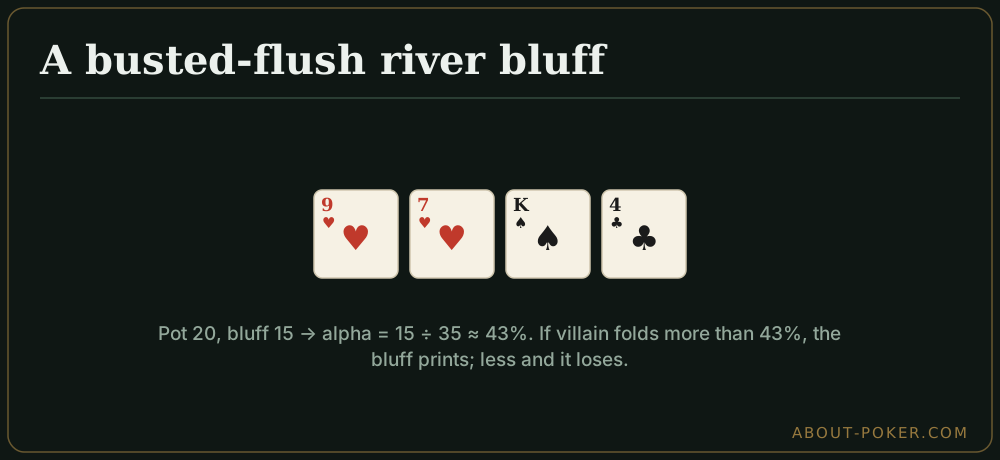
The pot is 20 on the river. You’ve missed your draw and hold a busted flush that can’t beat anything. You consider a bluff of 15, a three-quarter-pot bet.
Alpha = 15 ÷ (20 + 15) = 15 ÷ 35 ≈ 0.43.
Your opponent needs to fold about 43% of the time for the bluff to break even. If you estimate they’ll fold more than that — say their range is full of missed draws and weak pairs they’ll release — the bluff prints. If they’ve turned up with a strong capped-off range that calls most of the time, folding maybe 25%, the bluff loses and you should give up.
Notice you never needed your own equity. With a true bluff, equity is roughly zero, so alpha is the whole decision.
How alpha sets your bluffing frequency
Alpha also drives how many bluffs you should have in a balanced betting range. To make a caller indifferent between calling and folding — the goal of a game-theory-optimal bet — you pair your value bets with bluffs in the right ratio.
For a pot-sized river bet, the balanced ratio is 2 value bets for every 1 bluff, which comes straight from the caller’s pot odds of 2-to-1. Larger bets allow more bluffs; smaller bets allow fewer. When you get this mix right, the caller can’t exploit you no matter what they do — the essence of indifference.
Alpha across streets and multiway pots
The formula never changes, but two situations shift how you should use it. The first is betting across multiple streets. Alpha only tells you the break-even fold rate for the bet in front of you. If you plan to fire the flop, turn, and river as a triple-barrel bluff, each barrel has its own alpha, and the folds compound: some hands fold to the flop bet, more fold to the turn, and the river gets the stubborn remainder. A multi-street bluff can be profitable even when no single barrel would win often enough on its own, because you are giving the opponent repeated chances to fold. The flip side is that you are also risking far more chips, so the price of being wrong on the river is steep.
The second is the multiway pot. Alpha as written assumes one opponent. Against two or more players you need every one of them to fold, and the required success rate is roughly alpha applied to each independent decision. If a pot-sized bet needs 50 percent folds heads-up, then against two callers you need something closer to both folding — which, if each folds about 70 percent of the time, still only clears the bar around half the time. Pure bluffs get sharply worse the more players are in the pot, which is exactly why disciplined players bluff far less multiway and lean on value betting instead.
A quick decision checklist for bluffs
- Work out alpha first: bet divided by (pot plus bet). That is the fold rate you need.
- Estimate the opponent’s actual fold rate from their range and tendencies.
- If their estimated fold rate clearly beats alpha, the bluff prints. If it is close, look for extra reasons — position, a scary board, a capped opponent range.
- Confirm your hand is a genuine bluff with near-zero showdown value; if it can win a checkdown, consider checking instead.
- In a multiway pot, raise your bar substantially — you need everyone to fold, not just one player.
Common mistakes with alpha
- Confusing alpha with your equity. Alpha is about fold frequency, not how often your hand wins. Use it for bluffs, use pot odds for calls.
- Bluffing too big without a plan. Overbets raise alpha, meaning you need more folds. If the opponent is sticky, a huge bluff needs a huge fold rate you won’t get.
- Ignoring the opponent’s range. Alpha tells you the break-even fold rate; only reading the villain tells you their actual fold rate. The gap between the two is your profit or loss.
- Bluffing hands with good showdown value. If your hand can sometimes win a checkdown, it’s not a pure bluff, and simple alpha understates its true worth.
Quick reference: alpha by bet size
| Bet size | Alpha (folds needed) |
|---|---|
| 1/4 pot | 20% |
| 1/2 pot | 33% |
| 2/3 pot | 40% |
| Pot | 50% |
| 1.5x pot | 60% |
Memorize this table and the value bet side follows naturally. Alpha turns “should I bluff?” from a gut feeling into arithmetic: estimate their fold rate, compare it to alpha, and act.
Frequently asked
What is alpha in poker?
Alpha is the fraction of the time a bluff must succeed to break even. It equals bet ÷ (pot + bet). If your opponent folds at least alpha of the time, your bluff is at worst break-even and often profitable.
How do you calculate alpha?
Alpha equals your bet divided by the pot plus your bet. A pot-sized bluff needs 1 ÷ (1 + 1) = 50% folds. A half-pot bluff needs 0.5 ÷ (1.5) = about 33% folds to break even.
How does alpha relate to minimum defense frequency?
They are complements. Alpha is the fold rate a bluff needs; minimum defense frequency (MDF) is the continue rate the caller needs. Alpha plus MDF always equals 100% for a given bet size.