What Is Stab Bet in Poker?
A stab bet is a small bet at a pot nobody wants, made when the aggressor shows weakness by checking. Learn when to stab, how much, and a worked example.
On this page · 7 sections
A stab bet is a small bet at a pot that nobody seems to want. It usually happens when the preflop raiser checks the flop or turn, showing weakness, and another player — often the one in position — “stabs” at the pot to take it down. The name captures the feel of the move: a quick, opportunistic jab at chips that are lying unclaimed in the middle. It is one of the easiest ways for observant players to win pots without a made hand.
Where the term comes from
Poker slang leans on physical imagery, and stabbing fits perfectly. When the player who took the betting lead checks, they leave the pot exposed. A stab is a fast, low-cost thrust at that opening. You are not building a big pot or telling an elaborate story — you are grabbing a pot that the aggressor just signaled they do not want.
Why the stab works
The logic is built on a simple read: when a preflop raiser checks a board that should have helped their range, they usually have nothing. A raiser who flopped a strong hand almost always keeps betting. So a check is a confession of weakness, and a small stab bet exploits it directly.
This is different from a continuation bet, where the original raiser keeps firing. A stab comes from a player who was not the aggressor. You are borrowing the initiative your opponent just dropped. Because they have already told you they are weak, you do not need a big bet to fold them out — a third of the pot often does the job.
Worked example: stabbing after a check
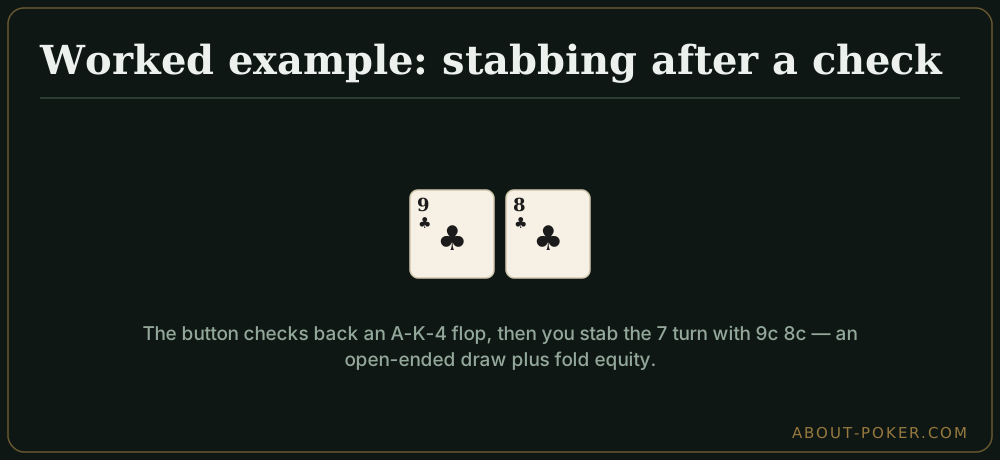
You call a button raise from the big blind with 9♣ 8♣. The flop comes:
A♦ K♠ 4♥
This is a board that hugely favors the button’s raising range — lots of aces and kings. If they had bet, you would fold. But instead the button checks behind. That check is loud: it usually means they have a hand like a small pair or two unpaired cards that missed. On the turn, the 7♠ falls, giving you an open-ended straight draw.
You bet 4 into 9 — a stab. You win two ways. Either the button folds their weak, checked-back hand right now, or you get called and still have eight clean outs to a straight on the river. That combination of fold equity plus real outs is what makes a stab so profitable. Contrast this with a pure value bet, where you already hold the best hand and want calls; a stab wants folds first.
When to stab and when to hold back
Stab when these things line up:
- The aggressor checked a board that should have hit them. A check on an ace-high or king-high flop is a strong weakness signal.
- You are in position. Acting last lets you take the free card if you miss and the initiative if they fold.
- Your hand can improve. Backdoor draws and overcards give you a backup plan.
Hold back when the checker is a tricky player who traps with checks, when the board is so coordinated that many hands connected, or when you are out of position and would be guessing on later streets. Not every check is genuine weakness — some strong players check back strong hands to induce exactly this kind of float and stab.
How much to bet
Stab bets are usually small, around a third to a half of the pot. The opponent has already shown weakness, so you do not need a big bet to move them off their hand, and a small size risks fewer chips if they wake up with something and call or raise. Save your larger bets for spots where you have a genuine hand and want to build the pot.
Common mistakes
- Stabbing too big. A pot-sized bet risks far more than the small edge the stab earns. Keep it cheap.
- Stabbing every check. Good players notice a relentless stabber and start check-calling or check-raising to punish it. Pick your spots.
- Ignoring who checked. A passive player’s check is weakness; a tricky player’s check may be a trap. Adjust to the person.
- No plan for a raise. Decide in advance whether you are folding to a check-raise or continuing with your outs.
Quick checklist before you stab
- Did the aggressor check a board that favored their range?
- Am I in position with a hand that can improve if called?
- Is this opponent likely to fold rather than trap?
- Is my bet small enough to make the stab low-risk?
Answer yes to most of those and take your jab at the pot. The stab bet rewards attention: the players who notice unclaimed pots and grab them add up a steady stream of chips over a session. Keep building your vocabulary in the poker terms glossary.
Frequently asked
What is a stab bet in poker?
A stab bet is a bet made at a pot that everyone seems to have given up on, usually after the preflop raiser checks and shows weakness. You are stabbing at an uncontested pot, trying to win it with a small bet rather than by having the best hand.
When should you stab at a pot?
Stab when the previous aggressor checks a board that should have hit their range, and you are in position with a hand that can either win now or improve. A check from the preflop raiser often means air, so a small bet folds them out a large share of the time.
How much should a stab bet be?
Stab bets are usually small, around a third to a half of the pot. You do not need a big bet to fold out a hand that has already signaled weakness by checking, and a small size risks fewer chips when you get called or raised.
What is the difference between a stab and a c-bet?
A c-bet is made by the preflop raiser continuing their own aggression. A stab is made by a player who was NOT the aggressor, seizing on the aggressor's check. The stab exploits weakness that someone else showed rather than continuing a story you started.