What Is Stab in Poker?
A stab is a bet made at a pot that nobody wants — usually after the aggressor checks. Learn what stabbing means, when it prints money, and how to defend.
On this page · 8 sections
A stab is a bet made at a pot that looks like nobody wants it. The classic spot: the preflop raiser checks the flop, signaling they missed, and you — who did not raise before the flop — fire a bet to scoop the pot they just abandoned. You are “stabbing” at an undefended pot. It is a small, repeatable play that adds up to real money against passive opponents.
The Core Definition
Every hand has an aggressor — usually the last person to raise before the flop. When that player checks instead of continuing, they are broadcasting weakness: strong hands almost always bet. A stab takes advantage of that broadcast. You do not need a hand; you need the read that theirs is weak and the position to apply pressure.
The word “stab” captures the spirit — it is a quick jab at the pot, not a committed, multi-street plan. You are gambling a small bet that the checked-through weakness is real. For a deeper breakdown of the bet itself, see our full guide to the stab bet.
Stab vs C-Bet
The distinction from a continuation bet is the source of the aggression:
- A c-bet is the preflop raiser continuing their own story. They took the lead before the flop and keep it.
- A stab is made by someone who did not raise preflop, attacking after the raiser checks and gives up the lead.
In short, a c-bet maintains initiative; a stab steals it. Both are often bluffs, but they come from opposite seats at the table.
A Worked Example
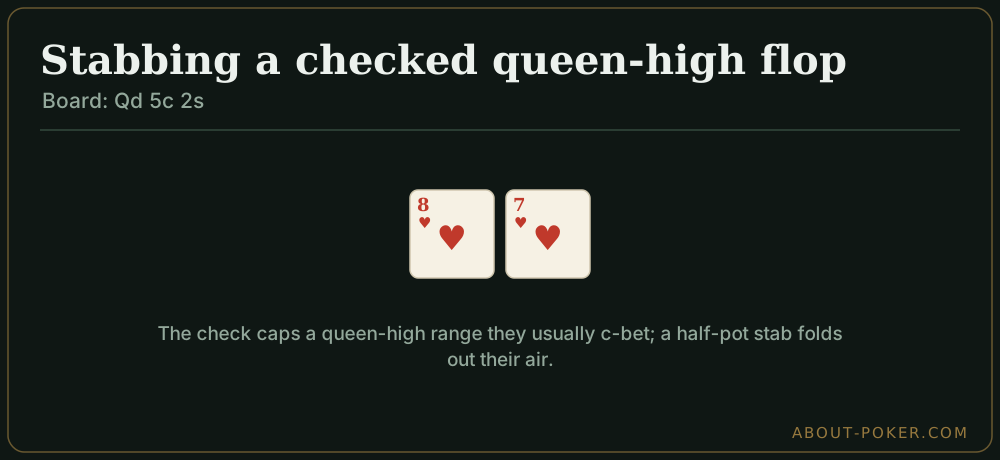
You call a raise from the big blind with 8h 7h. Three players see a flop of Qd 5c 2s. The original raiser, first to act, checks. It folds to you.
That checked flop is a queen-high board the raiser very often c-bets when they have a piece. Their check strongly suggests they missed — they have ace-high, small pairs, or busted overcards. You have nothing but a backdoor straight draw, yet you bet half the pot. Most of their weak range folds, and you pick up the pot. That is a stab: a bet at abandoned money, powered by their check rather than your cards.
When Stabbing Prints Money
Stabs are most profitable when these line up:
- The aggressor checks a board that missed their range. High, dry, disconnected boards (like K-7-2 or Q-5-2 rainbow) are prime — they hit a raiser’s range less than coordinated middling boards.
- You are in position. Acting after the check lets you attack with information. Stabbing from out of position is riskier.
- The pot is heads-up or short-handed. The more players left to act, the more likely someone has a hand that will not fold.
- Opponents can fold. Against a calling station, a stab just bloats a pot you will lose.
Stab and Float Together
Stabbing pairs naturally with the float. Sometimes you call a flop bet planning to stab the turn when the opponent checks; other times the raiser checks the flop and you stab immediately. Both plays hunt the same prey — an opponent who bets when strong and gives up when weak. Learn to spot the check that says “I have nothing,” and you will find these bets everywhere.
Defending Against Stabs
If you are the one who checked and keeps getting stabbed, you are leaking chips. Two fixes: first, check-raise or check-call occasionally with real hands so that stabbers cannot bet with impunity. Second, tighten up your giving-up range — do not check-fold every missed flop. Even a floated bluff catcher or a check-raise bluff once in a while forces stabbers to slow down. If opponents learn they can bet every time you check, they will, and it will cost you.
Common Mistakes
Stabbing multiway. With three or four players still in, the odds that someone connected are too high. Reserve stabs for heads-up and three-handed pots.
Stabbing stations. A stab needs fold equity. Against players who never fold, it is money down the drain.
Over-sizing the stab. You are attacking a weak range; a small-to-medium bet gets the same folds as a big one at lower risk. Do not risk a pot-sized bet to steal a small pot.
Quick Checklist
- Did the aggressor check, signaling weakness?
- Is the board one that likely missed their range?
- Am I in position, heads-up or three-handed?
- Can these opponents actually fold?
- Is my sizing small enough to risk little for the pot on offer?
Check those boxes and the stab turns a checked, abandoned pot into an easy pickup — one small bet at a time.
Frequently asked
What does stab mean in poker?
A stab is a bet made at a pot that appears abandoned — most often when the preflop raiser checks and shows weakness. You stab to pick up a pot nobody has claimed, usually with a hand that has little value of its own.
When should I stab at a pot?
Stab in position when the aggressor checks a board that missed their range, when the pot is heads-up or three-handed, and when your opponents are capable of folding. A dry or scary board they are unlikely to have connected with is ideal.
Is stabbing the same as a c-bet?
No. A continuation bet is made by the preflop raiser continuing their own aggression. A stab is made by a non-aggressor attacking after the original raiser checks and gives up initiative. Stabbing exploits the weakness that a checked flop signals.